

VAPA
VAPA (Onfidence GmbH, part of Sellercore) · Marketing
VAPA is AI-driven Amazon PPC software from Austria that uses reinforcement learning to set bids, harvest keywords and rebalance budgets across 20+ marketplaces. It now sits inside the Sellercore platform.
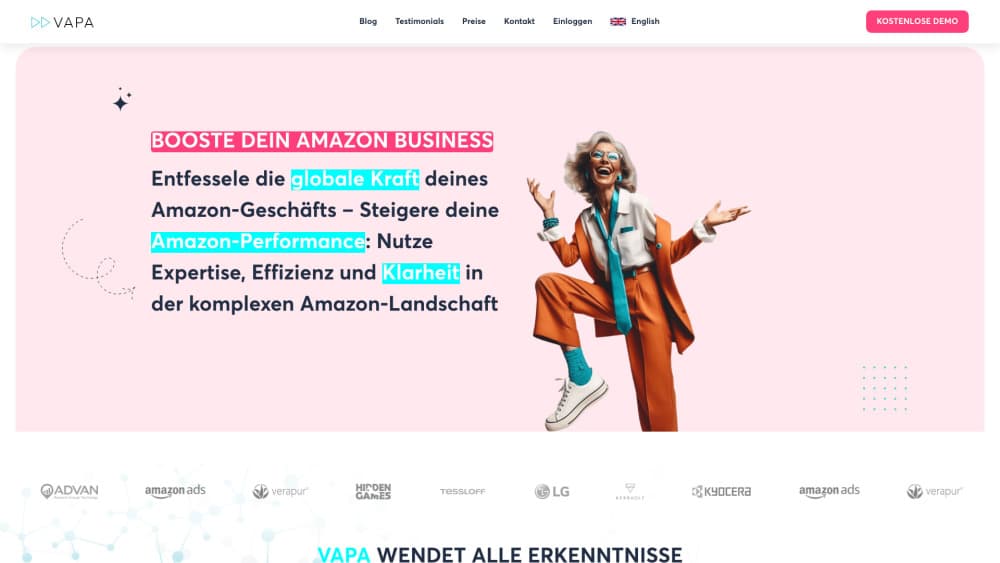
About VAPA
What Is VAPA
VAPA is an Amazon advertising tool that runs your campaigns with a learning model instead of a rule book. You connect an Amazon Ads account, hand over campaigns you already built, and the system adjusts bids, moves search terms between match types, and trims spend on placements that lose money. The company behind it, Onfidence GmbH, works out of Enns, Austria, and VAPA has been acquired by Sellercore, which folded it into a wider platform for Amazon sellers.
The pitch rests on one difference. Most Amazon PPC automation fires off if-then rules: raise the bid when ACoS drops below 20%, pause the keyword after ten clicks without a sale. VAPA trains on account history and decides per bid, per hour, weighing target ACoS, competition and seasonality together. According to VAPA, brands running the tool report ROAS moving from 1.8x to 3.2x and ACoS falling from 42% to 24%, with weekly ad management time dropping from 15 hours to about one.
The catch is trust. A model that rewrites bids overnight needs guardrails, and you'll want the change log and the target ACoS settings dialed in before you let it run unattended. It also assumes you already sell on Amazon at some volume. A brand spending €300 a month on Sponsored Products won't generate the data the model needs, and the percentage fee on ad revenue starts to feel heavy at small scale. VAPA reports 847 brands and €40M+ in optimized ad spend, which is the segment it was built for.
Getting Started
- Book a demo or start the 14-day trial from vapa.ai, then create an account with your business email.
- Link your Amazon Ads account through the official Amazon authorization flow. The connection is read and write, since the tool needs permission to change bids.
- Set your target ACoS and monthly budget, and choose which campaigns VAPA may touch. New accounts can leave campaigns untouched for a few days while the model reads history.
- Review the first optimization batch in the history log, approve the direction, then let the agent run on its own schedule.
Product Information
A quick look at VAPA's pricing, supported platforms, and performance.
Best for
The users, tasks, and scenarios where this tool fits best.
Users
- Amazon sellers doing €5k or more in monthly ad spend
- Small agencies and freelancers managing a handful of seller accounts
- Brand owners who inherited messy campaigns
Tasks
- Daily bid management
- Search term cleanup
- Launch and Prime Day pushes
- Weekly performance reporting
Scenarios
- A seller with 40 campaigns and no dedicated PPC manager
- A European brand selling in several marketplaces
- A team that has to justify ad decisions to a client
Key features
Bid Agent
The Bid Agent sets each bid on its own instead of applying account-wide rules. It factors in target ACoS, the competitive situation on the keyword, and the hour of the week, then moves bids in cent-level steps rather than big jumps. That granularity matters on keywords where a 15 cent change can flip you out of the top placement, and it means you stop seeing bid whiplash after a single bad day of sales.
Keyword Harvesting and Negative Targeting
VAPA watches search term reports continuously and promotes converting queries into their own exact match campaigns. Terms that spend without converting get added as negatives, which keeps your campaign structure from silting up with junk traffic over time. The practical effect for Amazon PPC software users is that manual search term reviews, usually a weekly chore, mostly disappear.
Dayparting
Dayparting assigns a separate bid factor to every hour of the week. If your buyers shop on weekday evenings, VAPA pushes more budget into those slots and backs off at 3am when clicks rarely turn into orders. You can also keep it simple and set two or three blocks if granular control feels like overkill for your catalog.
Campaign Boost and Automations
Boost is built for short windows: a product launch, Black Friday, a lightning deal. You give it a start and end time, and the agent lifts bids and budget for that period before restoring normal settings. Automations cover the rest, with custom filters by campaign, brand or product so rules apply to the right slice of the account.
Analytics and Weekly AI Reports
The dashboard tracks spend, sales, ACoS, ROAS and TACoS across campaigns in one place. Beyond the live numbers, VAPA sends a weekly report written by the system with the changes it made and what it recommends next. It won't replace a strategist, but it does cut the hour you'd spend exporting data before every client call.
Competitor and Placement Insight
The tool monitors advertising competition and Buy Box pressure on the products you promote, then shifts budget toward the placements with the most room to win. For sellers in crowded categories, knowing that a competitor just took the Buy Box on your main ASIN is more useful than another bid chart.
Full Audit Trail
Every bid change and every automated action lands in a history log with the reason attached. If a bid spikes 40% overnight, you can see which rule or model output triggered it. This is the feature that makes VAPA usable for agencies, where the person paying the invoice wants an explanation, not a black box.
Pros and cons
Pros
- Reinforcement learning produces bid decisions that adapt to seasonality instead of snapping between fixed rules.
- Campaign takeover means you keep the structure you already built, with optimization starting on day one.
- Coverage of Sponsored Products, Sponsored Brands, Sponsored Display and Sponsored TV in one system.
- Audit trail with reasons makes client reporting and internal review much easier.
- Support for 20+ Amazon marketplaces suits European sellers expanding beyond one country.
Cons
- Pricing starts at €15/mo for analytics only; the ad optimization tier is €249/mo plus 1.9% of ad-attributed revenue, which is steep for small accounts.
- No free plan, just a 14-day trial, so testing it properly takes a real ad budget.
- Contracts run month to month but cancellation requires three months notice to month end.
- No public API documentation, which blocks teams that want to pipe VAPA data into their own BI stack.
Frequently asked questions
VAPA automates Amazon PPC management. It connects to your Amazon Ads account, then adjusts bids, harvests keywords, adds negatives and reallocates budget across ad formats without daily input from you.
Related content
Explore related tools, skills, and articles for VAPA.
VAPA Alternatives

ngram 2.0
ngram · Video · Marketingngram 2.0 is an AI video generator for teams. It turns a prompt, a screen recording, or a product URL into a narrated explainer, product demo, or AI avatar video, and every scene stays editable.

shippedit.me
Krawlup · Marketing · Businessshippedit.me now redirects to Krawlup, a web platform that audits SEO, AEO and page speed every week, then hands the fixes to AI coding agents over MCP.

MePersona
MePersona, Inc. · Writing · Productivity · MarketingMePersona is an AI unified inbox for creators. It learns your voice, drafts replies to fan messages from 12 platforms, and sends only what you approve.