

Vapi
Vapi · Voice & Language · Coding
Vapi is a developer platform for building voice AI agents that handle inbound and outbound phone calls, letting you mix speech to text, language models, and voices while Vapi runs the infrastructure.
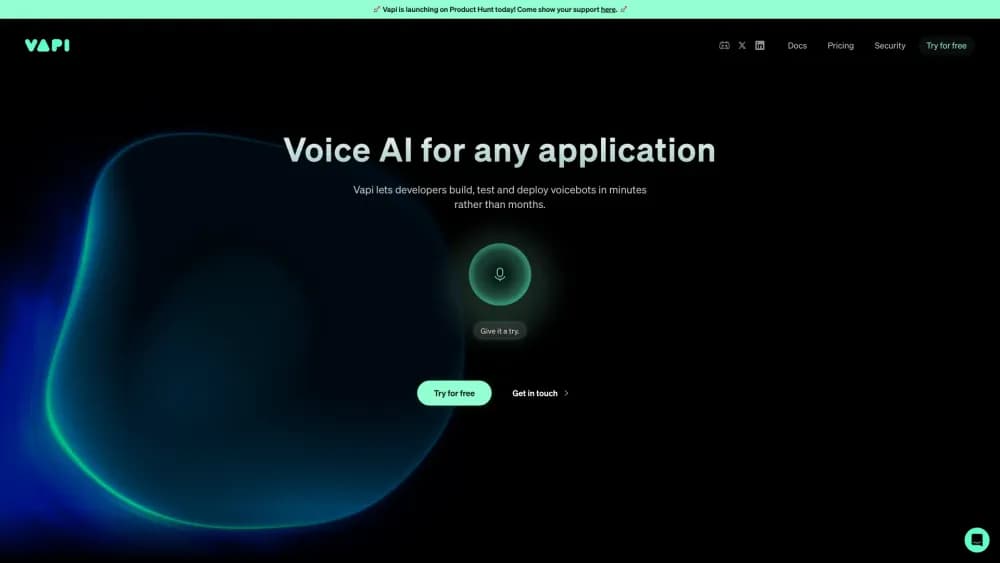
About Vapi
What Is Vapi
Vapi is a developer platform for building voice AI agents that make and receive phone calls. The company handles the hard parts of real-time voice: the audio streaming, the phone connections, and the orchestration between speech recognition, a language model, and a natural sounding voice. You build the agent, Vapi keeps it running.
The pitch is control. Instead of locking you into one vendor stack, Vapi lets you pick the transcriber, the model, and the voice from a catalog that includes OpenAI, Anthropic, Google, Deepgram, and ElevenLabs. Teams switch providers by changing a setting rather than rebuilding infrastructure.
The main limit is audience. Vapi is built for developers and engineering teams, not for someone who wants a no-code chatbot in an afternoon. There is a dashboard that gets a first phone agent running in about five minutes, but as a voice AI agent platform it still expects you to be comfortable with code once you reach custom tools, webhooks, and multi-assistant routing.
Getting Started
- Create a free Vapi account; new users get $5 in credits to test calls.
- Pick a model preset or choose your own transcriber, language model, and voice.
- Write the system prompt that sets your agent's role and behavior.
- Connect a phone number or embed the web SDK, then place a test call.
- Publish a version, run simulations, and monitor calls before scaling to production.
Product Information
A quick look at Vapi's pricing, supported platforms, and performance.
Best for
The users, tasks, and scenarios where this tool fits best.
Users
- Developers building voice agents
- Engineering teams at growing companies
- Support and sales operations leads
- Enterprise teams with compliance needs
Tasks
- Inbound customer support
- Outbound sales and lead qualification
- Appointment scheduling
- Order tracking and returns
Scenarios
- A small team that needs phone coverage outside business hours without hiring a night shift.
- A vendor marketplace that wants one voice agent platform to route calls to specialized agents by topic or region.
- A product team embedding live voice into a web app through the SDK rather than a phone line.
Key features
Multi-Provider Model Catalog
Vapi bundles every assistant from three parts: speech to text, a language model, and text to speech. You choose each one from a catalog that spans OpenAI, Anthropic, Google, Deepgram, Gladia, and ElevenLabs. That means you can pair the fastest transcriber with the model you already trust and the voice that fits your brand, then swap any piece later.
Low Latency Conversations
Vapi handles conversational AI at speed: average response times stay under half a second for enterprise clients, which is what makes turn taking feel natural instead of robotic. The company reports sub-600ms response times on its core stack. In practice that gap is the difference between a caller waiting awkwardly and a conversation that flows.
Assistants and Squads
The platform has two ways to build. A single assistant uses one system prompt with tools and structured outputs, which covers most support and booking jobs. Squads link several assistants together with context preserving transfers, so a triage agent can hand a call to a billing specialist without making the caller repeat themselves.
Phone and Web Integration
Agents can make and receive calls on any phone number, or run inside your product through the web SDK. Both paths use the same agent definition, so you build once and deploy to a hotline and to an in-app voice button without rewriting logic.
Tool and API Connections
Vapi agents call your own APIs, databases, and back office systems through tools and webhooks, exposed through the same voice agent API that powers the rest of the platform. That is how an agent checks a live order status or writes a booking into your calendar instead of just talking about it.
Observability and Testing
Simulations let you test calls before a real customer hears them, and monitoring surfaces where quality drops across every call. You can review transcripts, publish versions, and roll back to an earlier one if a change makes things worse.
Pros and cons
Pros
- You own the stack and pick your own models, voices, and providers instead of accepting a fixed bundle.
- Prices pass through provider costs with no markup on models, so billing stays transparent.
- Real low latency (under 500ms average) keeps conversations from feeling like a walkie-talkie.
- Strong developer tooling including a CLI, config as code, and SDKs across several languages.
- Enterprise features like SOC 2, HIPAA, and PCI compliance, SSO, and RBAC are available when you need them.
Cons
- The pricing is granular, with hosting fees, model costs, and a success package stacked on top, so estimating a monthly bill takes some math.
- It is built for developers: non-technical users will hit a wall once they move past the basic dashboard setup.
- Concurrency caps on lower plans (4 to 10 calls) can throttle a fast growing operation until you pay for more.
- The Pro package starts at $999 a month, which is steep for a small team that only needs occasional call volume.
Frequently asked questions
Vapi is a platform for building voice AI agents that handle phone calls. Teams use it for customer support, sales and lead qualification, appointment scheduling, and order management, with agents that talk to callers and connect to the systems behind them.
Related content
Explore related tools, skills, and articles for Vapi.
Vapi Alternatives

Foley
Hanamori Labs, LLC · Voice & Language · Productivity · AI AssistantFoley is a voice to-do list that turns a spoken sentence into a filed task, complete with project, date and time, then helps you plan the day around what is already there.

HireKey
HireKey · Voice & Language · Productivity · LeaningHireKey is an AI job search copilot built by a former tech recruiter. It checks role fit, tailors resumes, runs interview practice and tracks every application.

Fluence
Yay Software (Yannick Huchard) · Writing · Voice & Language · ProductivityFluence is an Android app that reads PDFs, EPUBs, Word files and web articles aloud, follows each sentence as it speaks, and answers questions about the text on the phone itself.