

Voc AI Chatbot
Shulex (SHULEX TECHNOLOGY LIMITED) · Marketing · Chatbot
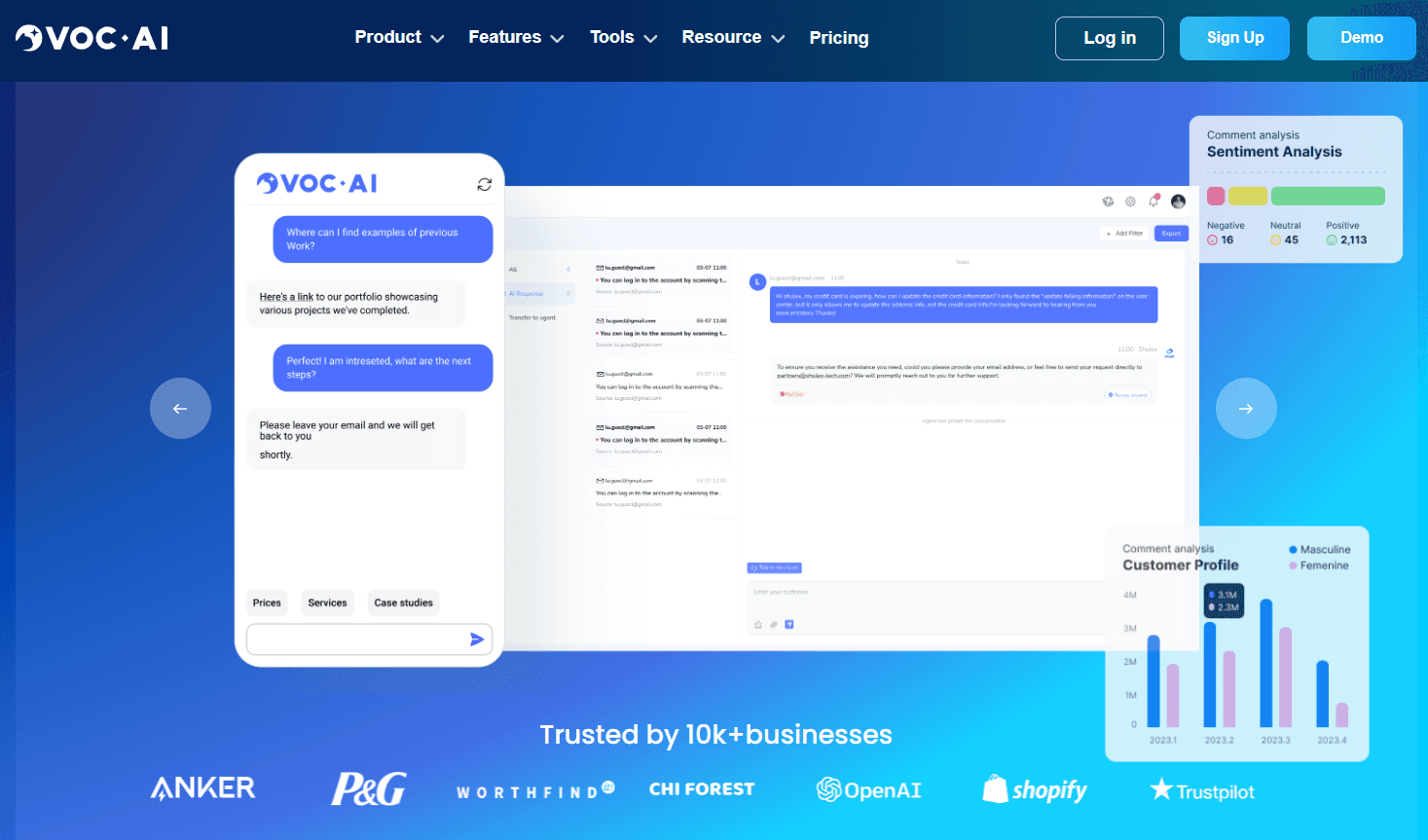
Voc AI Chatbot is the former name of Solvea, an AI customer service chatbot for online stores that answers live chat, email and phone questions from your own product and order data.
About Voc AI Chatbot
What Is Voc AI Chatbot
Voc AI Chatbot is the name this product carried when it first shipped, and the vendor now sells it as Solvea. The job hasn't changed: it reads your product pages, return policy and order system, then answers buyers on its own instead of handing every question to a person. The company behind both names is Shulex, a Hong Kong registered operation with roots in cross-border e-commerce tools, and it counts more than 200 brands as customers.
What you actually buy is a service agent rather than a script. It pulls order status, shipping exceptions and refund rules live, drafts the reply, and writes the result back into your helpdesk. The vendor publishes a first response under 10 seconds and a resolution share above 70%. Treat those as vendor figures until you test them on your own traffic.
The limit is structure. Nothing resolves automatically until someone writes down the knowledge: policies, SKU details, what the AI may approve, and when it must call a human. A store with an empty help center gets an expensive chat widget. Public pricing also stops at a single free seat. Team terms get quoted per deal, so a mid-size company has to talk to sales before it can budget.
Getting Started
- Sign up for the one-person free plan, which covers email and live chat tickets with AI replies pulled from a knowledge base.
- Load the knowledge base: product specs, shipping windows, return and warranty rules, and the answers your team already gives by hand.
- Connect the systems the AI is allowed to read, such as the order platform, logistics tracking or the helpdesk inbox.
- Run the seven-day phone trial if you want AI voice in the mix, then decide whether to keep calls inside the rollout.
- Replay old conversations against the agent, fix the gaps it misses, and only then let it reply to real buyers.
Product Information
A quick look at Voc AI Chatbot's pricing, supported platforms, and performance.
Best for
The users, tasks, and scenarios where this tool fits best.
Users
- Online store owners without a support team
- Retail brands with steady ticket volume
- Support leads who own their queue
- Cross-border sellers running in several languages
Tasks
- Answering pre-sale questions about specs and fit
- Tracking orders and catching shipping exceptions
- Handling returns and refund requests
- Routing complaints before they turn into reviews
Scenarios
- A promotion week when questions spike
- Night and weekend coverage for a small shop
- Onboarding a new support hire
- A brand scaling into new markets
Key features
Customer support automation that resolves instead of deflecting
Most support bots stop at a canned reply, which is why buyers type "agent" three times. This AI chatbot for e-commerce looks up the order, checks the shipping record and applies your after-sales policy before it answers. The vendor reports more than 70% of common inquiries resolved without a human and 80% or higher reply accuracy, both measured on its own customer projects. Those numbers only hold once your knowledge base is complete.
Live chat AI that reads the page context
On a product page, the chat widget knows which SKU the buyer is looking at, so a question about a sofa's width gets the real measurement rather than a generic answer. It handles pre-sale questions first and passes conversations that need judgment to an agent with the history intact. For stores with a thin catalogue this is a small gain. For stores with 200 variants and confusing specs, it's the difference between a sale and an abandoned cart.
AI voice agent for phone inquiries
Phone support is where small teams bleed time. The voice agent answers calls in the customer's language, collects the reason for the call and hands the call to a person with a recording, a transcript and a summary already attached. Calls and messages land in the same inbox as chats, so nobody has to check two systems. Voice is billed by the minute on top of the seat price.
Human handoff with rules you set
The AI escalates when it can't find a reliable source, when a case involves compensation beyond policy, when a buyer is clearly upset or asks for a person, and when compliance questions come up. An agent takes over with one click and can hand follow-up back to the AI afterwards. Refunds and address changes run as write actions that need approval, and payment card details stay outside the AI's reach.
Long-term memory for returning customers
The agent remembers earlier conversations and order history, so a repeat buyer doesn't restate their problem from scratch. That matters most in categories where the same person comes back for parts, accessories or a second purchase. Memory also shortens the average conversation, which is where the per-minute and per-credit costs come from.
Shared helpdesk inbox with owners and statuses
Every conversation carries an owner, a status and internal notes, so the next teammate sees what happened and what should happen next. Calls, chats and SMS sit together with transcripts and recordings. Full context matters when a support request turns into a dispute later, and it's the part small teams usually lose when they run support out of a shared phone.
Reports on what the AI is failing at
AI tagging and root-cause reports show which question types keep landing on a human, and where the knowledge base has holes. That's the useful half of support analytics: not a CSAT score, but a list of the questions worth writing a policy for. Without those reports, knowledge maintenance turns into guesswork.
Integrations with the systems that hold the answers
The agent connects to order, logistics, inventory, ERP and ticketing systems, and it answers from live data instead of a static FAQ. A standard rollout covers assessment, training, testing and the first use cases inside about four weeks. More channels and more systems add time.
Pros and cons
Pros
- Published results are concrete: over 70% of routine inquiries resolved without a human and 80%+ reply accuracy, both measured across named customer projects rather than a demo.
- Live data beats scripted replies: order, shipping and after-sales lookups hold up when the buyer checks them ten minutes later.
- The free tier is usable: a one-person helpdesk with AI replies and a seven-day phone trial costs nothing and needs no card.
- Handoff is designed for real teams: one-click takeover, rules for escalation, and approval required before refunds or address changes go through.
Cons
- Nothing works until the knowledge base does: an empty or outdated help center produces confident wrong answers, which is worse than no bot.
- Public pricing stops at one seat: use-based credits make phone and AI volume hard to forecast, and a team rollout ends in a sales call.
- Insurance and regulated retail are a poor fit: refunds and compensation need approval, so the automation ceiling is lower than the marketing implies.
- Advanced setup is a project, not a switch: four weeks is realistic for a basic rollout, and multi-system integrations push it longer.
Frequently asked questions
Yes. Voc AI Chatbot is the older name, and the vendor now sells the AI customer service agent as Solvea. The product line covers the service agent, a voice agent, a smart helpdesk and the VOC review analytics tools.
Related content
Explore related tools, skills, and articles for Voc AI Chatbot.
Voc AI Chatbot Alternatives

ngram 2.0
ngram · Video · Marketingngram 2.0 is an AI video generator for teams. It turns a prompt, a screen recording, or a product URL into a narrated explainer, product demo, or AI avatar video, and every scene stays editable.

shippedit.me
Krawlup · Marketing · Businessshippedit.me now redirects to Krawlup, a web platform that audits SEO, AEO and page speed every week, then hands the fixes to AI coding agents over MCP.

MePersona
MePersona, Inc. · Writing · Productivity · MarketingMePersona is an AI unified inbox for creators. It learns your voice, drafts replies to fan messages from 12 platforms, and sends only what you approve.