

Waldium
Structured Labs · Writing
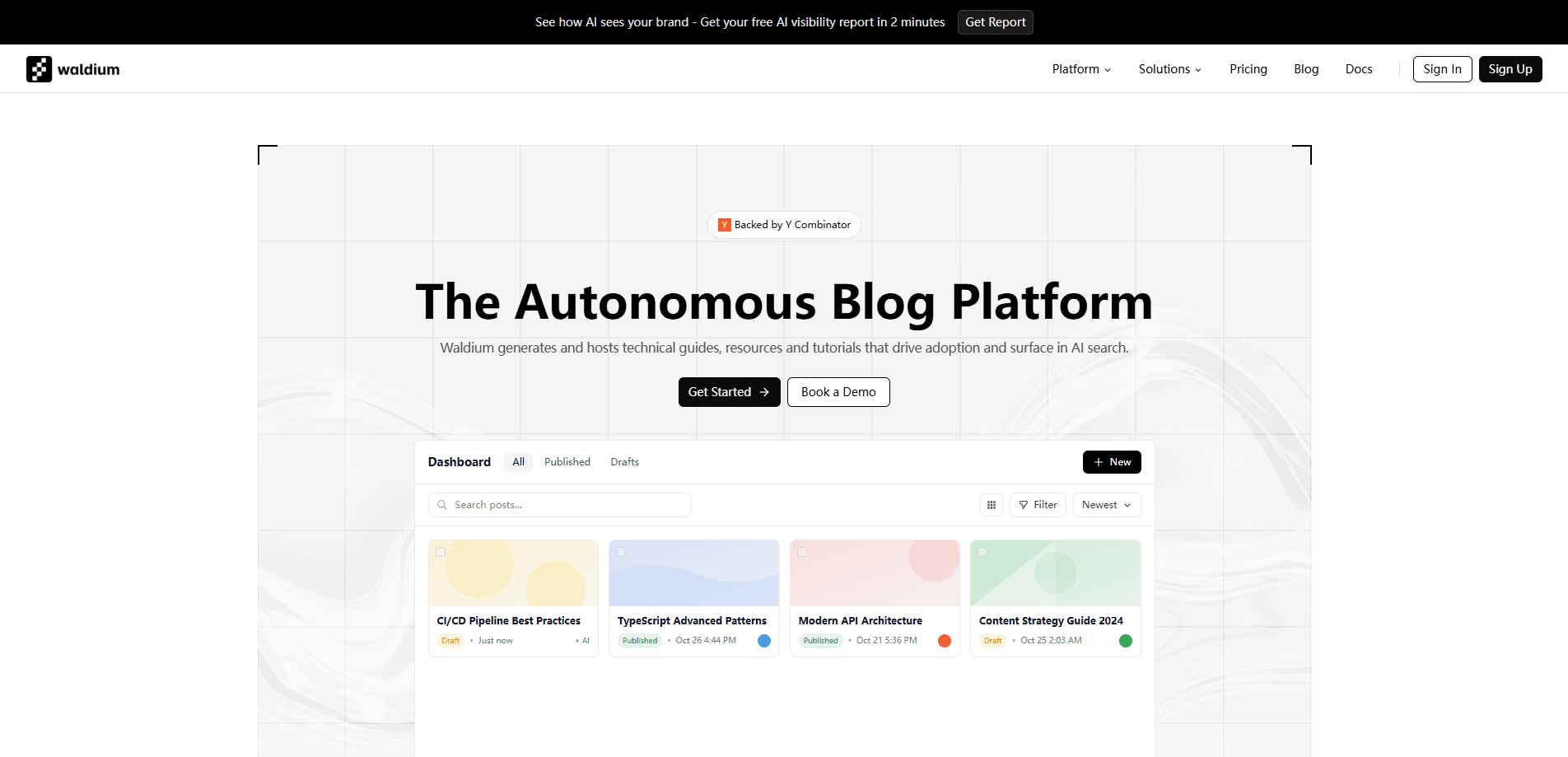
Waldium is an AI content automation platform built by Structured Labs that writes, hosts, and maintains technical guides and tutorials for software companies. The idea is simple. Instead of chasing clicks on a search results page, Waldium shapes content so it shows up when people ask ChatGPT, Claude, or Cursor a technical question. Teams use it to keep documentation current, publish at scale, and track how often their material gets pulled into AI answers. That shift matters.
About Waldium
What Is Waldium
Waldium targets a problem that showed up the moment people started asking AI assistants for advice. Search traffic splits across a dozen engines now, and a lot of it never reaches a company page at all, which means the old playbook of ranking on Google and waiting for clicks quietly stops working. Waldium answers that by producing the kind of structured, factual guides AI systems like to quote, then hosting them so they stay readable and indexable.
The platform sits on top of Structured Labs' wider goal: turning a business's own knowledge into clean training-quality data. Waldium is the customer-facing piece of that work, aimed at developer tools, SaaS products, and anyone whose docs double as a sales funnel. Simple as that.
There are limits worth knowing up front. Waldium focuses on AI search visibility, so it won't replace your marketing site or your support desk. It also leans on your own source material, which means thin or outdated docs in will produce thin output, and that's a trap plenty of teams fall into when they assume the tool fixes bad documentation on its own. And it's still an early product from a small team, so roadmaps and pricing can move.
Getting Started
- Sign up at the Waldium site and connect the knowledge source you want to work from, such as product docs or help-center articles.
- Set your target topics and the AI platforms you care about reaching.
- Review the generated guides and tutorials before publishing, and edit anything that drifts from your product.
- Publish the hosted pages and keep feeding updates as your product changes.
Product Information
A quick look at Waldium's pricing, supported platforms, and performance.
Best for
The users, tasks, and scenarios where this tool fits best.
Users
- Developer-tool and SaaS teams
- Content and SEO leads
- Technical writers
Tasks
- Producing technical guides at scale
- Keeping tutorials current
- Tracking AI mentions
Scenarios
- Launching a new developer tool
- Cleaning up fragmented docs
- Testing AI search ROI
Key features
AI Guide Generation
Waldium writes technical guides and tutorials from the material you feed it, aiming for the structured, plain-language format that AI assistants prefer to quote. It's not magic. You supply product docs or help articles, and it turns them into publishable pages. The output is drafted for you, but it still needs a human pass to catch anything that doesn't match your current build.
Hosted Content Pages
The platform hosts the finished guides rather than handing you a file to drop elsewhere. That means one place to update, and pages stay live and indexable without you running a separate CMS. For small teams without much web infrastructure, that's a real time saver. No server wrangling required.
AI Search Visibility Focus
Most SEO tools tune content for Google rankings. Waldium aims at a different target: getting your content pulled into answers from ChatGPT, Claude, Cursor, and similar tools. That's a real gap in most content stacks, and it's the core reason teams look at Waldium in the first place. If that's where your audience now asks questions, the whole approach makes more sense than another keyword dashboard.
Knowledge-to-Data Pipeline
Under the hood, Waldium turns a company's scattered knowledge into structured data, and it does this by parsing the messy help articles, release notes, and internal docs most teams already have lying around. That's the same asset Structured Labs sells as a broader training-data layer, so your content does double duty as something both humans and models can read.
Content Refresh Workflow
Docs go stale. Waldium is built around keeping published guides current as your product shifts, so the pages AI systems read don't describe features you killed six months ago. Updates flow from your source material rather than from manual rewrites.
Performance Tracking
You get visibility into how often your guides show up in AI answers. It's the one loop that tells you whether the effort is paying off. Not guesswork. The depth of that reporting depends on the plan you're on.
Pros and cons
Pros
- Targets AI search visibility directly, a gap most traditional SEO tools still ignore.
- Handles writing, hosting, and updates in one place.
- Draws on your own docs, so output stays grounded in real product facts.
- Built by a Y Combinator-funded team at Structured Labs with a clear technical direction.
Cons
- No free plan, and pricing isn't published, so you have to talk to sales before you can try it.
- Generated guides still need human review, which means it won't run fully hands-off.
- Output quality depends heavily on how clean and complete your source documentation is.
Frequently asked questions
Waldium is an AI content automation platform that generates, hosts, and updates technical guides and tutorials so they're more likely to appear in AI search tools like ChatGPT, Claude, and Cursor. It's built for teams whose documentation doubles as a way to attract users.
Related content
Explore related tools, skills, and articles for Waldium.
Waldium Alternatives

Google EmbeddingGemma 2
Google DeepMind · Writing · Image · CodingGoogle EmbeddingGemma 2 is a 740M-parameter open model that turns text, code, images, audio, and video frames into vectors in one 768-dimension space, running on phones and laptops.

MePersona
MePersona, Inc. · Writing · Productivity · MarketingMePersona is an AI unified inbox for creators. It learns your voice, drafts replies to fan messages from 12 platforms, and sends only what you approve.

Fluence
Yay Software (Yannick Huchard) · Writing · Voice & Language · ProductivityFluence is an Android app that reads PDFs, EPUBs, Word files and web articles aloud, follows each sentence as it speaks, and answers questions about the text on the phone itself.