

Writesonic
Writesonic, Inc. · Writing · Marketing · Chatbot
Writesonic is an AI search visibility platform that tracks how brands appear in AI answers and writes content to improve it.
About Writesonic
What Is Writesonic
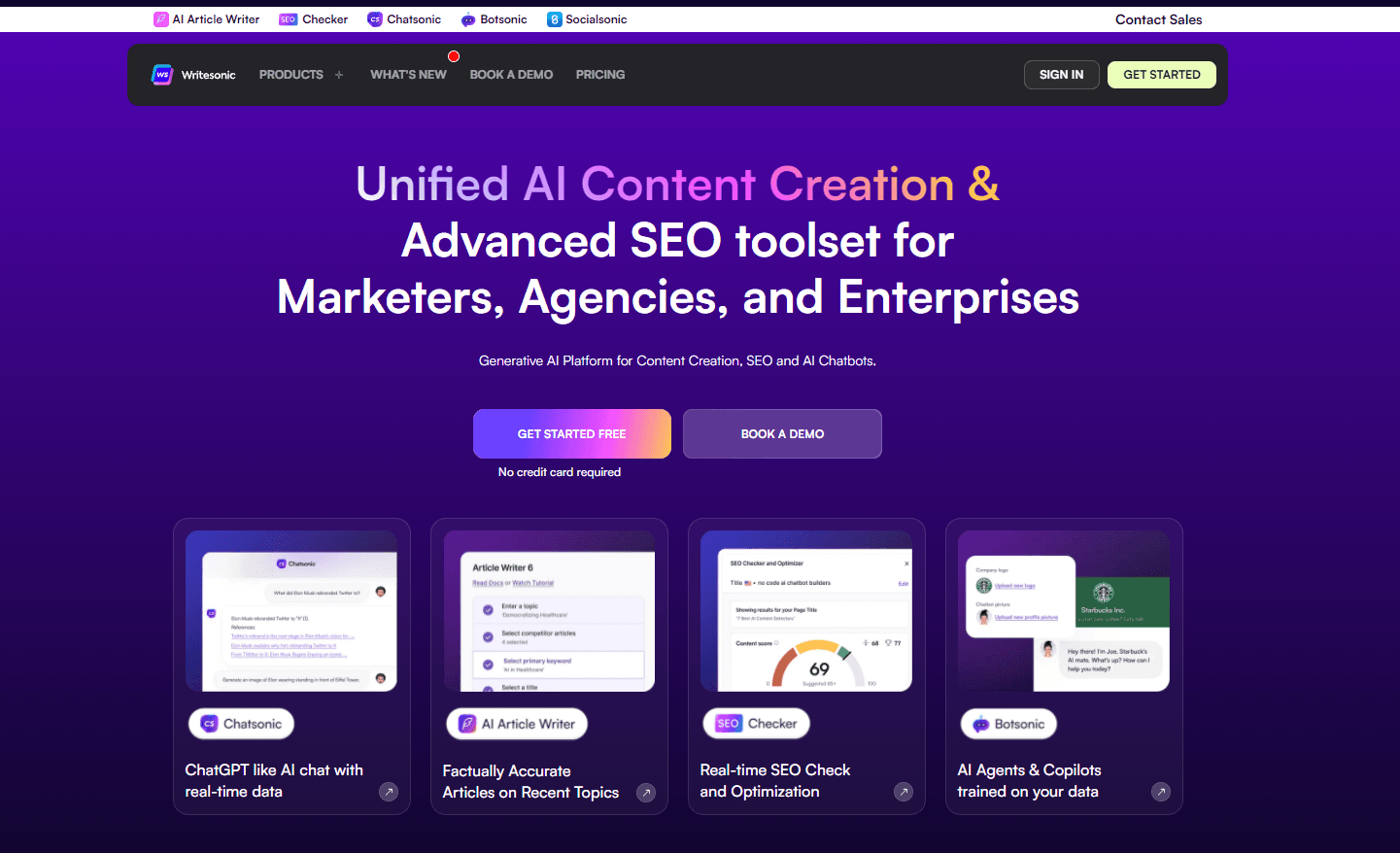
Writesonic started life in 2020 as an AI article writer and has since shifted its center of gravity. Today the product is best described as an AI search visibility platform, or GEO tool. It's built for the era when buyers ask ChatGPT, Perplexity, and Google AI Overviews for recommendations instead of scrolling ten blue links.
The core idea is simple. You connect your brand. The platform watches how AI engines describe you across 10 major platforms, and then it hands you a list of things to fix, ranked so you know what actually moves the needle first. Those fixes can be content, citations, or technical work. Writesonic runs the content side itself through an AI article writer that researches, writes, and adds citations before a human editor reviews the draft, so teams get a starting point that's far past a blank page.
The limits matter here. Tracking is only as good as the platforms it crawls. The AI article pipeline still produces drafts that need editing before they go live. Pricing also climbs fast once you move past the entry tier, which puts the full workflow out of reach for solo bloggers watching every dollar.
Getting Started
- Create an account on writesonic.com and start the 7-day trial. No credit card is required.
- Add your brand and the competitors you want to measure against.
- Pick the AI platforms to track, such as ChatGPT, Perplexity, and Google AI Overviews.
- Review your visibility report to see which prompts mention you and which skip you.
- Generate the AI articles and citations the Action Center recommends, then publish from the same dashboard.
Product Information
A quick look at Writesonic's pricing, supported platforms, and performance.
Best for
The users, tasks, and scenarios where this tool fits best.
Users
- Marketing teams at growth-stage companies
- SEO and content agencies
- Content leads who also handle strategy
- Solo creators and bloggers
Tasks
- Tracking brand mentions across AI assistants
- Generating long-form SEO articles
- Fixing visibility gaps
- Monitoring AI crawler traffic
Scenarios
- A product launch where you want to know within days whether AI engines picked up the news.
- Quarterly SEO planning when you need to justify content spend with pipeline and traffic numbers.
- Agency reporting cycles where you have to show clients concrete movement in AI answers.
- Competitive research before a rebrand, when you want a snapshot of who AI currently recommends in your niche.
Key features
AI Search Visibility Tracking
Writesonic monitors how a brand appears across 10 AI platforms, including ChatGPT, Perplexity, Gemini, and Google AI Overviews. It reports share of voice, citations, sentiment, and position against named competitors, which is the kind of data a standard rank tracker simply never produces because it only measures blue links and not the synthesized answers buyers now read. That's the whole point. The point is answering a question traditional rank trackers can't. When someone asks an AI what to buy, does your name come up?
AI Article Writer
The article pipeline isn't a thin wrapper around a chat model. It's a full AI content writing tool, running 100+ steps per article, handling research, outline, drafting, and citation insertion, then writing in a defined brand voice. Drafts still need editing, but the heavy lifting of sourcing and structure happens first.
Action Center and Agentic Workflows
Instead of dumping a dashboard of numbers that nobody on the team has time to decode, Writesonic sorts the work by impact and ranks each item so you always know which fix to tackle first. Then it runs parts of that work itself. That means drafting an article, suggesting citations, or flagging pages AI bots can't read. For lean teams, this is the difference between a report and a to-do list that actually gets done.
AI Agent Analytics
Server-side tracking records every AI crawler visit and human click-through from AI answers, giving you a picture that client-side analytics tools usually miss entirely because the bots never execute JavaScript. It shows which pages return errors to AI bots. It also shows which content gets pulled into answers. No JavaScript needed, so you catch bots that never run scripts.
Brand Transcripts and Reporting
White-label reports and brand transparency controls suit agencies and enterprise teams that need to show clients or leadership what changed and why, backed by numbers rather than vague claims. The reporting pulls visibility, citations, and traffic into one view rather than scattering them across separate tools that never quite line up.
API Access
Writesonic exposes an API for teams that want to pull visibility data or trigger content workflows programmatically. It lets you wire AI search data into your own dashboards. Or automate article generation as part of a larger pipeline.
Pros and cons
Pros
- Combines AI visibility tracking and AI article writing in one platform, so you don't bolt two tools together.
- Tracks 10 AI platforms rather than just one, which matters as buyers split across ChatGPT, Gemini, and Perplexity.
- Server-side AI crawler analytics catch bot visits that JavaScript-based tools miss.
- 7-day free trial needs no credit card, so testing the workflow costs nothing but time.
- White-label reporting and bulk credits make it usable for agency client work.
Cons
- No permanent free plan, so anyone testing it long term pays once the trial ends.
- The full visibility workflow sits in higher tiers, and entry pricing leaves smaller budgets priced out. Expect to pay up.
- AI articles still need a human editor, so it adds a drafting step rather than replacing the writing team.
- Tracking is limited to the platforms Writesonic crawls, so niche engines may fall outside the data.
Frequently asked questions
It tracks how your brand shows up in AI answers across 10 platforms. Then it helps you fix the gaps with AI-written content, citations, and technical work. It began as an AI article writer and has grown into a broader AI search visibility platform.
Related content
Explore related tools, skills, and articles for Writesonic.
Writesonic Alternatives

Emailwritr
Emailwritr · Writing · MarketingEmailwritr is an AI email copywriting tool built for affiliates, course creators, and online businesses that want more revenue from the list they already own. Instead of blank pages or generic chatbot prompts, this AI email writer generates welcome sequences, launch campaigns, cart recovery emails, and promo series from frameworks modeled on well-known direct-response copywriters. You connect your autoresponder, answer a few questions about your offer, and it writes the copy for you.

Swms
Swms AI · Writing · Productivity · BusinessSwms is an AI safety compliance tool that turns a plain description of a job into ready-to-use safety documents. Describe your project, trade, and known hazards, and it writes a safe work method statement, job hazard analysis, safe work procedure, RAMS, or safety data sheet in seconds. It also ships with Oscar, a chat assistant that answers workplace safety questions in any language. Teams in construction, mining, transport, and warehousing use it to cut the paperwork that usually eats into a workday.

Prosp
Prosp · Writing · Voice & Language · MarketingProsp is an AI LinkedIn outreach tool built for agencies and sales teams, and it writes the message and the voice note in your own voice for each prospect so they actually reply. You connect your accounts, find leads, and let the AI draft and send personalized messages at scale, all from one inbox. It's built for people running outbound at volume. That's the whole pitch. Every touchpoint still has to feel human.