

Yuma Sales AI
Yuma AI · Marketing · Business
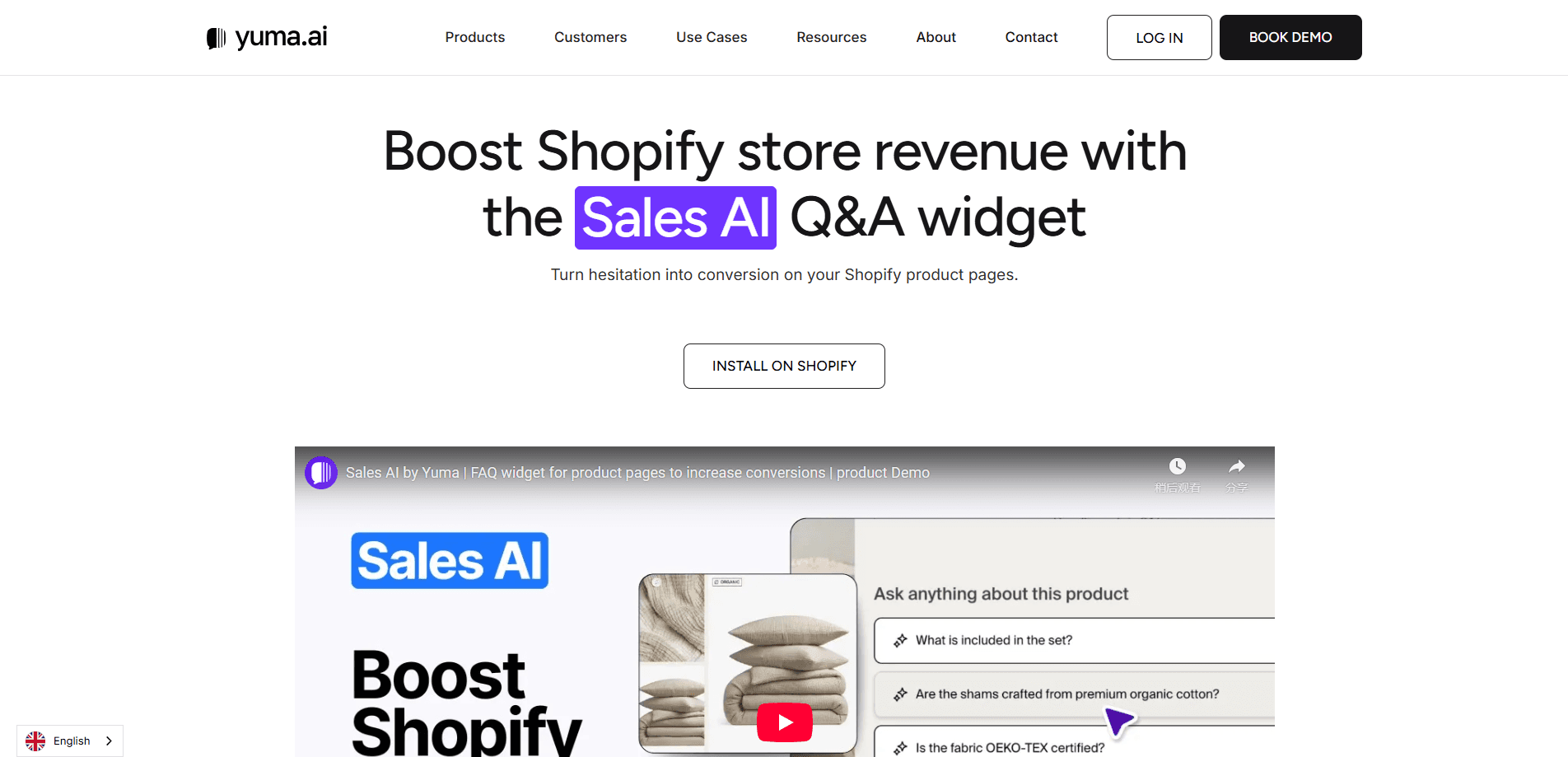
Yuma Sales AI is an AI shopping agent for Shopify stores that steps in while a shopper browses, answering product questions in real time and nudging them toward checkout. It recommends items based on live browsing behavior, recovers abandoned carts with timely follow-ups, and quietly adjusts product pages to fit each visitor. Yuma says the widget lifts revenue per visitor by up to 18% in A/B tests. It's built for e-commerce teams that want more conversions without hiring more staff to chat with every visitor.
About Yuma Sales AI
What Is Yuma Sales AI
Yuma Sales AI is an AI sales assistant that runs on a Shopify storefront. Think of it as a Shopify AI widget with a brain: it watches how a shopper moves through the site, then reacts in the moment. It surfaces a product that matches their taste. It quotes a review right where doubt creeps in. It offers a discount code when someone stalls near checkout. The idea is to sell the way a good shop assistant does, by reading the person in front of you rather than shouting the same pitch at everyone.
It sits in a busy field. Dozens of Shopify apps promise AI-upsells or chatbots, and plenty of them are little more than a rule engine with a nice skin. Yuma's angle is behavior-driven personalization that changes the page itself. So what sets it apart? That kind of personalization is harder to build and harder to fake, and it's why the company leans on A/B-verified lift numbers instead of generic promises. Yuma also sells a separate Support AI agent for handling tickets, and the two products come from the same platform and data model.
The catch is what you'd expect from an enterprise-flavored tool. Yuma Sales AI is built for merchants with real traffic and real revenue, not a hobby store doing a few orders a month. It's not cheap either. And it wants to run on your live store, not a sandbox. Onboarding runs through Yuma's team, the price is quoted per account, and it assumes you already run a Shopify store that's worth improving.
Getting Started
- Book a demo or request access through the Yuma site, since Sales AI isn't a self-serve install from the Shopify App Store.
- Connect your Shopify store and review how Yuma reads your product catalog, collections, and existing reviews.
- Work with Yuma's team to set brand voice, guardrails, and which interventions you want live first.
- Launch on a controlled share of traffic and compare the A/B results against your baseline before scaling up.
Product Information
A quick look at Yuma Sales AI's pricing, supported platforms, and performance.
Best for
The users, tasks, and scenarios where this tool fits best.
Users
- Shopify store owners with steady traffic
- E-commerce growth and CRO teams
- Brands without a chat team
Tasks
- Answering product questions
- Recovering abandoned carts
- Personalizing recommendations
Scenarios
- A shopper hesitates on a high-ticket item
- A visitor browses a category without buying
- A full cart sits idle overnight
Key features
Real-Time Product Q&A
The widget answers shopper questions about products directly on the page, so people don't have to leave the site or wait for an email reply. It pulls from your catalog and product details, which keeps answers grounded rather than invented. For a store selling anything with sizing, fit, or compatibility questions, that removes a common reason to bounce.
Behavior-Based Recommendations
Smart Recommendations and Next-Best Buy read what a visitor browsed, clicked, and lingered on, then suggest items that fit that behavior. The suggestions adapt as the session goes, so a shopper looking at running shoes sees shoes, not a generic bestseller list. Yuma says tailoring picks in the moment pushes carts toward higher value.
Cart Recovery
Cart Saver watches for abandoned carts and sends timely messages or notifications to bring shoppers back. Timing is everything. Yuma ties the nudge to the actual moment someone leaves items behind rather than blasting a fixed-schedule email. Recovering even a slice of abandoned carts tends to pay for the tool on its own.
Adaptive UI
Adaptive UI changes the storefront itself based on each visitor's behavior, adjusting layouts, visuals, and product listings in real time. Color schemes and entire sections can shift instantly. It's the most ambitious piece of the product. No two shoppers see the same page.
Segment Builder and Affinity Nudges
Segment Builder groups shoppers automatically by how they browse, click, and linger, which lets you target promotions at the right lists. Affinity Nudges then deliver pop-ups or brief messages that point people toward product details, recommendations, or limited-time deals. Together they turn anonymous traffic into something you can actually act on.
Safety Guard
Safety Guard runs every intervention through multilayer validation before it goes live, checking product picks, nudges, and UI changes for accuracy, brand voice, legal wording, and rule limits. Anything off-spec gets paused and logged. If you've ever watched a support bot invent a refund policy, this is the feature you care about most.
Custom Coupon Generator
At the moment a shopper looks ready to leave, Custom Coupon Generator issues a personalized discount code to tip them toward buying. It can also nudge order value by timing a small incentive, like free shipping, when it's most likely to matter. Used carefully, it's a targeted save rather than a blanket discount.
Pros and cons
Pros
- Reacts to live browsing behavior instead of showing every visitor the same pitch.
- Combines several selling jobs in one tool, from product Q&A to cart recovery and upsells.
- Reports A/B-tested lift, so performance is measured against a baseline rather than claimed.
- Safety Guard checks interventions before launch, which lowers the risk of a rogue message.
Cons
- No public pricing and no self-serve signup, so you have to talk to sales to get started.
- Only works on Shopify, which rules out WooCommerce, BigCommerce, and custom storefronts.
- Needs decent traffic and revenue to be worthwhile, so small stores likely won't see a return.
- Adaptive UI rewrites parts of your site automatically, which some brands won't want.
Frequently asked questions
It's an AI shopping agent that runs on a Shopify store and helps visitors buy. It answers product questions, recommends items based on browsing behavior, recovers abandoned carts, and adjusts parts of the page to fit each shopper. The goal is more conversions from the traffic your store already gets.
Related content
Explore related tools, skills, and articles for Yuma Sales AI.
Yuma Sales AI Alternatives

Emailwritr
Emailwritr · Writing · MarketingEmailwritr is an AI email copywriting tool built for affiliates, course creators, and online businesses that want more revenue from the list they already own. Instead of blank pages or generic chatbot prompts, this AI email writer generates welcome sequences, launch campaigns, cart recovery emails, and promo series from frameworks modeled on well-known direct-response copywriters. You connect your autoresponder, answer a few questions about your offer, and it writes the copy for you.

Prosp
Prosp · Writing · Voice & Language · MarketingProsp is an AI LinkedIn outreach tool built for agencies and sales teams, and it writes the message and the voice note in your own voice for each prospect so they actually reply. You connect your accounts, find leads, and let the AI draft and send personalized messages at scale, all from one inbox. It's built for people running outbound at volume. That's the whole pitch. Every touchpoint still has to feel human.

On Model
On Model · Image · MarketingOn Model is an AI fashion model tool that places your clothing on virtual models so online stores can get on-model product photos without booking a photoshoot. It runs as a Shopify app, letting you swap the model in an existing image, change backgrounds, and generate faces for cropped or headless shots. The goal is simple: match your product photos to your customers and stand out from competitors using the same supplier images.