

Zillion
Zillion · Other
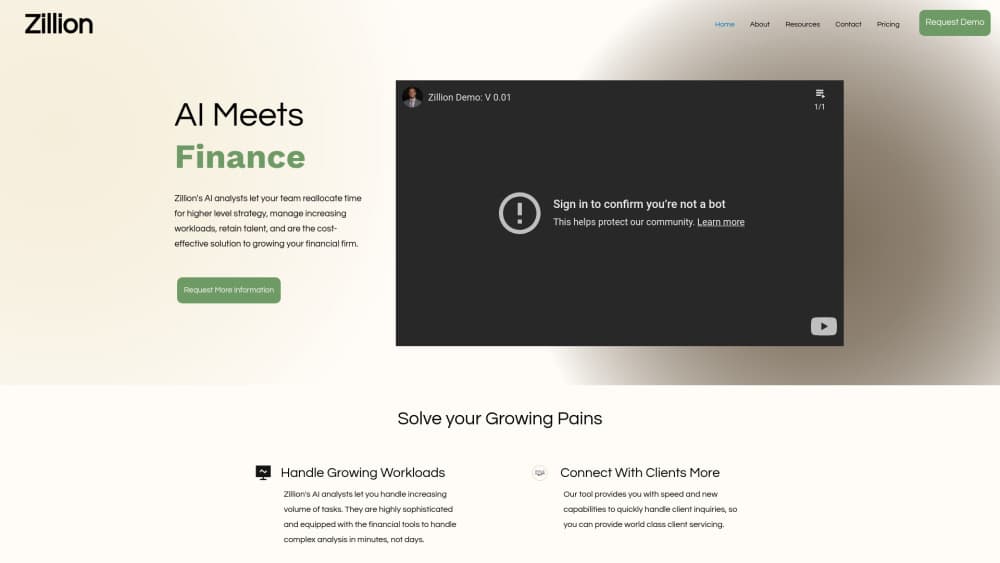
Zillion supplies AI analysts to financial firms. The agents read filings, pull market and economic data, and draft models, reports, and decks, with plans from $25 a month.
About Zillion
What Is Zillion
Zillion is financial analysis software built around a simple idea: give an investment team a junior analyst that never sleeps. You ask a question in plain language, and the system works through filings, earnings material, market data, and your own documents before writing an answer with sources attached.
The product targets the grind at the bottom of finance work. Pulling comparables, skimming a 200 page 10-K, rebuilding a three statement model, and formatting a deck eat hours that partners would rather spend on judgment. Zillion handles those first passes and leaves the review to a person.
Its data coverage is the part that separates it from a general chatbot. The platform reaches 12,000+ issuers and 40+ economic datasets, and firms can wire in alternative data of their own. The catch is scope. This is a research and drafting tool for finance professionals, not a consumer investing app, and the output still needs a human check before it goes to a client.
Getting Started
- Request access on the Zillion site and pick a plan. The Lite and Executive tiers cover individuals and small teams, while the Enterprise tier opens custom data and workflow work.
- Connect the material you work from. Upload filings, reports, and spreadsheets, or point the analyst at the built-in issuer and economic data.
- Ask for the analysis in a chat. A prompt like "compare margin trends for three peers over five years" returns a written answer, a table, and the sources behind each figure.
- Turn the answer into a deliverable. Export a spreadsheet, a model, or a slide deck, then edit the parts that need your own view.
- Set up repeat work. Teams on the Enterprise plan can codify their own methodology so recurring reports follow the same structure every quarter.
Product Information
A quick look at Zillion's pricing, supported platforms, and performance.
Best for
The users, tasks, and scenarios where this tool fits best.
Users
- Equity and credit analysts
- Boutique investment firms
- Portfolio managers and partners
Tasks
- Initial due diligence
- Comparable company analysis
- Earnings season triage
- Client reporting
Scenarios
- A two person research shop covering 40 names
- A deal team working through a short deadline
- A firm with its own scoring method
Key features
AI Analysts With Finance Domain Knowledge
Each analyst is tuned for finance work rather than general chat. It understands the shape of a 10-K, the difference between adjusted and reported earnings, and the way a valuation table is normally laid out. That grounding cuts the back and forth you get when a general model misreads a filing.
Document Review at Scale
Upload annual reports, research notes, credit agreements, or a full data room and ask questions across all of it. The system summarizes long documents, extracts specific figures, and compares language between periods. For diligence, this is the feature that saves the most hours.
Issuer and Economic Data Coverage
Zillion connects to 12,000+ issuers and 40+ economic datasets, so an analysis can mix company figures with rates, inflation, and sector data. Firms can add their own alternative datasets on top. The value shows up when you need a quick read on how a business fares against the macro backdrop.
Models, Spreadsheets, and Decks
Answers don't stay in the chat. The platform produces spreadsheets, financial models, and PowerPoint output that you can open and edit in the tools your team already uses. Formatting is handled, and the assumptions stay visible for review.
Custom Methodology
Every firm has its own way of scoring a company or framing a recommendation. Enterprise customers can encode that method, along with custom data sources and automated workflows, so the output matches house style instead of a generic template.
Citations and Conservative Answers
The analyst cites the source behind its figures, and it says when it lacks the information to answer. That matters more in finance than raw speed. A wrong number presented with confidence costs more than a slow, honest "not in the documents."
Pros and cons
Pros
- Fast first pass on document review, which is where junior finance work usually stalls.
- Data coverage broad enough for peer analysis without a separate market data subscription.
- Output arrives as editable spreadsheets, models, and slides rather than chat text you have to rebuild.
- Enterprise customization lets a firm keep its own methodology and alternative data.
- Pricing starts low enough for an individual analyst to test on real work.
Cons
- No public API, so teams can't wire Zillion into an internal system or a custom app.
- The product is built for finance, which means other departments get little value from a seat.
- Answers still need a human check, and a reviewer who doesn't know the filings can miss a plausible but wrong figure.
- Public information on the roadmap and recent releases is thin, so buyers should ask for a demo before committing a team.
Frequently asked questions
It acts as an AI analyst for financial firms. You ask a question, and it reads filings and data, runs the analysis, and returns an answer with sources, plus a spreadsheet or deck when you need one.
Related content
Explore related tools, skills, and articles for Zillion.
Zillion Alternatives

Odyssey 3
Odyssey · OtherOdyssey-3 is Odyssey's foundation world model. It simulates physics in real time, turns a prompt into an interactive environment, and adapts to robots, cars and games.

JarvisCore
Prescott Data · Coding · Productivity · OtherJarvisCore is an open source Python runtime where AI agents work as equal peers on an agent mesh, claim tasks from a shared ledger, and reach external services through a zero-trust broker.
Clef
Cloudflare · Business · OtherClef is Cloudflare's open-source decision model for Workers AI. It returns calibrated probabilities for typed questions, not generated text, so agents can classify, route, and act fast.