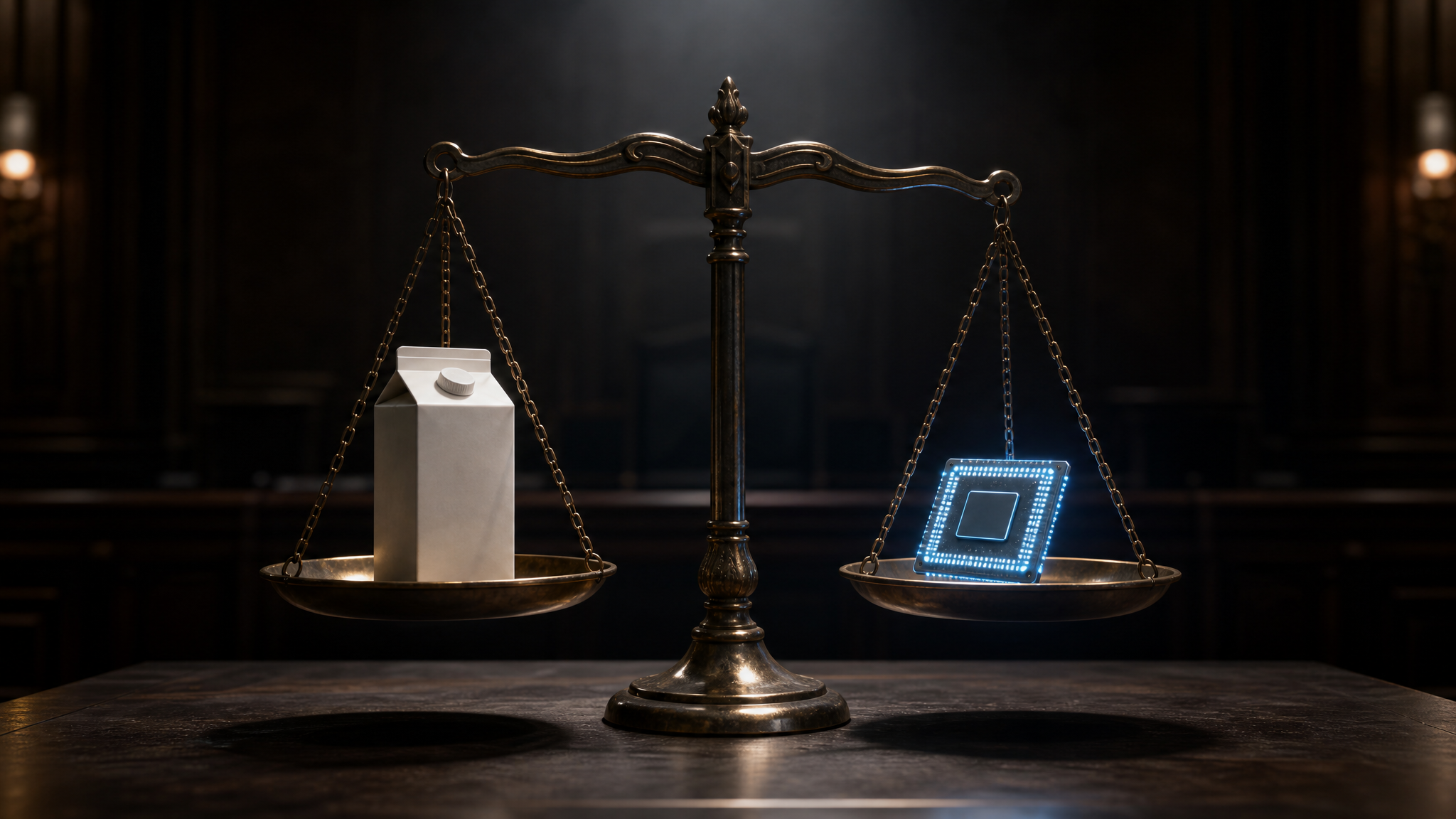
A carton of milk gets more safety rules than an AI model, Microsoft's president says. He wants binding global oversight, and he's making the case while Washington pushes the other way.
What Brad Smith Said About AI and Safety Rules
Microsoft president Brad Smith told the BBC that AI operates under less safety oversight than everyday products. His comparison landed on milk and washing machines, both of which face checks and rules that AI, in his account, doesn't.
Smith's argument is that regulators have spent decades setting standards for food and appliances, and that AI has arrived without an equivalent framework. He called for a unified, global approach to AI regulation rather than a patchwork of national rules.
The timing makes the remark pointed. Smith made the case as the Trump administration is pressing for industry self-regulation and arguing that heavy rules would hurt US firms in a race with China, according to reporting on his comments.
The Rules Smith Wants for AI
Smith's proposal covers three areas. The first is transparent reporting when AI systems cause incidents, so problems surface instead of staying hidden. The second is independent evaluation of AI systems by outside parties. The third is a mechanism to keep advanced AI from slipping out of human control.
He also backed one concrete piece of lawmaking: requiring companies to notify victims when a runaway AI program intrudes on their systems. That turns a vague safety concern into something with a legal trigger.
Smith said Microsoft is willing to sign onto these commitments. That pledge comes from a company with a large stake in how the rules get written, so it's worth reading as both a position and a strategy.
The case Smith is making
- AI faces far lighter oversight than food or appliances
- Incident reporting and outside evaluation should be required
- Rules should be global, not country by country
The counterargument in Washington
- Heavy regulation could slow US firms against Chinese rivals
- Industry self-regulation can move faster than legislation
- Written rules may lag a technology that changes monthly
Why the Milk and Washing Machine Comparison Matters
The metaphor does the work of simplifying a dense policy debate. Most people don't know how AI safety rules are structured, but they do understand that a washing machine carries safety certification and a milk carton carries an inspection date. Framing AI against those benchmarks makes the gap feel obvious.
The comparison also serves a strategic purpose. By naming products that already face regulation, Smith avoids arguing for rules from scratch. He's borrowing the credibility of rules people already accept.
There's a fair objection here. A washing machine is a finished product that behaves the same way every time it runs. An AI model can be updated overnight and used for entirely new tasks. The comparison lands emotionally but skips the reason AI is hard to regulate in the first place.
Where Microsoft's Position Sits in the Policy Fight
Smith's stance puts Microsoft on the side of regulation at a moment when the industry's loudest voice leans the other way. That split runs through the AI sector, and it isn't clean along company lines.
For developers and businesses building on AI, the practical question is what any of this changes on the ground. Transparent incident reporting would mean more visibility into when systems fail. Independent evaluation would add a checkpoint before deployment. Neither is in place today.
Self-regulation, the administration's preference, moves faster but depends on companies policing themselves. Smith's proposal would make some of that behavior mandatory, which is the core disagreement.
What to Watch on AI Regulation
The near-term signal is whether Smith's push turns into anything with teeth, either through legislation or through voluntary pledges that companies actually sign. So which other firms line up behind Microsoft on incident reporting and outside evaluation? That's the test to watch.
There's also the question of scope. A global framework is easy to call for and hard to build, especially when major governments disagree on the tradeoff between safety and competitiveness. Until that gap closes, the milk carton will keep its rules and the model will keep running mostly on trust.