

4o Image API
4oimageapi.io · Image
4o Image API is a REST service from 4oimageapi.io that generates and edits images with OpenAI's GPT-image-1 model. It takes text prompts or up to five reference images and returns PNG, JPEG, or WebP.
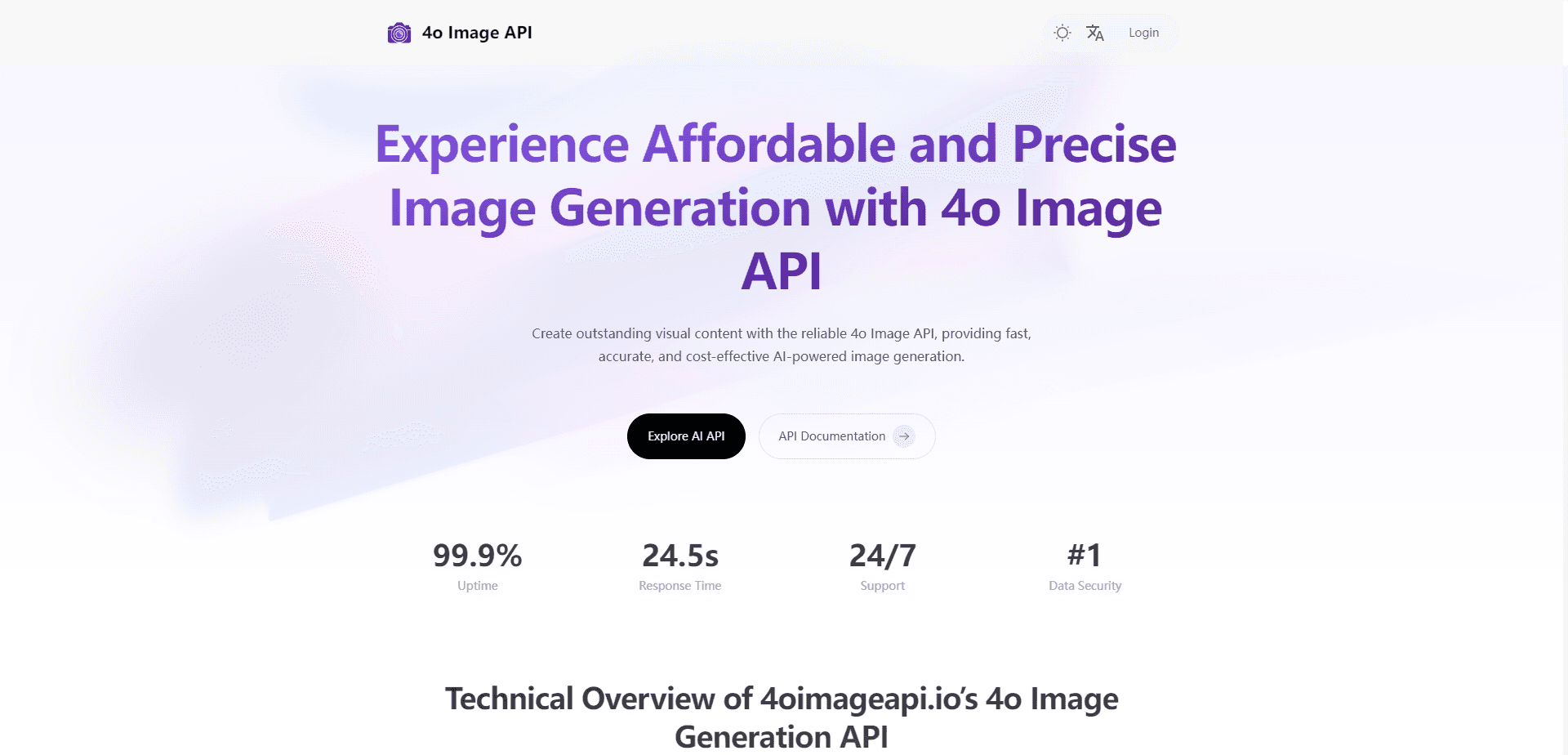
About 4o Image API
What Is 4o Image API
4o Image API is a hosted AI image generation API built on GPT-image-1, the model behind OpenAI's GPT-4o image features. You send a prompt or a set of reference images to a REST endpoint, and the service returns finished visuals through a callback or a polling endpoint.
The pitch is convenience. Instead of managing your own OpenAI account, verification, and token accounting, you sign up, grab a key, and call one endpoint. Pricing is per request rather than per token, which makes budgeting easier for teams that ship a steady volume of images.
There's a real tradeoff in that setup. You're paying a reseller layer on top of a model you could reach directly, so costs and latency depend on the intermediary rather than OpenAI. And support, uptime, and data handling now run through a third party, not the model maker.
Getting Started
- Create an account at 4oimageapi.io and open the API Key management page.
- Generate a personal API key and store it somewhere secure, since calls authenticate with a Bearer token.
- Send a POST request to the generation endpoint with your prompt, an optional reference image list, and a size such as 1:1, 3:2, or 2:3.
- Supply a callback URL or poll the record-info endpoint to check task status until it returns a success state.
- Download the finished image, which stays available for 14 days before it's cleared.
Product Information
A quick look at 4o Image API's pricing, supported platforms, and performance.
Best for
The users, tasks, and scenarios where this tool fits best.
Users
- Developers without an OpenAI account
- Startups shipping visual features
- Marketing and design teams
Tasks
- Text-to-image generation
- Editing from reference images
- Product visualization
- Infographics and text-heavy visuals
Scenarios
- A solo developer adding image generation to a side project without an OpenAI contract.
- A marketing team that needs campaign visuals on a deadline and no design backlog.
- A game studio blocking out character and environment concepts faster than hand sketching allows.
Key features
Text-to-Image Generation
The core endpoint turns a written prompt into a finished image. You describe the scene, mood, and style, and the model returns a visual you can use directly or iterate on. It's the entry point for most users.
Reference Image Editing
You can pass up to five reference images alongside a prompt. The model then restyles, merges, or adjusts the inputs instead of working from text alone. For style transfer and product composites, this is the feature that matters most.
Style Transformation
The service supports a wide range of looks, from photorealistic photography to hand-drawn illustration. That range lets one integration serve very different projects, whether it's a brand campaign or a game concept board.
Text Rendering in Images
GPT-image-1 handles lettering better than older generators, so infographics, signs, and invitations come out with readable text. For anyone who's wrestled with garbled logos from earlier tools, this is a genuine step up.
Asynchronous Task Handling
Generation runs as a background job. You submit a request, get a task id, and either receive a callback or poll for status until it reports success. That design suits batch jobs and high-volume pipelines better than a blocking call would.
Flexible Output Formats
Images come back as PNG, JPEG, or WebP, and you can pick aspect ratios like 1:1, 3:2, or 2:3. The format options cover web delivery and print without a separate conversion step.
Account and Usage Management
The API includes endpoints for checking credit balance, usage quotas, and access settings. Teams can monitor spend from the same service they generate with, instead of reconciling two dashboards.
Pros and cons
Pros
- Reaches GPT-image-1 without an OpenAI organization verification step, which removes a common signup blocker.
- Per-request pricing and credit tracking make costs easier to forecast than token-based billing.
- Supports both text prompts and up to five reference images, covering generation and editing in one service.
- Asynchronous processing with callbacks fits batch and high-volume workflows.
- Documents PNG, JPEG, and WebP output with selectable aspect ratios, so assets are ready for web or print.
Cons
- It's a reseller layer over a model you can call directly, so you pay an intermediary markup and inherit its uptime.
- Support, data handling, and security now run through a third party rather than OpenAI, which matters if your images touch sensitive material.
- Generated images are stored for only 14 days, so anything you want to keep has to be downloaded promptly.
- Latency depends on the intermediary, and complex prompts can take a while to return, which is a problem for real-time interfaces.
Frequently asked questions
It's used to generate and edit images through a REST API powered by OpenAI's GPT-image-1 model. Developers call it to add text-to-image, reference editing, and style transfer to their own apps without building an OpenAI integration themselves.
Related content
Explore related tools, skills, and articles for 4o Image API.
4o Image API Alternatives

Google EmbeddingGemma 2
Google DeepMind · Writing · Image · CodingGoogle EmbeddingGemma 2 is a 740M-parameter open model that turns text, code, images, audio, and video frames into vectors in one 768-dimension space, running on phones and laptops.

Tractionwave
TractionWave · Image · MarketingTractionWave is an AI attention heatmap tool for static ads. Upload a PNG or JPG and it returns predicted attention, ranked hotspots, and fixes before you spend budget.

Imejis.io
Imejis.io · Image · MarketingImejis.io is an AI design studio for agents and marketing teams. Describe an image in plain words, and it writes the copy, builds the layout, reflows it to every size, then exports a finished file.