

Amodeling
Amodeling · Image
Amodeling is an AI platform that turns text descriptions and 2D images into 3D models, with printing and customization built in.
About Amodeling
What Is Amodeling
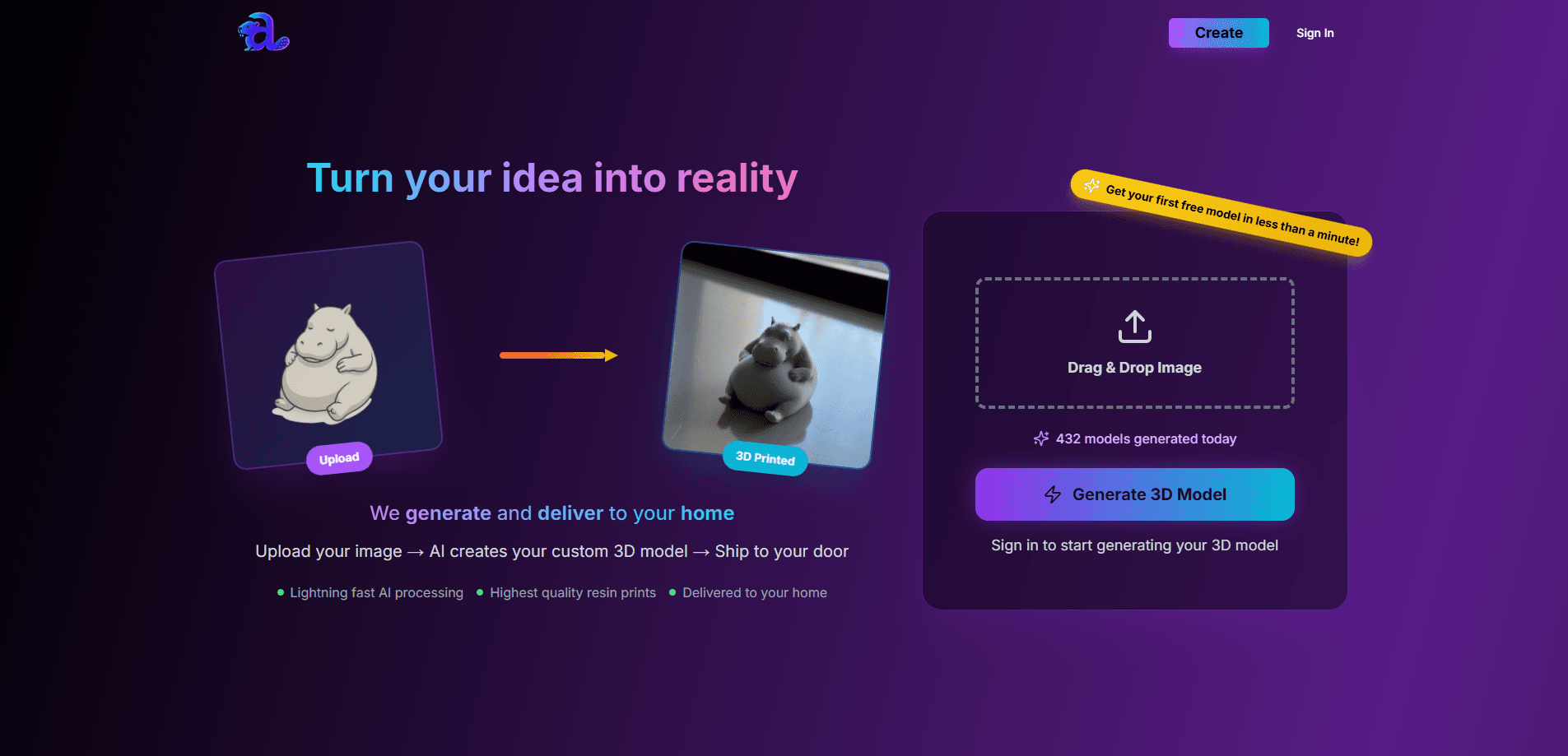
Amodeling is an AI-powered platform that generates 3D models from plain text descriptions and flat 2D images. The pitch is simple: describe what you want, or upload a picture, and the service builds a 3D asset you can adjust and send to print.
The product targets people who lack traditional 3D modeling skills. Instead of learning complex software, you work from a prompt or a reference image and let the platform handle geometry creation. That lowers the entry barrier for hobbyists, makers, and small studios that need quick assets.
The main limitation is transparency. The website shows a one-line description and redirects to a parked lander page, so there's no published pricing, no feature documentation, no supported file formats, and no accuracy data. Anyone weighing it should treat the promise as unverified until the product exposes real details.
Getting Started
- Go to the Amodeling website and review the stated promise of 3D generation from text and images.
- Prepare a clear text description or a clean 2D image to use as the source.
- Submit it through the platform to start generating a 3D model.
- Adjust the resulting model if the tools allow, checking shape and proportions.
- Send it to print or export it for further work if the options exist.
- Confirm supported formats and pricing before relying on Amodeling for real projects.
Product Information
A quick look at Amodeling's pricing, supported platforms, and performance.
Best for
The users, tasks, and scenarios where this tool fits best.
Users
- Beginners in 3D
- Makers and hobbyists
- Designers sketching ideas
Tasks
- Turning a description into a model
- Converting a 2D image to 3D
- Preparing files for printing
Scenarios
- Early idea testing
- Small batch prototyping
- Skill-free modeling
Key features
Text to 3D generation
The core promise is turning written descriptions into 3D models. You describe the object you want and the platform builds geometry from that text. It's aimed at users who think in words rather than in modeling commands.
Image to 3D conversion
Amodeling also takes 2D images as input and lifts them into three dimensions. That's useful when you have a reference picture but no starting mesh. The site doesn't state how many views or what image quality the conversion needs.
Customization
The platform mentions customization as part of the workflow, which suggests you can adjust a generated model after creation rather than accepting it as-is. The exact editing controls aren't documented on the site.
3D printing support
Printing is folded into the service, so the output is meant to be more than a viewport asset. If it works as described, you could move from idea to printed object in one tool. Compatibility with specific printers isn't confirmed.
Accessible to all skill levels
Amodeling positions itself for users of any skill level, which is the main draw. By removing manual modeling steps, it targets people who'd otherwise be shut out of 3D creation. What that means in practice depends on output quality, which isn't published.
Pros and cons
Pros
- Low skill barrier: text and image inputs mean you don't need modeling experience to start.
- Combined workflow: generation, customization, and printing in one platform is convenient if it holds up.
- Broad audience: the pitch speaks to beginners and casual users, not just professionals.
- Clear core idea: generating 3D from text and 2D images is easy to understand at a glance.
Cons
- Thin public information: the site is a parked page, so pricing, formats, and limits are unknown.
- Unverified claims: generation quality and print readiness have no published benchmarks.
- Uncertain availability: with no working site, it's unclear whether the product is live or still in development.
- No documented API: developers can't plan integrations without interface details.
Frequently asked questions
Amodeling is an AI platform that generates 3D models from text descriptions and 2D images, with customization and printing mentioned as part of the service.
Related content
Explore related tools, skills, and articles for Amodeling.
Amodeling Alternatives

Google EmbeddingGemma 2
Google DeepMind · Writing · Image · CodingGoogle EmbeddingGemma 2 is a 740M-parameter open model that turns text, code, images, audio, and video frames into vectors in one 768-dimension space, running on phones and laptops.

Tractionwave
TractionWave · Image · MarketingTractionWave is an AI attention heatmap tool for static ads. Upload a PNG or JPG and it returns predicted attention, ranked hotspots, and fixes before you spend budget.

Imejis.io
Imejis.io · Image · MarketingImejis.io is an AI design studio for agents and marketing teams. Describe an image in plain words, and it writes the copy, builds the layout, reflows it to every size, then exports a finished file.