

Attio
Attio · Productivity · Marketing
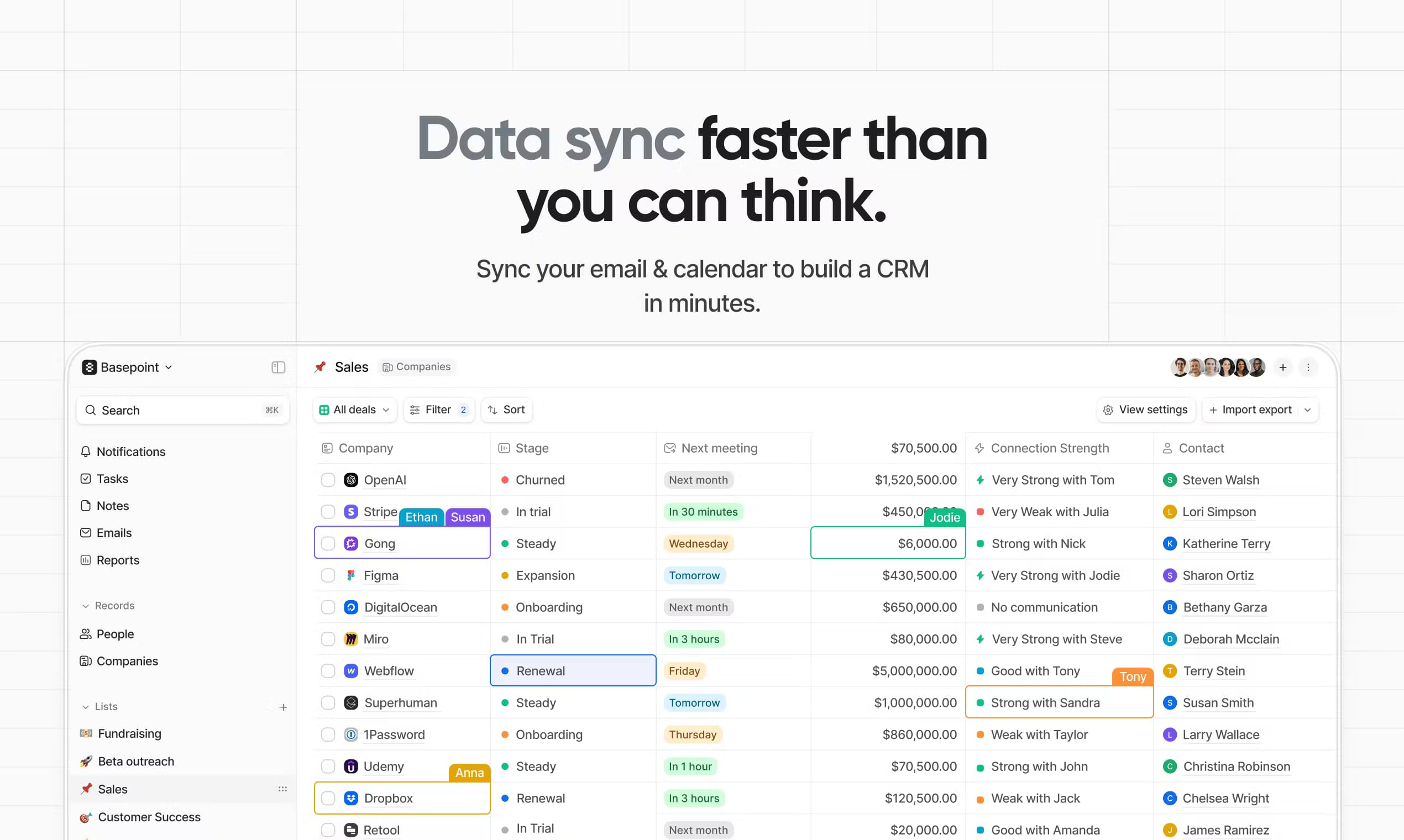
Attio is an AI CRM that builds a live contact database from your email and calendar, made for go-to-market teams.
About Attio
What Is Attio
Attio is a customizable CRM built around a flexible data model. Instead of forcing your sales process into a fixed set of fields, it lets you define objects, attributes, and views that match how your team actually sells. A high-growth PLG startup, a B2B marketplace, and a distributor selling globally can all shape the same workspace to fit them. That makes it a popular pick as a CRM for startups.
The pitch is that data should collect itself. Connect your inbox and calendar and Attio starts logging emails, calls, and meetings on its own, then enriches each contact with company and role details. You end up with a real-time database of everyone you talk to rather than a set of records someone forgot to update.
The catch is that all of this power has a learning curve. Attio doesn't look or behave like older CRMs, and teams coming from a rigid tool often need a few days to adjust. The AI features also run on credits, so heavy usage costs more. Most Attio pricing pages list the free tier first for a reason.
Getting Started
- Create a workspace at attio.com and sign in with your work email.
- Connect your inbox and calendar so Attio can sync emails, meetings, and contacts automatically.
- Adjust the data model: set up the objects, attributes, and pipeline stages that match your sales process.
- Add teammates and assign access permissions, then import any existing records from a CSV file.
- Set up workflows and let agents enrich and route new leads as they arrive.
Product Information
A quick look at Attio's pricing, supported platforms, and performance.
Best for
The users, tasks, and scenarios where this tool fits best.
Users
- Go-to-market teams
- Early-stage startups
- RevOps and sales leaders
Tasks
- Contact management
- Lead routing
- Forecasting
- Pipeline tracking
Scenarios
- A founder who wants a CRM that keeps itself current without weekly data entry.
- A scaling sales team replacing a rigid legacy CRM with something that fits its own process.
- A company connecting Slack, Notion, and its other tools so records stay in sync across the stack.
Key features
Live Contact Database
Attio builds its database from the email and calendar you already use. Every message, meeting, and call is logged against the right record automatically, so the workspace reflects reality without anyone updating it by hand. No manual entry. The more contacts you sync, the more useful the whole system becomes.
Custom Data Model
You define your own objects, attributes, and relationships instead of filling in fixed fields. A recruiting pipeline, a partner directory, and a deal flow can all live in one workspace. That's rare. This is the feature that separates Attio from CRMs that assume every business sells the same way.
AI Agents for Revenue Work
Agents handle research and busywork so reps can focus on closing. They prospect and reach out when buyers are looking, enrich and qualify each lead, and brief meetings before they start, which means a rep walks into a call already knowing who is on it and why the deal matters. Agents draft plays for renewals and upsells that you review and approve.
Ask Attio
Ask any revenue question in plain language and get an answer in seconds. Weekly forecast? Performance by rep? It pulls from the same facts your team and your agents work from, so nobody is guessing.
Workflows and Automations
Build workflows that run your own sales motions: enrich a new lead, score it, and route it to a rep without manual steps. Workflows and AI features share workspace credits, so you can scale usage up as you grow. Keep an eye on the meter.
Integrations and a Custom API
Attio connects to tools like Claude, Slack, Clay, Linear, and Notion, plus anything else your team runs on. A custom API lets developers integrate it with the rest of your stack when the built-in connections aren't enough. Setup is quick.
Pros and cons
Pros
- Builds its database automatically from email and calendar, so records stay current.
- Highly flexible data model that adapts to how a team actually sells.
- Free plan for individuals and small teams, plus a 14-day Pro trial.
- AI agents and workflows handle research, enrichment, and routing.
- Native Android and iOS apps, and a custom API for deeper integrations.
Cons
- The flexible setup has a real learning curve for teams used to rigid CRMs.
- AI and workflow features run on credits, so heavy use adds to the cost.
- Adding more seats raises the bill quickly on paid plans.
- Some advanced permissions and admin tools sit behind the Enterprise tier.
Frequently asked questions
Attio is a CRM for managing customer relationships. It keeps contacts, companies, deals, and conversations in one place, and uses AI agents to research leads, enrich data, and keep your pipeline moving.
Related content
Explore related tools, skills, and articles for Attio.
Attio Alternatives

Base Code
Base44 (Wix) · Coding · ProductivityBase Code is a shared cloud development environment from Base44. Teammates describe changes to an existing GitHub codebase in chat, preview them live and send them back as pull requests.

Knocket
Knocket (Tencent RTC team) · Productivity · Business · ChatbotKnocket is a free live chat and contact page tool that lets visitors message you from your website, app, or a shareable link, with every reply handled from Telegram or one inbox.

FloorGen
Vinit Kumar (FloorGen) · Productivity · China AIFloorGen is a browser-based floor plan maker that turns a sentence or a sketch into an editable 2D plan and a 3D walkthrough. Export to PDF, DXF or video, and draw without an account.