

AWEAR
AWEAR · AI Assistant
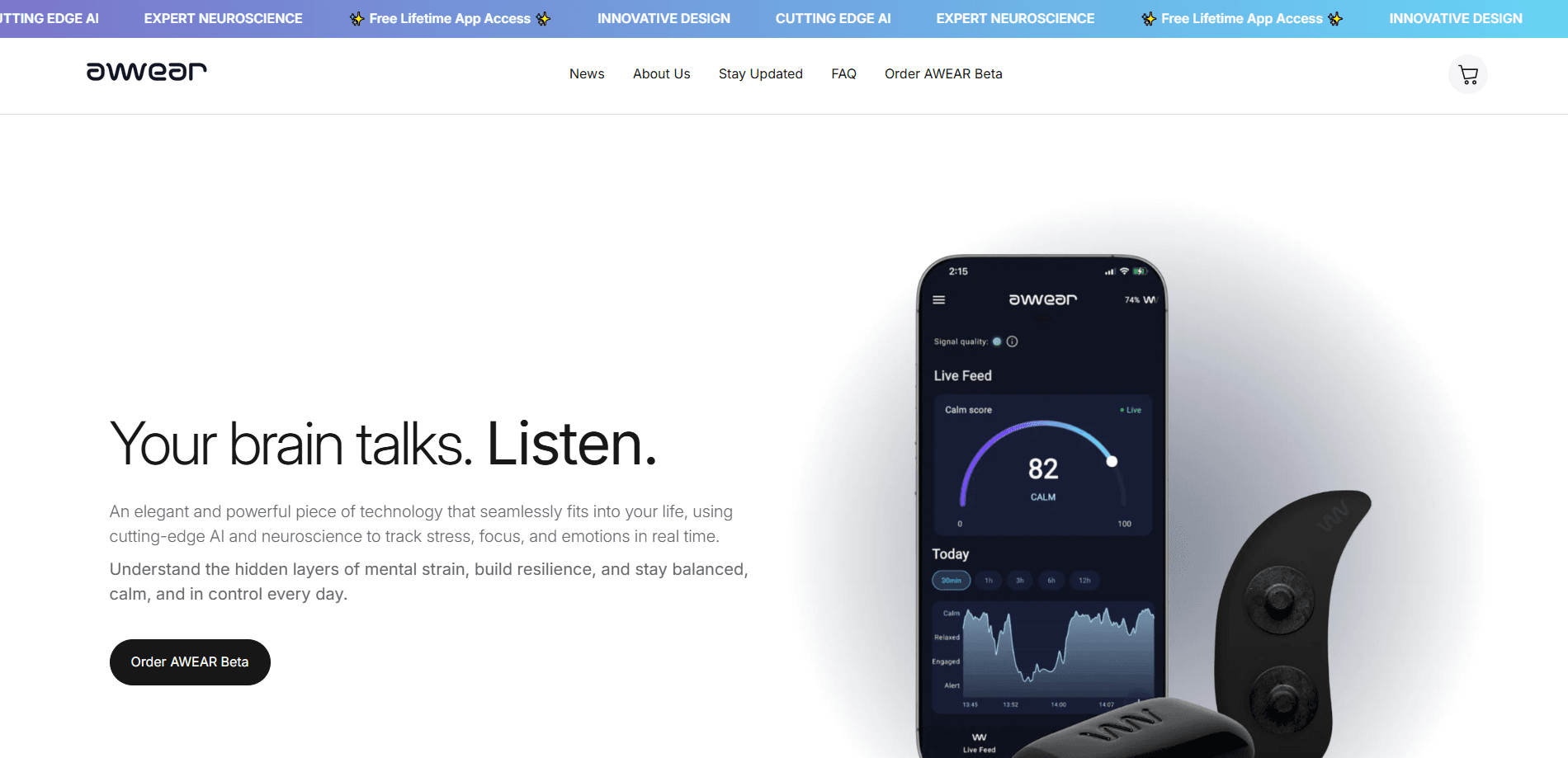
AWEAR is a discreet, behind-the-ear EEG wearable that uses AI to track stress, focus, and emotional load in real time. The device sits behind your ear like a small patch, reads brain activity through research-grade EEG sensors, and sends simple insights and gentle nudges to an iPhone app. Think of it as a brain activity tracker that flags rising stress. It's built for people who want to catch that stress before it builds, not after.
About AWEAR
What Is AWEAR
AWEAR is a wearable brain monitor from the team at aweartech.com. It measures electrical activity from your brain using EEG (electroencephalography), the same sensing method researchers have used for over 100 years, then runs those signals through AI to show changes in mental state. You get readings on stress, focus, mental load, and recovery rather than raw brainwave charts.
The pitch is narrow and honest: AWEAR doesn't try to replace your Apple Watch or Oura ring. Those track sleep, heart rate, and metabolic health. AWEAR targets mental wellness by reading the central nervous system directly instead of estimating stress after your body has already responded. The company states it's not a medical device and doesn't diagnose or treat anything.
There are real limits. The product is in beta, and the app is iPhone only right now. Android support is listed as coming soon, so Android users can't use it yet. Each adhesive patch lasts about four days, which means a steady routine of swapping patches and reordering refills if you want the sensor to keep working day after day. If you want a set-and-forget tracker, this isn't it.
Getting Started
- Order the AWEAR Beta kit, which bundles the device and a starter set of adhesive patches.
- Download the AWEAR app on iPhone and pair the device over Bluetooth.
- Attach a fresh patch and place the sensor behind your ear. It takes seconds and there are no buttons to press.
- Wear it through your day and check the app for real-time signals on stress and focus.
- Act on the nudges when stress rises, and review your wellness timeline over the following weeks to spot patterns.
Product Information
A quick look at AWEAR's pricing, supported platforms, and performance.
Best for
The users, tasks, and scenarios where this tool fits best.
Users
- High-stress professionals
- Mindfulness and meditation practitioners
- Biohackers and longevity enthusiasts
Tasks
- Real-time stress tracking
- Focus tracking and cognitive load monitoring
- Emotional regulation practice
- Habit and recovery review
Scenarios
- Back-to-back meeting days
- Gym and workout recovery
- Late-night wind-down
- Study and deep-focus sessions
Key features
Research-Grade Ear EEG
AWEAR reads brain activity through soft electrodes placed around the ear. It's the same EEG sensing that neuroscience and clinical research have relied on for over a century. The sensor sits behind the ear, so it stays out of the way at a desk, at home, or on the move. The company says it runs internal testing and validation with neuroscientists and clinicians.
Real-Time Stress Detection
Most wearables estimate stress after your body has already reacted. AWEAR reads the central nervous system directly, so it can flag emotional arousal as it builds. That timing is the whole point. It gives you a moment to pause instead of realizing hours later that you were wound up all afternoon.
AI Signal Analysis
Raw EEG means little to most people. So how does AWEAR make sense of it? Its AI turns those signals into plain insights about emotional arousal, cognitive load, focus, and recovery. You won't see brainwave charts. Just indicators you can read in a glance.
Gentle Nudges
When your mental state starts to shift, AWEAR sends a subtle alert, a light vibration with simple prompts, to pause, breathe, or reset. It's the difference between noticing a rough day and actually doing something about it in the moment, which is exactly the gap most stress trackers leave wide open.
Activity Correlation and Wellness Timeline
The app connects what you did with how your mind responded. Meetings, workouts, sleep, and relationships all show up as patterns over time, so you can see which habits help you stay balanced and which ones quietly pull you off course across a busy week.
Discreet, Button-Free Hardware
The device is glossy black, about the size of a fingertip, and has no screen and no buttons. It attaches with a soft adhesive patch behind the ear and is meant to be worn all day and forgotten. Each patch lasts about four days, and refill packs cover months of use.
Pros and cons
Pros
- Reads brain activity directly with EEG instead of estimating stress indirectly, which is a genuinely different approach from most wearables.
- Real-time alerts land before emotions take over, so there's a window to actually respond.
- Discreet, lightweight, and button-free, so it fits into a normal day without fuss.
- Backed by collaboration with researchers and clinicians from institutions like Stanford Medicine and UCSF.
Cons
- iPhone only. Android users can't use AWEAR until support ships.
- Patches last around four days each, so it needs regular swapping and reordering. Skip that and the device is useless.
- It's a beta product, so hardware and app features can still shift.
- It's a wellness device, not a medical one, so it can't diagnose or treat any condition.
- The hardware and patch refills are an ongoing cost, not a one-time purchase.
Frequently asked questions
AWEAR measures brain electrical activity with ear-worn EEG sensors, then uses AI to translate those signals into indicators of stress, focus, mental load, and recovery. You see simple insights in the app, not raw brainwave data.
Related content
Explore related tools, skills, and articles for AWEAR.
AWEAR Alternatives

Iplan AI
Iplan AI · Productivity · AI AssistantIplan AI is an AI travel planner that turns a few trip details into a full day-by-day itinerary in seconds. You answer questions about your destination, interests, budget, and travel companions, and the tool builds a plan you can edit, share, and carry with you on any device. It targets travelers who want a solid draft without spending hours in spreadsheets and browser tabs. Think of it as an itinerary generator that does the tedious part for you.

Screenhelp
Screenhelp · Productivity · AI AssistantScreenhelp is an AI screen assistant that turns a single keyboard shortcut into real-time help. You press Ctrl+Shift+Space, it captures what's on your screen, and it streams an answer into a private panel in about two seconds. Think of it as an AI screenshot helper you trigger on demand. It runs on Mac, Windows, and the web, starts free with 30 answers a month, and stays invisible during screen sharing on Zoom, Teams, and Google Meet.
Rainbow
Rainbow · AI AssistantRainbow is an AI weather forecast app built around short-term precipitation nowcasting. Its engine pushes min-by-min rain and snow predictions up to four hours ahead, blending live satellite and radar feeds into hyperlocal forecasts. The app adds live rain radar, a seven-day outlook, precipitation alerts, home-screen widgets, and a hurricane tracker, and it runs on both Android and iOS with a free tier plus paid upgrades.