

Besimple AI
Besimple AI · Coding
Besimple AI is a data research lab that licenses real conversational audio to train speech and omni models, pairing vetted datasets with benchmarks on where voice systems fail.
About Besimple AI
What Is Besimple AI
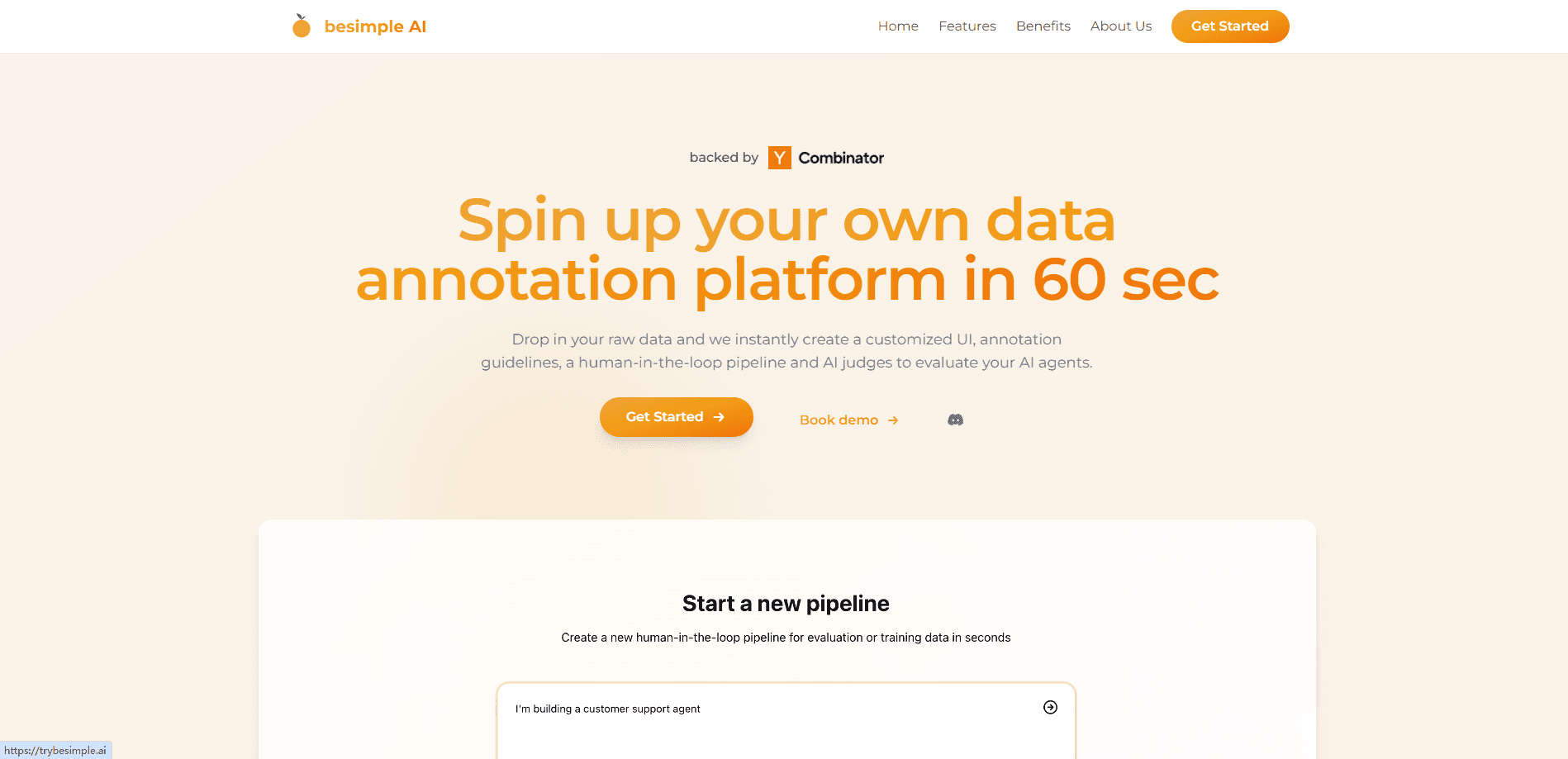
Besimple AI is a Y Combinator-backed data research lab that sells licensed conversational audio for training speech and omni models. Instead of scraping unlicensed clips, besimple.ai runs a platform where a vetted network of contributors records real conversations, and those recordings get delivered as training data. The company positions itself around one claim: ethically sourced, licensed audio that arrives in about 48 hours instead of the six months of negotiation a traditional scraping pipeline can take.
The product is aimed at frontier AI labs and research teams, not casual users. You license datasets from Besimple, and the team works with your researchers to define the rubric and build the collection together. Alongside the data business, the company publishes open research on voice failures, including benchmarks such as Voice Code Bench and Vocal Affect Bench, which gives buyers a way to see how its thinking lines up with production problems.
Two limits matter up front. There's no self-serve checkout, no free tier, and no public price list, so the entry path runs through a call with the sales team. And the datasets are professional licensing deals, which means it's built for organizations with a data budget rather than individuals.
Getting Started
- Book an intro call through the site and describe the speech or omni model you're training
- Work with the team to define what counts as good data and design the rubric for your task
- Receive the collected, licensed audio, with delivery framed around a roughly 48-hour turnaround
- Expand the dataset over time as your pipeline needs more hours, languages or specialist domains
Product Information
A quick look at Besimple AI's pricing, supported platforms, and performance.
Best for
The users, tasks, and scenarios where this tool fits best.
Users
- Frontier AI labs training speech and omni models
- Speech recognition and voice assistant developers
- Researchers testing emotion and affect in audio
- Teams working in specialist domains
Tasks
- Post-training and fine-tuning speech models
- Building full-duplex voice interfaces
- Evaluating voice systems
- Expanding language coverage
- Sourcing professional voice performances
Scenarios
- A lab hits a wall on turn-taking
- Your model fumbles emails and file paths
- You're entering a new market
- Legal needs proof of licensing
- A product needs specialist speech
Key features
Licensed Conversational Audio Datasets
The core product is audio you can legally train on. Besimple collects real conversations through a contributor network and hands over licensed recordings, so a legal review has a paper trail instead of a pile of scraped clips. The company contrasts this with the traditional route, where you scrape unlicensed audio and then spend months on legal negotiation while building your own acquisition pipeline.
Around 48-Hour Delivery
Speed is the headline claim. Besimple says licensed audio moves through its collection platform in roughly 48 hours, against the six-month-plus timeline it attributes to the scraped approach. For a team whose training runs are blocked on data, that turnaround is the difference between shipping this quarter and shipping next year. The faster path also means you can iterate on a dataset mid-project rather than locking in one collection up front.
Multilingual and Accent Coverage
The datasets stretch across speech from more than 20 countries. That includes single-speaker recordings from people with a wide range of accents, which matters when you're tuning a model that has to understand real users rather than clean studio narration. Language and accent coverage is usually the first thing a voice team asks about, and it's the difference between a model that works in one market and one that travels.
Multi-Speaker and Full-Duplex Data
Some datasets capture natural conversations between three or more speakers, and longer two-speaker sessions cover extended, full-duplex exchanges. This is the data that teaches a model turn-taking, overlap and the messy parts of talking that a single-speaker corpus never shows. Teams building voice agents use it to reduce the awkward interruptions and premature cutoffs that make a system feel robotic.
Specialist Domain Conversations
Besimple also collects conversations and script readings in finance, medicine, education and other specialist fields. Domain data is scarce and often sensitive, so having a licensed source matters when a general-purpose dataset won't cut it. A model trained on medical dialogue learns a different vocabulary and rhythm than one trained on everyday chat, and that gap shows up in accuracy on real tasks.
Voice Actor Recordings With Commercial Licensing
For buyers who need controlled, high-quality performances, Besimple offers professional voice actor recordings with a custom commercial license attached. That gives product teams a clear right to use the audio in a shipped product, which is often the sticking point when a legal team reviews training data. It's a narrower catalog than the conversational sets, but it covers the cases where naturalness and clarity both matter.
Voice AI Benchmarks and Open Research
The company publishes its own benchmarks and open-sources datasets on the failures it sees in voice systems. Voice Code Bench measures whether a transcript preserves the exact email, URL, file path or command a downstream system needs, and Vocal Affect Bench checks whether a model can read expressed emotion from raw speech. These aren't marketing pages; they're reports that show how the team frames the problems it then sells data to solve, which is useful if you want to sanity-check the vendor's priorities before you commit.
Pros and cons
Pros
- Licensed, ethically sourced audio means a clear rights trail for training data, which eases legal review
- Around 48-hour delivery shortens the wait that scraped pipelines can stretch past six months
- Coverage spans 20+ countries, multiple accents, multi-speaker and full-duplex conversations
- Specialist domains like finance, medicine and education are available, not just everyday chat
- Published benchmarks and open research let you judge the vendor's priorities before buying
Cons
- No self-serve signup, free tier or public pricing, so you can't test the data without a sales conversation
- Priced as custom licensing, which puts it out of reach for individuals and small teams on a tight budget
- Focused on speech and audio data, so it won't help you source text, image or video training sets
- Delivery speed and exact dataset contents depend on what your team scopes with sales, so timelines aren't guaranteed up front
Frequently asked questions
It sells licensed conversational audio datasets for training speech and omni models, along with the benchmarks and research it publishes around voice systems. You're buying training data, not a finished voice product.
Related content
Explore related tools, skills, and articles for Besimple AI.
Besimple AI Alternatives

Udon
Udon · Coding · ProductivityUdon turns an Apple Silicon Mac into a home server you run from a browser, with container controls, file shares, and an optional AI sysadmin.

offstage
offstage cloud · Coding · Productivityoffstage gives AI coding agents and CI jobs a real Mac: a fresh macOS account on Apple silicon, driven over an API and billed by the second.

BotBus
Chengdu Tuyang Tusen Technology Co., Ltd. · Coding · ProductivityBotBus lets you control AI coding agents from your phone and watch: approve commands, start tasks and read results while the code stays on your desktop.