

CarePredict
CarePredict, Inc. · AI Assistant
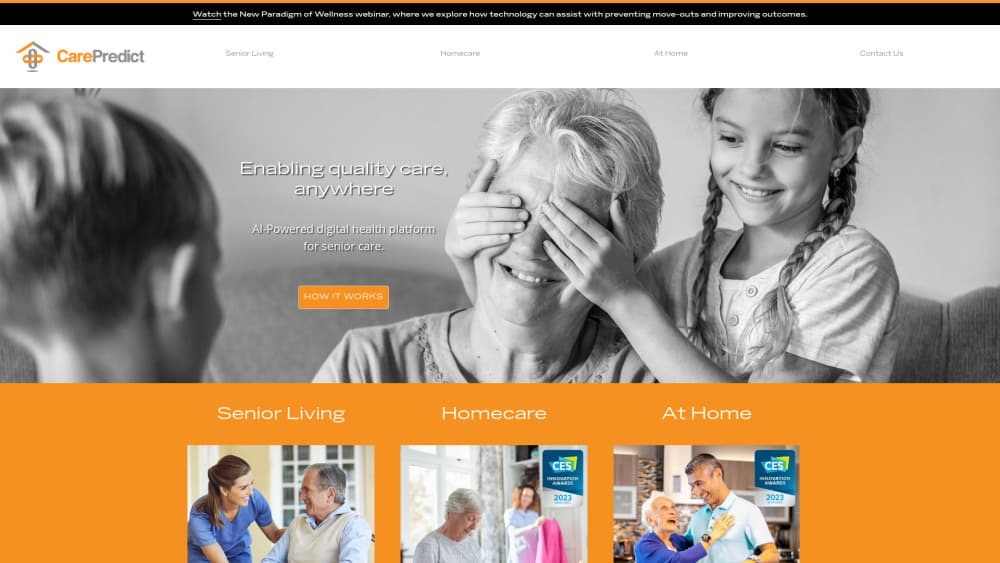
CarePredict is an AI resident care platform for senior living operators. It combines the Tempo wrist wearable, predictive health analytics, fall detection, and location tracking in one system.
About CarePredict
What Is CarePredict
CarePredict is a resident care platform built for senior living communities rather than individual families. The company started in 2013 when founder Satish Movva was looking for a better way to watch over his parents from a distance. It's based in Plantation, Florida, and says its software runs in more than 150 communities.
The core idea is simple. A small wrist wearable called CarePredict Tempo records how a resident moves, eats, sleeps, socializes, and uses the bathroom. The platform learns that person's normal routine, then flags the day it changes. A resident who suddenly stops joining meals, walks more slowly, or starts getting up several times at night may be showing the first sign of a urinary tract infection, a fall risk, or depression. Staff get an alert while there's still time to act.
That's the pitch, and it comes with real limits. CarePredict sells to operators, so you can't buy a single device for a parent at home. Pricing is quoted per community. The system also depends on staff who read alerts and follow up, plus residents who keep the wearable on. It supports clinical judgment, and it doesn't replace a nurse or a doctor.
Getting Started
- Book a demo with CarePredict and map your building, care levels, and current EHR setup. Pricing and hardware counts come out of that conversation.
- Install the location beacons around the community and assign a Tempo wearable to each resident. The band needs no wiring or in-room sensors.
- Train care staff on the dashboard, alert routing, and charting workflow. Expect a settling-in period while the platform learns each resident's baseline.
- Run daily stand-up reports, review flagged residents, and connect the data to care plan leveling and family updates.
Product Information
A quick look at CarePredict's pricing, supported platforms, and performance.
Best for
The users, tasks, and scenarios where this tool fits best.
Users
- Assisted living and independent living operators
- Memory care directors
- Operations and finance leaders
Tasks
- Responding to a fall or a bed exit
- Catching a health decline early
- Closing gaps in care plans
- Keeping families informed
Scenarios
- Overnight staffing with a thin crew
- A new resident's first weeks
- A suspected UTI that looks like confusion
Key features
Tempo Wrist Wearable
Tempo is the sensor hub. It sits on the wrist and tracks movement, eating, sleeping, socialization, and bathroom visits, then reports the room where each activity happens. Residents press the button for help, and staff can talk back through two-way audio. The battery swaps in seconds without taking the band off, which removes the nightly charging routine that smartwatches require. A wearable for seniors has to survive showers, laundry day, and forgetful mornings, so that detail matters more than it sounds.
Fall Detection and Bed Exit Alerts
Senior living fall detection only helps when the alert reaches the right person fast. The platform detects probable falls and bed exits, then routes the alert through the CarePredict app, a phone call, text, or email. Staff see which resident needs help and where. In-suite detection works with KamiCare hardware, so communities can cover rooms where a wrist device alone isn't enough.
Real-Time Location and Elopement Prevention
Indoor location tracking shows where a resident is anywhere in the building, not just in their room. Geofences trigger when someone with cognitive decline enters a restricted area or moves toward an exit. Staff can find the person fast, which is the whole point during an elopement scare.
Predictive Health Analytics
This is the part that separates CarePredict from a nurse call system. The platform learns each resident's normal pattern and scores daily activity against it. Sustained changes in mobility, meals, sleep, or social contact raise a flag for the clinical team. The company reports earlier UTI detection and fewer hospitalizations at customer sites, but those results come from each operator's own published case studies.
Care Plan Leveling and Documentation
Staff chart care as it happens from a mobile device. Managers get a view of scheduled versus delivered services, which supports care plan leveling and helps capture missed revenue. The same records feed the daily stand-up dashboard, so the morning meeting starts with the residents who need attention.
Staff Workflows and Retention Tools
Beyond care delivery, the platform bundles staff communication, pulse surveys, and a turnover predictor. The idea is that caregivers who feel heard stay longer. It's a softer benefit than fall detection, and its value depends on whether managers actually act on the survey results.
EHR and Building Integrations
CarePredict connects with EHR systems, point of sale, door locks, and legacy nurse call equipment. EHR integration quality varies by vendor and by how the community's network is set up, so confirm your specific stack during the demo.
Pros and cons
Pros
- One platform covers fall detection, location tracking, nurse call, care charting, and predictive alerts, which can replace several separate systems.
- The wearable tracks activity by room, giving clinical teams context that a pendant alarm can't provide.
- Swappable batteries avoid the daily charging problem that makes residents abandon wearables.
- Published customer case studies report fewer hospitalizations, faster UTI recovery, and higher length of stay, with numbers tied to named communities.
Cons
- No consumer option and no public pricing. A family can't buy it for one parent, and an operator has to sit through a sales process to learn the cost.
- Alerts only help when staff respond. Understaffed shifts can turn a good signal into another unread notification.
- Residents with dementia may remove the wristband, so memory care still needs door sensors and staff checks.
- Predictive flags point to a possible problem, not a diagnosis. Clinical follow-up is still required, and false positives add work.
Frequently asked questions
CarePredict tracks daily activity through a wrist wearable and turns those patterns into alerts for senior living staff. It covers fall detection, location tracking, elopement prevention, care documentation, and early signs of health decline.
Related content
Explore related tools, skills, and articles for CarePredict.
CarePredict Alternatives
Agibot
Agibot · Productivity · AI Assistant · ChatbotAgibot is a personal AI agent for Mac that keeps running after you close the window, runs routines on a schedule, and works from Telegram or Slack with your own API keys.
Foley
Hanamori Labs, LLC · Voice & Language · Productivity · AI AssistantFoley is a voice to-do list that turns a spoken sentence into a filed task, complete with project, date and time, then helps you plan the day around what is already there.

Ghost Core
Ghost · Productivity · AI AssistantGhost Core is a $3,499 screenless personal AI computer that runs local AI models on its own hardware, builds context from your apps and devices, and acts without waiting for a prompt.