

Death Clock: The Life Lab
Death Clock AI Health · AI Assistant
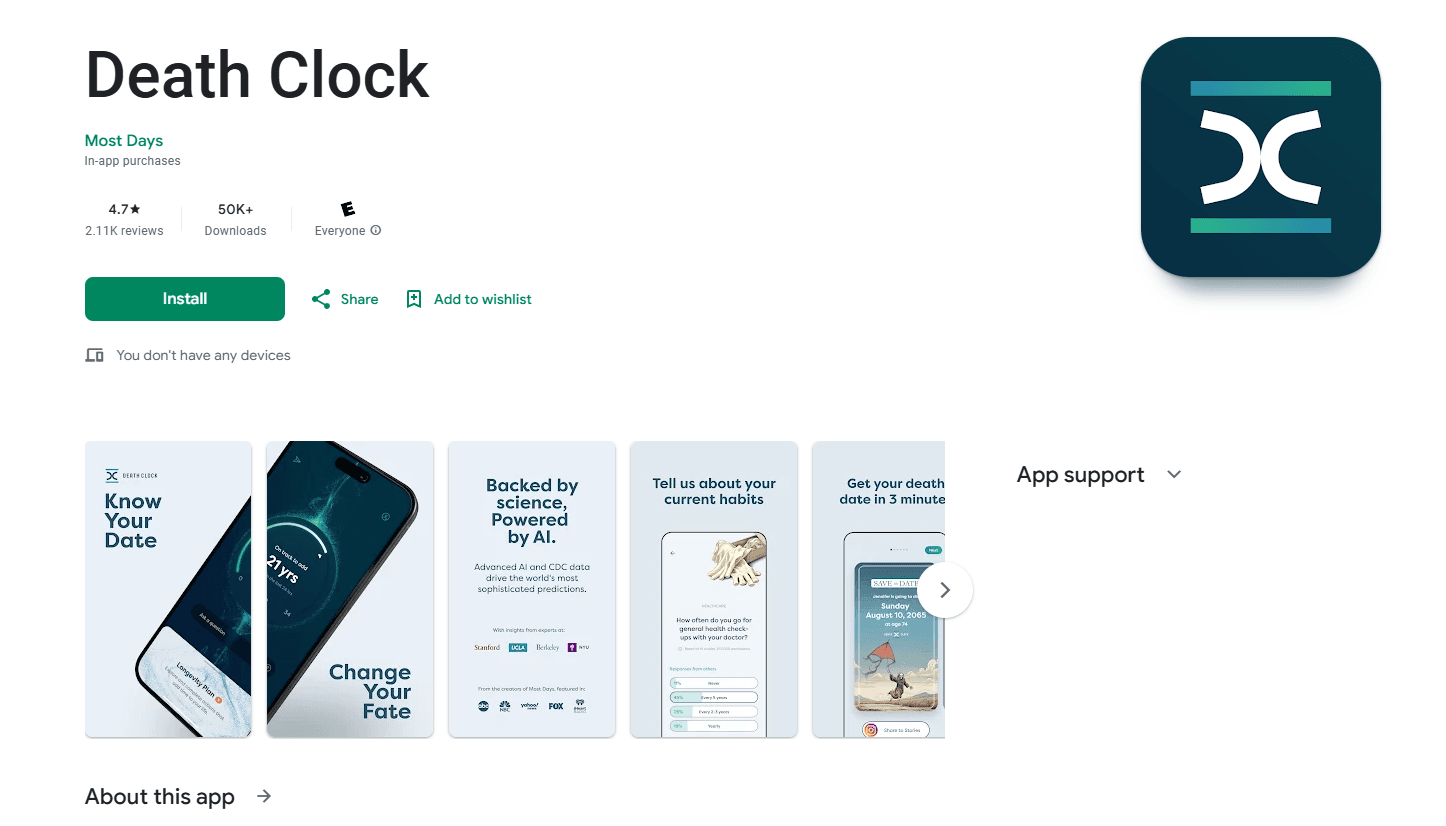
Death Clock: The Life Lab is an AI longevity app that predicts your death date, reads your bloodwork, and builds a plan to add healthy years.
About Death Clock: The Life Lab
What Is Death Clock: The Life Lab
Death Clock: The Life Lab is an AI longevity app that answers a blunt question: how long do you have? You answer questions about your habits, workouts, and health, then the app's model gives you a death date prediction and a birth-to-death countdown. It draws on CDC data and global mortality research to set that baseline.
The part that separates it from a novelty life expectancy calculator is what comes next. The Life Lab turns your number into a plan. An AI health concierge reads your lab results, flags what to work on, and suggests changes to diet, exercise, supplements, and screenings. Each subscription includes blood testing, so the advice sits on top of real biomarkers rather than guesses.
It isn't a diagnostic tool, and the app says so plainly. Death Clock is built for education and motivation, not for replacing a physician. Expect to pay for the deeper features. In-app purchases run from about $9.99 up to $999.99, and the concierge, bloodwork, and full tracking live behind a subscription.
Getting Started
- Download Death Clock: The Life Lab from Google Play and create an account.
- Answer the intake questions about your habits, workouts, and current health.
- Review your projected lifespan and the death date the model returns.
- Subscribe to open the AI health concierge and schedule your blood draw.
- Sync data from Apple Health, WHOOP, or Oura Ring and track how your Life Clock moves.
Product Information
A quick look at Death Clock: The Life Lab's pricing, supported platforms, and performance.
Best for
The users, tasks, and scenarios where this tool fits best.
Users
- Health-focused adults
- Biohackers and longevity fans
- People who need a nudge
Tasks
- Predicting life expectancy
- Interpreting bloodwork
- Tracking biomarker progress
- Building healthier habits
Scenarios
- Starting a longevity routine
- Checking in after a health scare
- Comparing wearable data to a plan
Key features
Death Date Prediction and Life Clock
The core feature estimates your life expectancy from your lifestyle inputs, then keeps a birth-to-death countdown running. Every healthy change you log feeds back into the Life Clock, so the number shifts as your habits do. That's the hook. It gets people to open the app again.
24/7 AI Health Concierge
A conversational coach trained on your profile interprets lab results, points to next steps, and answers questions in the language of preventive medicine. The pitch is a private longevity doctor without the retainer. It also covers everyday topics like supplements, sleep, and stress.
Included Blood Testing and Biomarkers
Each subscription includes blood testing, which is what gives the advice a factual base. Results cover blood pressure, blood sugar, hormone levels, fasting glucose, heart health, cholesterol, inflammation, and kidney function. Those markers drive both the plan and the lifespan estimate.
Wearable and Apple Health Sync
You can sync activity and health data from Apple Health, WHOOP, and Oura Ring. Blood pressure, heart rate, blood sugar, and heart condition metrics flow into one dashboard. Fewer manual entries. A fuller picture of what's moving your number.
Personalized Longevity Plan
The suggestion engine builds a plan across diet, exercise, supplements, and screenings, and a clinical board of physicians plus longevity researchers vets the frameworks behind it. The suggestions aim at evidence-backed preventive care. Not generic wellness tips.
Privacy and Encryption
The app states that your data is fully encrypted and never sold. For an app handling lab results and health history, that promise matters, and it's worth reading the linked privacy and HIPAA documents before you share anything sensitive.
Pros and cons
Pros
- Turns vague health advice into a concrete, trackable lifespan estimate you can watch move.
- Included blood testing means recommendations rest on real biomarkers, not self-reported guesses.
- The AI health concierge is available around the clock and speaks in plain preventive-care terms.
- Syncs with Apple Health, WHOOP, and Oura Ring, so your existing tracking data carries over.
- Clear medical disclaimer and encryption claims set honest expectations for what the app is.
Cons
- There's no free plan, so you can't try the useful features without paying.
- In-app purchases stretch to $999.99, which puts the deepest tier well beyond casual users.
- Blood draws add a scheduling step and may not suit people who dislike lab visits.
- The death date itself is an estimate built on population data, so it can mislead anyone who reads it as a medical prediction.
Frequently asked questions
It estimates your life expectancy from your habits and health data, then gives you a death date and a plan to extend your lifespan. Bloodwork and an AI health concierge sit behind a subscription.
Related content
Explore related tools, skills, and articles for Death Clock: The Life Lab.
Death Clock: The Life Lab Alternatives
Agibot
Agibot · Productivity · AI Assistant · ChatbotAgibot is a personal AI agent for Mac that keeps running after you close the window, runs routines on a schedule, and works from Telegram or Slack with your own API keys.

Foley
Hanamori Labs, LLC · Voice & Language · Productivity · AI AssistantFoley is a voice to-do list that turns a spoken sentence into a filed task, complete with project, date and time, then helps you plan the day around what is already there.

Ghost Core
Ghost · Productivity · AI AssistantGhost Core is a $3,499 screenless personal AI computer that runs local AI models on its own hardware, builds context from your apps and devices, and acts without waiting for a prompt.