

Deepaarogya AI
Deepaarogya AI · AI Assistant
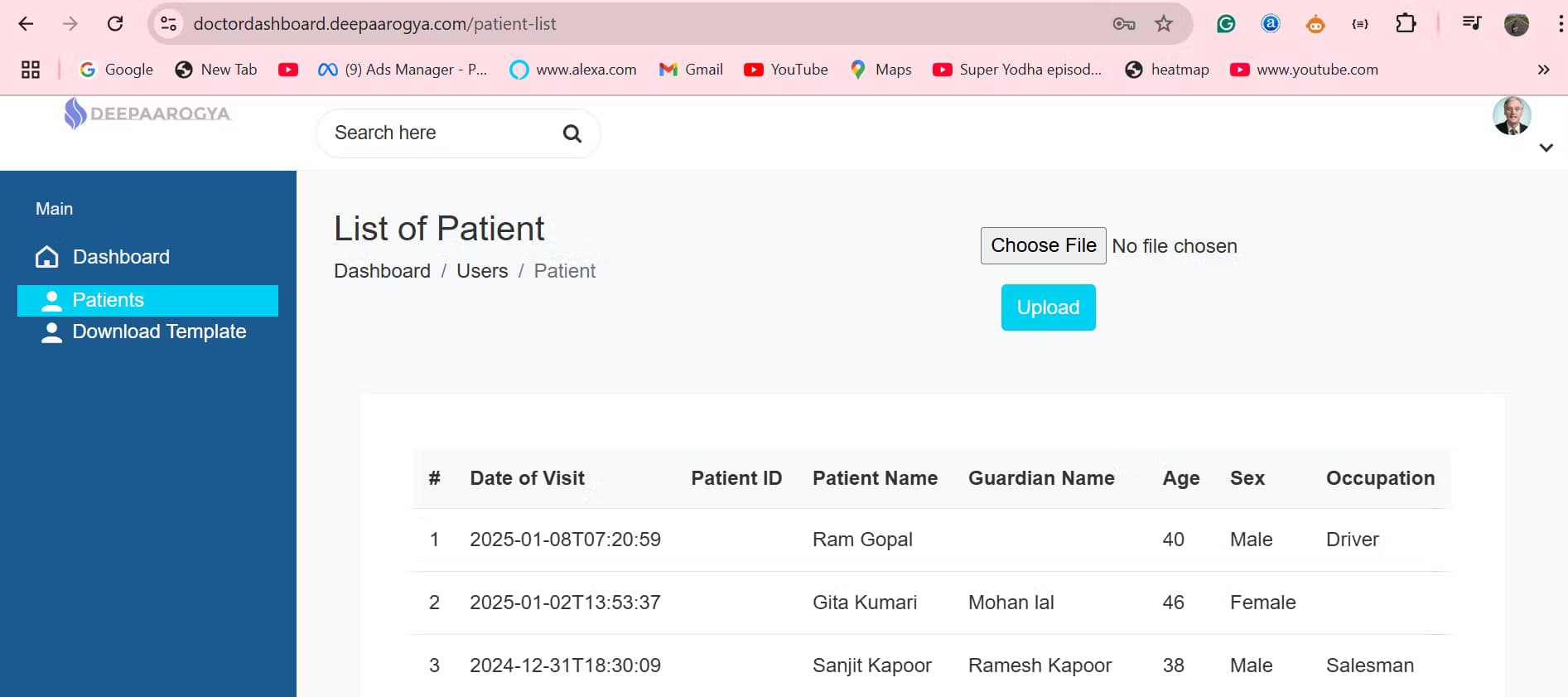
Deepaarogya AI is an AI hospital and clinic operating system for India. It puts OPD, IPD, pharmacy, billing, physiotherapy, and nutrition on one ABDM-ready patient record, with AI agents inside the chart.
About Deepaarogya AI
What Is Deepaarogya AI
Deepaarogya AI is EMR software for Indian clinics and hospitals. It bundles the everyday parts of running a practice, including outpatient visits, inpatient case sheets, pharmacy, billing, and specialty desks for physiotherapy and nutrition, into a single patient record. The angle is that AI agents sit inside that record rather than in a separate tool, so drafting a discharge summary or a diet plan happens where the clinician already works.
The product targets a specific problem. Most Indian clinics run on paper files, WhatsApp threads, and a few apps that don't share data. Records get scattered, billing drifts out of sync, and patients can't find or trust the clinic online. Deepaarogya pulls those pieces onto one record and adds AI to handle the busywork, such as turning consult notes into structured SOAP notes across 22 languages. It is listed on the Microsoft for Startups Founders Hub and was part of an IIT Madras incubation program.
The limits matter too. It is built for the Indian market and leans on India-specific rails such as ABDM and ABHA, so clinics outside India get less value. Pricing is low at the entry tier but rises with seats, modules, and AI packs. And every AI output is a draft for a clinician to review, not an autonomous diagnosis.
Getting Started
- Book a demo from the Deepaarogya AI website and describe your clinic's specialty and workflow.
- Map your OPD and IPD flow and migrate essential patient data with the deployment team.
- Set up role-based access for the front desk, doctors, and pharmacy.
- Configure specialty desks such as physiotherapy, nutrition, or orthopedics to match how you already practice.
- Go live, then add AI packs or extra specialties as the clinic grows.
Product Information
A quick look at Deepaarogya AI's pricing, supported platforms, and performance.
Best for
The users, tasks, and scenarios where this tool fits best.
Users
- Solo doctors and small clinics
- Multi-specialty hospitals
- Physiotherapy-led clinics
- Nutrition and dietetics practices
Tasks
- Digitizing handwritten records
- Writing clinical notes
- Sending prescriptions and reminders
- Running billing and follow-up
Scenarios
- A busy OPD morning
- An inpatient admission
- A follow-up that would otherwise be forgotten
Key features
Clinical AI agents inside the chart
Eight agents sit inside the patient record: Voice Receptionist, Discharge Summary, Nutritional, WhatsApp Follow-up, Visit Summary, Doc, Deep Healthcare, and SOAP. The Voice Receptionist confirms appointments into the OPD queue and captures the visit reason, while the SOAP agent drafts structured notes in 22 languages. Every output is a draft for clinician review, not an autonomous diagnosis.
One record across every department
OPD, IPD, pharmacy, billing, physiotherapy, nutrition, and lab and radiology queues share one patient record. Departments stop re-entering the same data and hand-offs happen without paper. For a multi-specialty hospital, that means the front desk, doctors, and pharmacy all work from the same chart.
ABDM-ready records and ABHA linking
The platform is built around India's ABDM rails, with ABHA-linked health records and consent-based sharing. Clinics that need to stay aligned with national health data standards get that handled in the platform rather than bolted on later. Security practices are aligned to HIPAA, and a BAA is available for enterprise deployments.
WhatsApp e-prescriptions and follow-ups
Clinicians can send signed e-prescriptions over WhatsApp straight from the consult chart, along with automated appointment reminders, medicine follow-ups, and revisit nudges. Messages carry a delivery status and an audit trail. WhatsApp messaging is an optional add-on pack, so clinics that don't need it don't pay for it.
Google Drive file sync
Clinical files such as X-rays, photos, lab PDFs, and reports sync to the hospital's own Google Drive. Files stay in the clinic's account while the EMR links each one to the right patient and visit. Clinics that are cautious about where patient data lives keep control of the storage.
Specialty desks for physio and nutrition
Physiotherapy desks track protocols, outcomes, team assignments, and session billing. The nutrition desk runs an agentic pipeline that generates diet plans grounded in the patient's clinical context, then routes them through a clinician review queue. Both are aimed at clinics whose billing and workflow don't fit a generic EMR template.
Customizable workflows and specialty fit
The platform is designed to adapt to orthopedics, ENT, physiotherapy-led, and multi-specialty setups rather than forcing new habits. Deployment teams configure OPD queues, physio protocols, nutrition desks, and billing rules around how a clinic already works. The company offers 24x7 deployment support for setup, training, and go-live.
Pros and cons
Pros
- The entry plan starts at ₹500 a month plus GST, which keeps digitizing a small clinic affordable.
- OPD, IPD, pharmacy, billing, physio, and nutrition share one patient record, so staff stop re-entering data.
- Eight AI agents sit inside the chart, and outputs are drafts for review rather than black-box decisions.
- ABDM and ABHA support is built in, which fits Indian clinics tracking national health data standards.
- Clinical files sync to the clinic's own Google Drive, so storage stays under the clinic's control.
Cons
- The platform is built for India, so the ABDM and ABHA focus offers little to clinics outside the country.
- Pricing climbs with seats, modules, and AI packs, so the ₹500 tier alone rarely covers a full practice.
- WhatsApp messaging is an add-on pack, which means a feature many clinics want costs extra.
- Onboarding leans on the deployment team, so a clinic can't fully self-serve from the website.
Frequently asked questions
Deepaarogya AI is AI hospital and clinic operating system software for India. It covers OPD, IPD, pharmacy, billing, physiotherapy, and nutrition on one ABDM-ready patient record, with clinical AI agents inside the chart.
Related content
Explore related tools, skills, and articles for Deepaarogya AI.
Deepaarogya AI Alternatives
Agibot
Agibot · Productivity · AI Assistant · ChatbotAgibot is a personal AI agent for Mac that keeps running after you close the window, runs routines on a schedule, and works from Telegram or Slack with your own API keys.

Foley
Hanamori Labs, LLC · Voice & Language · Productivity · AI AssistantFoley is a voice to-do list that turns a spoken sentence into a filed task, complete with project, date and time, then helps you plan the day around what is already there.

Ghost Core
Ghost · Productivity · AI AssistantGhost Core is a $3,499 screenless personal AI computer that runs local AI models on its own hardware, builds context from your apps and devices, and acts without waiting for a prompt.