
Educationist.AI
LAS Edventures Pvt. Ltd. · Leaning
Educationist.AI is an AI assessment platform for schools that turns teachers' classroom observations into Holistic Progress Cards. It's student assessment built around evidence, not memory.
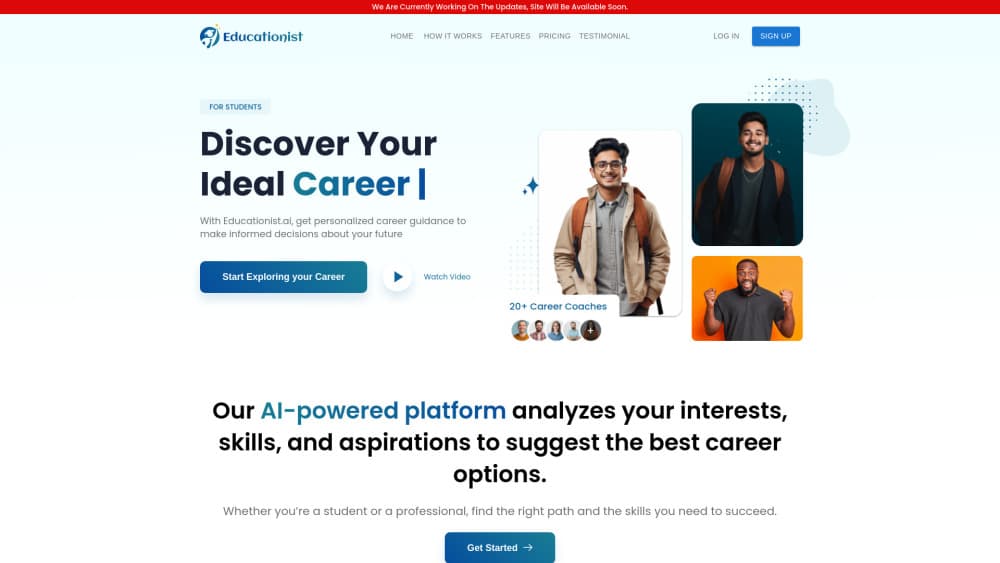
About Educationist.AI
What Is Educationist.AI
Educationist.AI is a classroom observation and reporting platform built for Indian schools working under the Holistic Progress Card framework. You can think of it as HPC software that starts from the classroom rather than the report. A teacher records what she sees while an activity is still happening. It's quick, and the report gets drafted from that record later. Instead of opening a blank form in March and reconstructing nine months from memory, she builds the evidence as she goes, one short entry at a time.
The product is built by LAS Edventures Pvt. Ltd., and the assessment structure underneath it comes from PARAKH under NCERT, following NEP 2020. That matters because the HPC framework is national, not tied to one board. A teacher files each observation against a domain, a curricular goal, a competency and a proficiency level, so the note lands in a real structure rather than a labeled comment box that a school fills in from scratch at the end of term. This is what makes it genuine competency based assessment rather than a form with a label. Today the platform generates the CBSE Holistic Progress Card in the official format, with a parent-friendly version alongside it, and it works with state-board schools too.
The biggest limit right now is coverage. The Foundational Stage, spanning Bal Vatika and Grade 2, is live. It's also where the tool lands hardest, since that stage has the least written down. Preparatory, Middle and Secondary stages are designed and listed on the roadmap but aren't available yet. Need those? Ask. Pricing also isn't published, since cost depends on how many sections and which stage a school runs.
Getting Started
- Book a free sixty-minute session through the site and walk your team through the Holistic Progress Card process.
- Set up the domains, curricular goals, competencies and proficiency levels your school needs tagged.
- Create an activity and pick which competencies it's likely to surface before it begins.
- Record each observation on a phone during or right after the activity, tagging the child, the goal, the level and an optional photo.
- Let the platform draft the term narrative, then export the CBSE Holistic Progress Card with a parent-friendly version.
Product Information
A quick look at Educationist.AI's pricing, supported platforms, and performance.
Best for
The users, tasks, and scenarios where this tool fits best.
Users
- Class teachers who want student assessment for schools to happen in the moment, instead of writing a term report from memory later.
- Coordinators and HODs who need to spot which competency domains a class is thin on before the term ends.
- Principals who want every child and every domain on one screen when an inspection or review comes around.
Tasks
- Tagging a single classroom activity to several competency domains at once, so one drawing task counts across the board.
- Recording observations on a phone mid-activity, with a note and an optional photo attached to the right child.
- Generating a Holistic Progress Card in the official CBSE format, plus a parent-friendly version for home.
- Tracking domain coverage across a term to see where evidence is missing rather than guessing in March.
Scenarios
- A nature-walk drawing session where the teacher files one activity against four domains while the children are still working.
- End-of-term reporting time, when the narrative is drafted from a term of real entries instead of reconstructed from memory.
- A state-board school that needs the same evidence layer but a different report format shaped around its board's requirements.
Key features
Observation capture on a teacher's phone
The recording flow is built for a phone in a classroom, mid-activity, not for a desktop form filled in later. In practice it works like a teacher observation app, and that's the whole point. A teacher taps through the child, the competency and the level in a few steps and adds a photo if she wants one. It isn't a mock-up. Evidence gets captured while the activity is still happening rather than after the fact.
Structured tagging against the HPC framework
Every observation falls into the real structure: a domain, a curricular goal, a competency and a proficiency level. No free-text box. Educationist.AI files entries under Positive Learning Habits, Cognitive Development, Socio-Emotional Development and the other core domains, with curricular goals like CG-6.3 attached. This means a report isn't a comment box with a label on it, and the same note can be read against a goal later.
Three-level proficiency scale
The platform uses Stream, Mountain and Sky as its three proficiency levels, framed as a rising form rather than a scoreboard. Stream isn't a failing grade. A five-year-old is often exactly where Stream sits in October. That framing matters. It changes how a report reads to parents and reduces the temptation to turn early learning into a ranking.
Activity-level competency mapping
Before an activity begins, the teacher tells the system which competencies it's likely to surface, so a single nature walk gets linked to cognitive, socio-emotional, language and aesthetic domains up front. The teacher only has to notice what happens. Why does that matter? Because one activity then feeds several parts of the report without extra admin.
Term narrative drafting
At the end of a term, Educationist.AI drafts the narrative from the observations already on file. With forty children and a term of entries, the report has real material. So the teacher edits rather than invents. The output is a written narrative tied to specific evidence, not a set of generic phrases that could describe any child.
CBSE Holistic Progress Card output
The platform generates the CBSE Holistic Progress Card in the official format, with a parent-friendly version alongside it. Same evidence, two audiences. State-board schools keep the same capture process, and the report format gets shaped around their requirements.
Pros and cons
Pros
- Evidence is captured during the activity, which removes the blank-page problem at the end of a term.
- Observations are filed against the real HPC structure from PARAKH and NCERT, not a free-text box.
- The phone-first capture flow fits how teachers actually work in a classroom.
- One activity can map to several domains, so a single lesson feeds multiple parts of the report.
- The parent-friendly report version makes the same evidence readable at home.
Cons
- Only the Foundational Stage (Bal Vatika to Grade 2) is live, so schools needing Middle or Secondary coverage have to wait.
- Pricing isn't published, which means a school has to book a session before it can budget.
- No free plan is available, so a school can't test the workflow on its own first.
- Formal data compliance is still being built out, so schools with strict hosting requirements need a direct conversation before committing.
Frequently asked questions
It captures a teacher's classroom observations in structured form and turns them into Holistic Progress Cards. No blank page. Instead of writing a term report from memory, the teacher records what she saw against a competency and a level. The platform then drafts the narrative from that evidence.
Related content
Explore related tools, skills, and articles for Educationist.AI.
Educationist.AI Alternatives

HireKey
HireKey · Voice & Language · Productivity · LeaningHireKey is an AI job search copilot built by a former tech recruiter. It checks role fit, tailors resumes, runs interview practice and tracks every application.

Lune
Retrograde Labs · Productivity · LeaningLune is a research search engine for scientific AI agents. It runs as an MCP server that lets Claude, ChatGPT and Cursor search peer-reviewed computer science papers and cite them.
Coddy
Coddy · Coding · LeaningCoddy is a gamified platform to learn to code through short interactive lessons in 20+ languages, with a browser editor, an AI tutor and free certificates.