

Fal AI
fal.ai · Image · Video
Fal AI is a generative media platform that runs 1,000+ image, video, audio and 3D models through one API, built for developers shipping AI features.
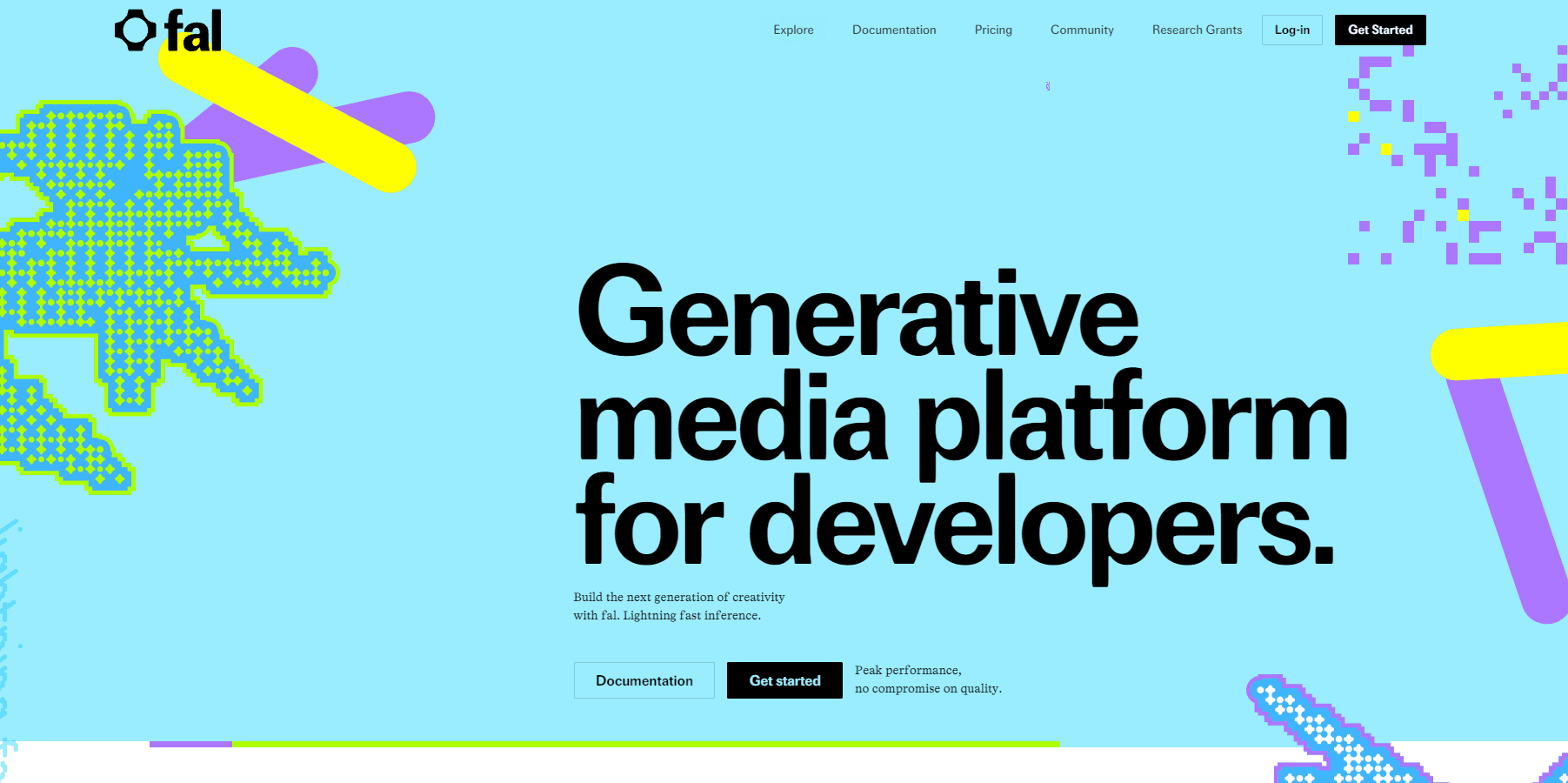
About Fal AI
What Is Fal AI
Fal AI is a generative media platform for developers. It hosts more than 1,000 production-ready models for images, video, audio, music, speech, 3D and real-time streaming, and lets you call any of them through a single unified API. You don't run your own GPUs to get started. You pick a model, grab an API key, and send a request.
The bigger draw is speed. Fal built its own inference stack and leans on NVIDIA H100, H200 and B200 hardware, so tasks that stall elsewhere tend to come back fast. Teams that generate media inside a live product care about that. A user waiting on an image shouldn't wait long.
The platform isn't only for calling hosted models. You can also deploy your own Python apps and custom models on the same infrastructure, with autoscaling and per-second billing. One catch: serverless deploys need account access the fal team approves case by case. It's not a click-and-go option. Fal is SOC 2 compliant and offers private endpoints, single sign-on and usage analytics for companies that need them.
Getting Started
- Create a fal account and open the dashboard to generate an API key.
- Pick a model from the marketplace, or browse the docs to compare options for your task.
- Install the client, such as
pip install fal-clientfor Python, and set your API key. - Send a request with the model ID and your input, like a text prompt.
- Read the result from the response and wire it into your app.
Product Information
A quick look at Fal AI's pricing, supported platforms, and performance.
Best for
The users, tasks, and scenarios where this tool fits best.
Users
- Developers building AI media features
- Product teams shipping fast
- Startups that don't want to manage GPUs
Tasks
- Generating images from text prompts
- Producing short video clips
- Converting speech or text to audio
- Deploying a custom model
Scenarios
- Prototyping an AI feature before committing budget
- Scaling an app when traffic spikes
- Shipping media generation inside a live product
Key features
One API Across Every Media Type
Fal hosts image, video, audio, music, speech, 3D and real-time models behind one interface. Learn the request pattern once. Reuse it everywhere. That cuts the glue code you'd otherwise write model by model, and for a team shipping several features, that's a real time saver.
Fast Inference Stack
Fal built its own inference and claims industry-leading speed, backed by NVIDIA H100, H200 and B200 hardware. The pitch is real-time generation, where output arrives fast enough to sit inside a live product. Real-world latency still depends on the model and your inputs, so benchmark before you commit.
Serverless Model Deployment
You can deploy your own Python apps and custom models on fal's infrastructure, with autoscaling and scale-to-zero. Your app gets a persistent endpoint, and you only pay for the time runners are active. Access is gated. You'll need approval from the fal team first.
Real-Time Streaming
Some endpoints support streaming output for live apps. Instead of waiting for a finished file, you get results as they're produced. That matters for anything interactive, where a long pause reads as a broken product, and it's the main reason teams pick fal over a batch-only pipeline that finishes jobs long after a user has already given up and closed the tab.
Enterprise Controls
Fal advertises SOC 2 compliance, single sign-on, private endpoints and usage analytics. These are the boxes procurement usually asks about. Having them in place shortens the path from prototype to a signed contract. No procurement team wants to start those conversations from zero.
Playground and Agent
Beyond the API, fal offers a browser playground for testing models without code, plus a fal Agent that plans, generates and edits media in one conversation. The playground is handy for quick comparisons before you write any integration.
Pros and cons
Pros
- 1,000+ models under one API, so you're not juggling a different SDK for each one
- Fast inference aimed at real-time use, which suits live product features
- Serverless option lets you run your own models without managing hardware
- Free tier and pay-per-use billing keep early testing cheap
- Enterprise features like SOC 2 and SSO support compliance reviews
Cons
- It's a developer platform, so non-coders won't get far without writing code
- Serverless deploys need fal's approval, which adds a wait before you can ship
- Costs scale with usage. High-volume generation can get expensive.
- Model quality and latency vary by endpoint, so you have to test rather than assume
Frequently asked questions
Fal AI runs generative media models for developers. Use it to generate images, video, audio, music, speech and 3D content from prompts, either through a hosted model or your own deployment. So what does it replace? A stack of separate integrations.
Related content
Explore related tools, skills, and articles for Fal AI.
Fal AI Alternatives

Google EmbeddingGemma 2
Google DeepMind · Writing · Image · CodingGoogle EmbeddingGemma 2 is a 740M-parameter open model that turns text, code, images, audio, and video frames into vectors in one 768-dimension space, running on phones and laptops.

Tractionwave
TractionWave · Image · MarketingTractionWave is an AI attention heatmap tool for static ads. Upload a PNG or JPG and it returns predicted attention, ranked hotspots, and fixes before you spend budget.

Imejis.io
Imejis.io · Image · MarketingImejis.io is an AI design studio for agents and marketing teams. Describe an image in plain words, and it writes the copy, builds the layout, reflows it to every size, then exports a finished file.