

Fastshot
Fastshot, Inc. · Coding
Fastshot is an AI mobile app builder that turns a plain-language description into a working native iOS and Android app. It targets founders, solo makers, and small teams who want to build apps from text and ship a real app to the App Store and Google Play without hiring engineers or running a build pipeline. The platform handles design, assets, store metadata, backend, and authentication, then lets you publish from one dashboard.
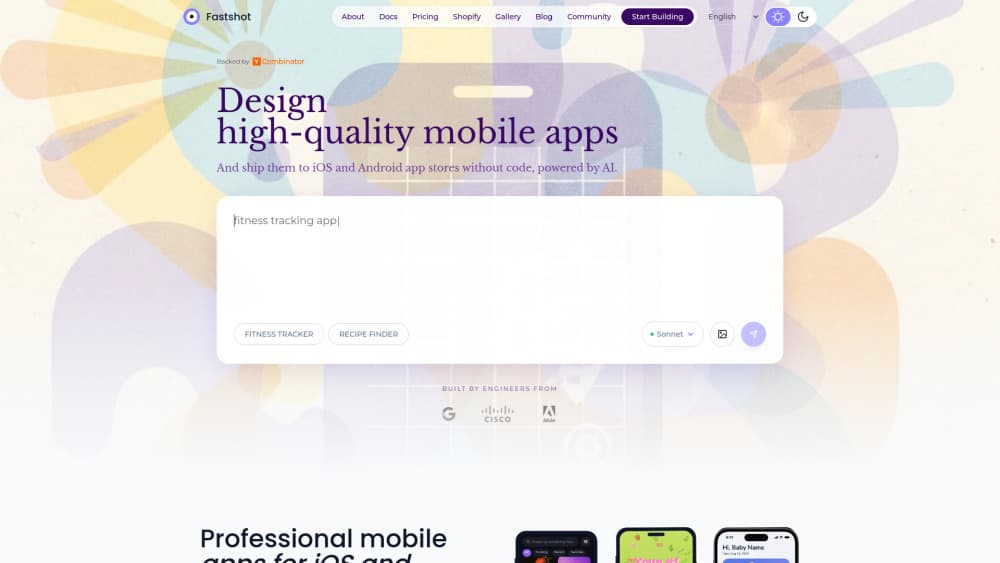
About Fastshot
What Is Fastshot
Fastshot is a web-based AI app generator for building native mobile apps from text. You describe an idea in plain language, and the system produces designs, branding, and the functional app, drawing on a multi-agent setup built on Anthropic, Google Gemini, and Nano Banana models. The pitch is simple: skip the long build cycle and the backend work that eats most of a mobile project's time. No servers. No pipeline.
The platform commits to true native iOS and Android output, not a wrapper, and builds on Expo, which is a common toolkit for production mobile apps. Backend and sign-in are handled through a managed Supabase layer, so accounts, data, and Google or Apple login work without you wiring up servers.
The main limits are worth knowing up front. Fastshot is a no-code app builder, so it makes sense for standard app patterns rather than deeply custom engineering, where a hand-built native app built by a dedicated team of engineers working through a full sprint cycle would give you far more control over every screen and every edge case in the product. Pricing, plan details, and export options sit behind the site, and I couldn't confirm exact tiers from public pages, so treat any figures here as estimates. You also get what the AI produces, which means unusual or highly specialized features may need manual follow-up.
Getting Started
- Create an account on the Fastshot website with your email or a social login.
- Describe your app idea in plain language, including what it does and who it's for.
- Review the generated designs, branding, and mockups, then tweak them until they feel right.
- Add a backend, user accounts, and Google or Apple sign-in with one click if your app needs them.
- Build the app into native iOS and Android, then publish to the App Store and Google Play.
Product Information
A quick look at Fastshot's pricing, supported platforms, and performance.
Best for
The users, tasks, and scenarios where this tool fits best.
Users
- Solo founders
- Non-technical creators
- Small product teams
Tasks
- Turning a written concept into a working app
- Adding accounts and data
- Monetizing with subscriptions or ads
- Publishing to app stores
Scenarios
- Testing an app idea over a weekend
- Launching a simple utility or community app
- Turning an existing service into a mobile presence
Key features
Text to native app generation
The core of Fastshot is turning a plain-language description into an actual native app. So how does that work in practice? You write what you want, and the multi-agent system returns designs, branding, and functional screens. The output targets real App Store and Google Play builds rather than a web view in disguise, which matters if you care about performance and store approval. It's a real app.
Managed backend and authentication
Fastshot manages a Supabase backend for you, covering the database, auth, and storage. You can add user accounts, data persistence, and Google or Apple sign-in with one click. For most small apps, this removes the single biggest chunk of work, since you never touch servers, keys, or migration scripts, and you never have to worry about scaling a database as your first users arrive. That's a big deal.
One-click monetization
You can add subscriptions, in-app purchases, and ads from the dashboard. Adapty handles recurring revenue, trials, and upgrades, while Google AdMob covers banner, interstitial, and rewarded ads. Both connect in one click, and the two approaches combine, so you can stack subscription income with ad revenue.
Store-ready publishing
Publishing is built into the workflow. Fastshot generates store metadata, screenshots, and documentation, then pushes the app to the App Store and Google Play. That covers a lot of the tedious listing work that usually slows a launch, especially the screenshots and copy you'd otherwise write by hand.
Design and branding generation
The platform generates designs, branding, and assets from your idea rather than starting from a blank canvas. You review mockups and adjust them, and the approved design becomes the app. This is aimed at people who know what they want but can't produce polished UI themselves. Not everyone can. It closes that gap.
Pros and cons
Pros
- Turns plain text into native iOS and Android apps, cutting out most manual development work.
- Handles backend, accounts, and social sign-in through a managed Supabase layer, so no server setup is needed.
- One-click connections for subscriptions through Adapty and ads through Google AdMob.
- Publishes to the App Store and Google Play with generated metadata and screenshots.
Cons
- No free plan is advertised, so you'll need to check current pricing before committing.
- Exact pricing tiers aren't public, which makes budgeting harder until you contact the team.
- As a no-code builder, it fits standard app patterns better than highly custom features.
Frequently asked questions
Fastshot builds native iOS and Android apps from a text description. The multi-agent system handles design, assets, metadata, and functionality, and the output is meant for real store submission rather than a prototype. In short, it's a working app.
Related content
Explore related tools, skills, and articles for Fastshot.
Fastshot Alternatives
Forefront
Forefront · CodingForefront is a web platform for building with open-source AI. It lets you fine-tune leading open-source language models on your own data, evaluate how they perform, and run them through an API or export them to host yourself. Developers who want the convenience of a closed-source platform but insist on owning their models and data are the target audience here.

Startkit
StartKit.AI · CodingStartkit is a boilerplate for building AI SaaS and AI wrapper products. Think of it as an AI startup boilerplate with the boring parts already wired up: authentication, Stripe and Lemon Squeezy payments, usage limits, transactional email, and an AI API starter that talks to OpenAI, Anthropic, Groq, or Llama. You clone the repo, set your price, and start on the part of your product that people actually pay for. It's Next.js under React and Tailwind, so most of the boilerplate code already feels familiar.
Testim
Tricentis · CodingTestim is an AI-powered test automation platform for building and running end-to-end tests across web, mobile, and Salesforce applications. It leans on machine learning to keep tests stable when an interface changes, so teams spend less time fixing broken selectors. Not bad for an automated testing tool you can start using today. You create tests by recording actions in a browser, then optionally add JavaScript when you need more control. It's a solid pick for busy QA teams.