

Fibery
Fibery · Productivity
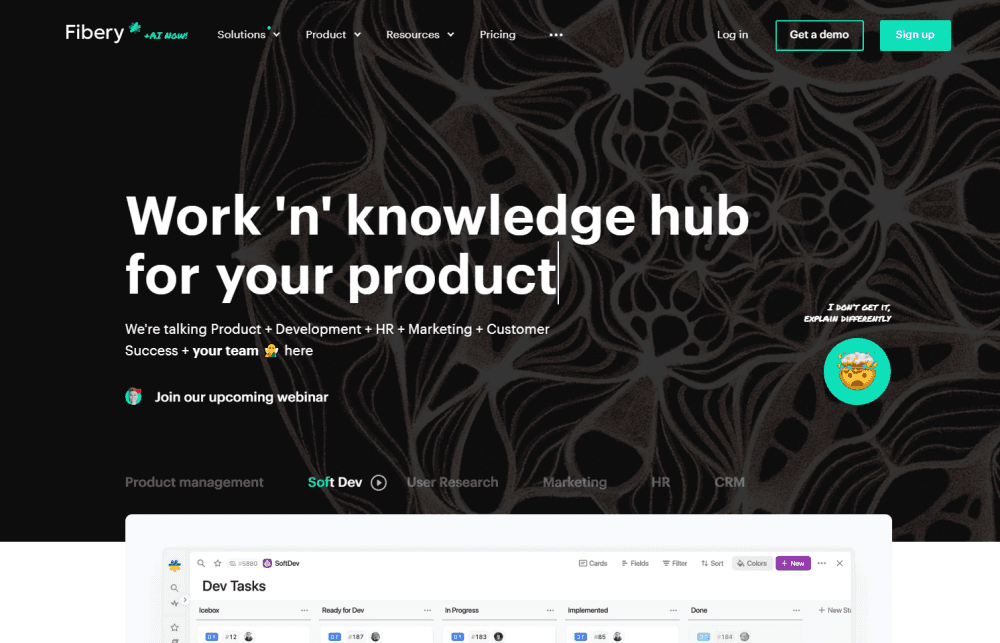
Fibery is a modular AI work management platform that connects databases, docs, whiteboards, and automations in one workspace, letting teams replace several scattered tools with one adaptable system.
About Fibery
What Is Fibery
Fibery is a connected workspace built by Fibery, a company founded in 2017 by the creators of Targetprocess. Instead of forcing your work into fixed boards and lists, it hands you building blocks: databases, relations, formulas, views, and automations. You assemble them into the system your team actually uses, whether that's product management software, a CRM, recruitment, or something no template covers.
The problem it targets is tool sprawl. Most teams run one app for docs, another for project tracking, a third for customer data, and a spreadsheet that ties the loose ends together. Fibery pulls those into one place where a customer record, a feature, and a task all know about each other. That connectedness is the whole point: link feedback to a product hierarchy and prioritization stops being guesswork.
The tradeoff is setup effort. A generic board is quick to spin up, but Fibery rewards teams willing to model their own data. If you want something that works out of the box with zero configuration, a simpler tool will suit you better. The AI layer is genuinely useful for building and querying a workspace, and the monthly credit limits on lower plans only bite on heavy use.
Getting Started
- Sign up at fibery.com and pick the Free plan or start a 14-day trial, no credit card required.
- Install a template or let Fibery AI generate a starting workspace by describing what you want to track.
- Build your databases and relations, then add the fields, formulas, and views your team needs.
- Invite teammates as members, observers, or guests, each with their own access level.
- Layer on automations and integrations so data flows in from the tools you already use.
Product Information
A quick look at Fibery's pricing, supported platforms, and performance.
Best for
The users, tasks, and scenarios where this tool fits best.
Users
- Product teams
- Founders and small teams
- Operations and agency leads
Tasks
- Managing customer feedback
- Running roadmaps
- Automating busywork
- Connecting tools
Scenarios
- A product launch
- A client project
- A startup dashboard
Key features
Custom Databases and Relations
Fibery starts with databases, the way Airtable or a spreadsheet does, but lets you connect them however you like. A feature can link to a customer, a task, and a release at once, and those relations can span different spaces. That flexibility means one workspace can model a workflow that would need three separate tools elsewhere.
Fibery AI and Remote MCP
Fibery AI builds and queries workspaces in plain language. Describe what you want to track and it spins up the structure, summarizes interviews, and finds relevant data. Through a remote MCP server, you can also connect Claude, ChatGPT, or another agent to work on the same data your team does, with the same permissions.
Views and Whiteboards
The platform offers far more than a board. Tables, lists, boards, timelines, calendars, galleries, forms, maps, and charts all read from the same data, so different teams see what they need without duplicate records. Whiteboards and collaborative docs sit alongside, which keeps planning and writing in the same place as the work.
Automations and Formulas
Automations handle repetitive steps: create a task when a sprint starts, assign QA when a story ends, or ping Slack when a deal closes. Buttons trigger actions on demand, and JavaScript actions reach further when a no-code workspace runs short of options. Formulas power calculations and validation across your databases, so status and scores update themselves.
Integrations and Open API
Fibery connects to dozens of tools, including Slack, GitHub, GitLab, Jira, Trello, HubSpot, and Zapier, and can sync data in on a schedule. Its API lets developers create entities, change schemas, and handle webhooks. The API is powerful but fairly complex, so it suits teams with someone comfortable writing code.
Charts and Reporting
The built-in chart view works like a lightweight BI tool over your live data, supporting bar charts, scatterplots, and tables. Reports can draw on historical data as well as current records, which helps answer questions like which features get requested most. For product teams, that turns a workspace into a place to make decisions, not just store tickets.
Pros and cons
Pros
- One platform replaces docs, project tracking, and a database, cutting the number of tools a team has to pay for and learn.
- Custom databases and relations let a workspace mirror how a team actually works instead of bending around rigid templates.
- The Free plan supports up to 10 users with unlimited entities and AI included, which is unusually generous for a small team.
- Native integrations and an open API move data between Fibery and the tools already in use without manual copying.
Cons
- Setup takes real effort, so teams that want something working out of the box may find the learning curve steep.
- AI usage runs on monthly credits, and lower plans cap them quickly, which can force an upgrade for heavy users.
- The API is powerful but complex, which raises the bar for anyone hoping to build integrations without developer help.
Frequently asked questions
Fibery is used to run connected work in one place, from product development and roadmaps to feedback management, a light CRM, and internal ops. You build the system from databases and views rather than adopting a fixed template.
Related content
Explore related tools, skills, and articles for Fibery.
Fibery Alternatives

Base Code
Base44 (Wix) · Coding · ProductivityBase Code is a shared cloud development environment from Base44. Teammates describe changes to an existing GitHub codebase in chat, preview them live and send them back as pull requests.

Knocket
Knocket (Tencent RTC team) · Productivity · Business · ChatbotKnocket is a free live chat and contact page tool that lets visitors message you from your website, app, or a shareable link, with every reply handled from Telegram or one inbox.

FloorGen
Vinit Kumar (FloorGen) · Productivity · China AIFloorGen is a browser-based floor plan maker that turns a sentence or a sketch into an editable 2D plan and a 3D walkthrough. Export to PDF, DXF or video, and draw without an account.