

FitnessAI: Gym Workout Planner
FitnessAI Inc. · Leaning · AI Assistant
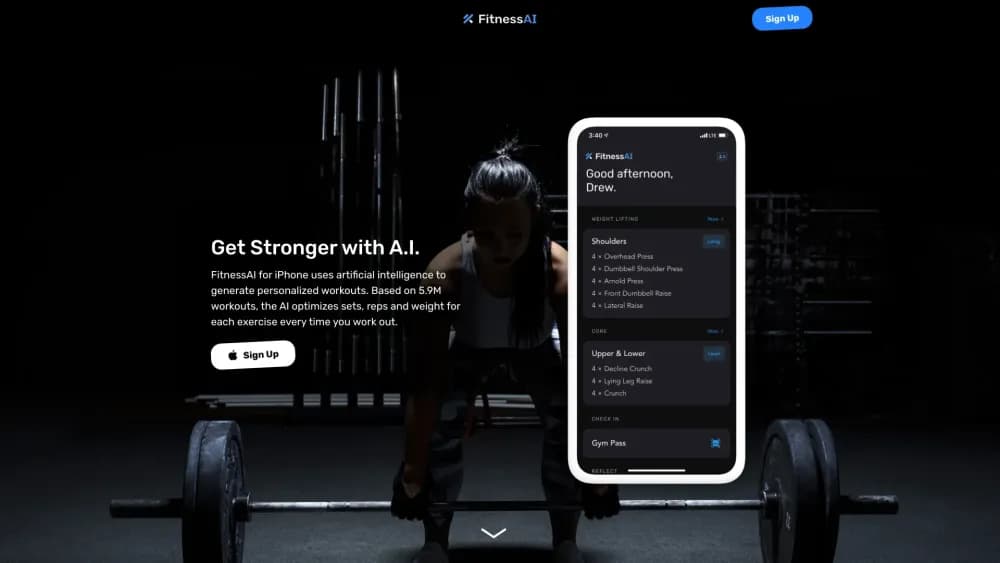
FitnessAI is an AI strength training app that picks your sets, reps and weights from logged workout data. Train at the gym or home, with any equipment you have.
About FitnessAI: Gym Workout Planner
What Is FitnessAI
FitnessAI is an AI workout planner built around one idea: you shouldn't have to guess what to lift. The app draws on a large set of real training logs to suggest a weight and rep target for each exercise, then adjusts those numbers as you log your sessions.
It's a strength training tool first. You open it at the gym or at home, see the day's plan, log your sets, and the algorithm moves your next weights up or down based on how the last session went. The company says its model was built from millions of workouts and data from tens of thousands of lifters.
The main catch is the subscription. The app is free to download, but the full adaptive program sits behind a paid plan, so the free path is closer to a trial than a complete product. There also isn't a clear public API, so treat it as a consumer training app rather than something you build on.
Getting Started
- Download FitnessAI from the App Store and answer the setup questions about your goals and experience.
- Enter the equipment you can use, whether that's a full gym, dumbbells at home, or bodyweight only.
- Open the day's workout and follow the listed exercises with their sets, reps and suggested weights.
- Log each set as you finish it so the algorithm can adjust your next session.
- Connect Apple Watch or Apple Health if you want your training data to sync automatically.
Product Information
A quick look at FitnessAI: Gym Workout Planner's pricing, supported platforms, and performance.
Best for
The users, tasks, and scenarios where this tool fits best.
Users
- Gym regulars who want structure
- Home lifters with limited gear
- Beginners learning progression
Tasks
- Planning daily strength sessions
- Tracking lifts over time
- Short, flexible training
Scenarios
- A 45 minute gym slot
- Travel or hotel training
- Home strength blocks
Key features
Adaptive Weight and Rep Targets
The core of FitnessAI is its suggestion engine. For every exercise you see a weight and rep range pulled from your own history plus the wider training data. Log a set that felt easy and the next one gets heavier. Struggle and it backs off. This is the part that separates it from a static spreadsheet plan, since the numbers move with you instead of staying fixed.
Any Equipment, Anywhere
You tell the app what you have, whether it's a commercial gym, a pair of adjustable dumbbells, or nothing but floor space. The exercise selection and swaps follow that list. If a machine is busy or missing, you can swap a movement and keep the session on track. It's the feature that makes the same app work for a crowded gym and a small apartment.
Apple Watch and Health Sync
FitnessAI connects to Apple Watch and Apple Health for automatic logging. Start a workout and your watch can track sets and rest periods without you reaching for the phone. The synced data also keeps your training history in one place, which matters because the algorithm leans on that history to set your next weights.
Guided Form and Muscle Visuals
Each exercise comes with guidance on form, and the app shows which muscles a movement targets. For lifters still learning an exercise, that visual layer is a faster way to check you're working the right area. It won't replace a coach watching your rep, but it covers the basics before you load up the bar.
BodyScan Progress Tracking
The app tracks more than the number on the scale. A BodyScan view is meant to show changes in muscle and fat over time, so progress you can't feel in a single session still shows up over weeks. It pairs with the strength charts, giving two angles on whether the plan is working.
Structured Challenges
FitnessAI runs focused challenges with rewards attached. They're aimed at consistency, the thing most lifters lose first. A challenge gives a short term target beyond your normal rotation, which can pull you back to the gym on days you'd otherwise skip.
Pros and cons
Pros
- Sets weights and reps for you, so you skip the guessing between exercises.
- Adapts to whatever equipment you have, from a full gym to a single pair of dumbbells.
- Apple Watch and Apple Health sync keep logging and history in one place.
- Session lengths flex from about 5 to 30 minutes, which fits a tight schedule.
- Built on a large body of logged workouts rather than a single trainer's method.
Cons
- The full adaptive program sits behind a paid subscription, so free use is limited.
- No published public API, which rules it out for developers wanting to build on it.
- You get the most value only if you log sets consistently and honestly.
- The focus is strength training, so cardio and mobility fans get less from it.
Frequently asked questions
It's used to plan and track strength training. The app suggests sets, reps and weights for each exercise, then adjusts them as you log your workouts over time.
Related content
Explore related tools, skills, and articles for FitnessAI: Gym Workout Planner.
FitnessAI: Gym Workout Planner Alternatives

HireKey
HireKey · Voice & Language · Productivity · LeaningHireKey is an AI job search copilot built by a former tech recruiter. It checks role fit, tailors resumes, runs interview practice and tracks every application.

Lune
Retrograde Labs · Productivity · LeaningLune is a research search engine for scientific AI agents. It runs as an MCP server that lets Claude, ChatGPT and Cursor search peer-reviewed computer science papers and cite them.
Coddy
Coddy · Coding · LeaningCoddy is a gamified platform to learn to code through short interactive lessons in 20+ languages, with a browser editor, an AI tutor and free certificates.