

FraudLens AI
FraudLens AI · Coding
FraudLens AI is a healthcare fraud detection platform built to catch fraud, waste, and abuse (FWA) before a claim gets paid. It runs on a multi-vectored detection approach and is designed to surface suspicious billing within 24 hours, so your review team works from a short list instead of a full claims backlog. Health plans, payers, and payment integrity teams are who it's built for.
About FraudLens AI
What Is FraudLens AI
FraudLens AI is a healthcare fraud detection software platform for spotting fraudulent and wasteful claims. The core promise is speed. Instead of discovering problems during a post-payment audit months later, it aims to flag suspicious activity within 24 hours so money can be recovered or withheld while it still matters. That's the whole pitch.
The product sits on top of your claims data and looks for the patterns that human reviewers miss when they're working through thousands of records a week. Its multi-vectored approach means it checks several signals at once rather than relying on a single rule set, which is how most legacy claim scrubbing tools work. Think of it as a healthcare payment integrity layer that runs early, not late. We couldn't confirm the exact signal set or model details from the official site, since the marketing pages sit behind a login.
The biggest limitation to know up front: FraudLens AI is a product for organizations, not individuals. It's aimed at payers, health plans, and payment integrity teams working at claims volume. If you're a solo billing consultant or a small clinic, this is likely heavier than what you need. There is no public self-serve signup, and pricing is quoted privately.
Getting Started
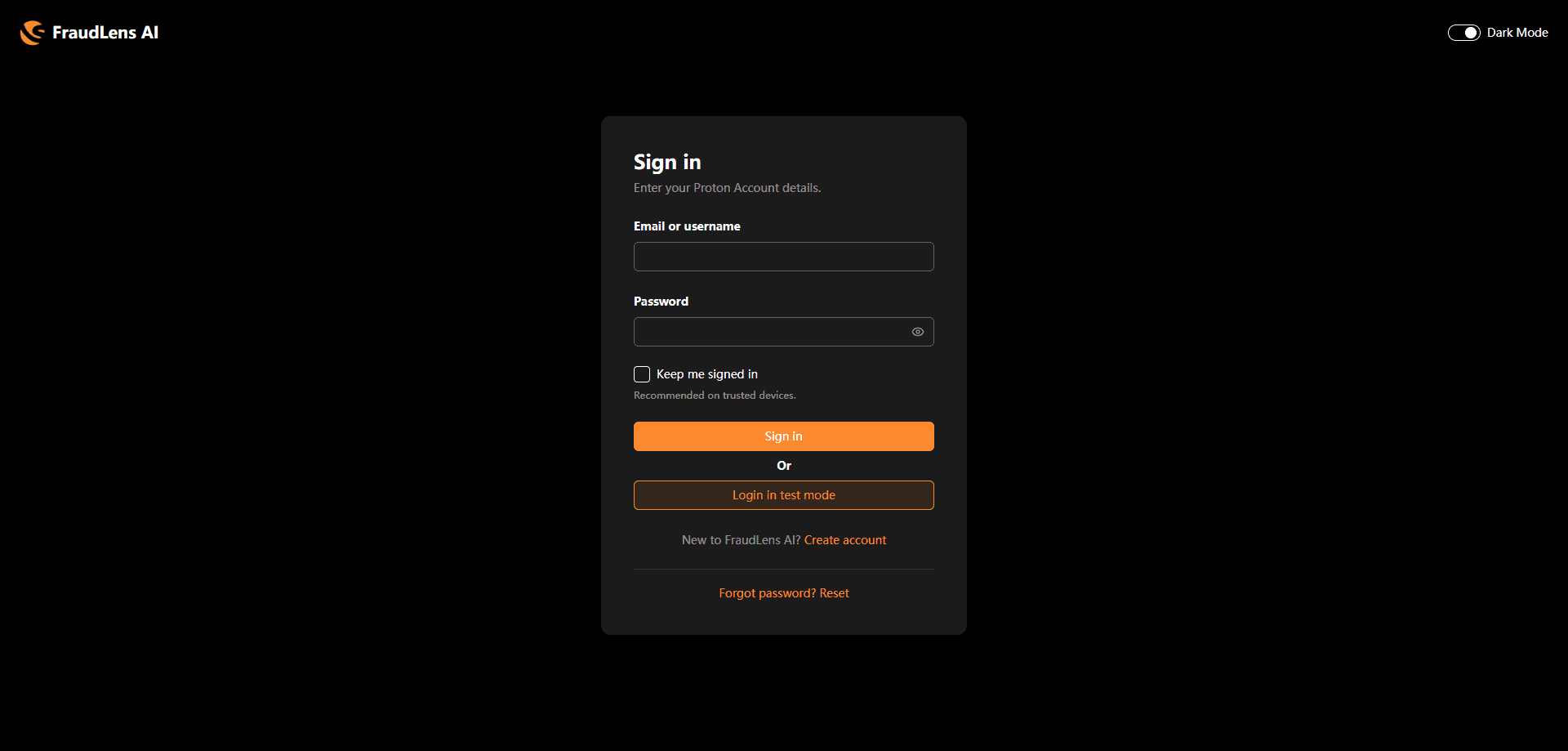
- Request access or a demo through the official site, since there's no open self-serve signup.
- Connect your claims data source or upload a claims file for review.
- Set your detection thresholds and the claim types you want the platform to prioritize.
- Review the flagged cases in the dashboard, inspecting the fraud indicators behind each one.
- Route confirmed cases to your investigation or recovery workflow.
Product Information
A quick look at FraudLens AI's pricing, supported platforms, and performance.
Best for
The users, tasks, and scenarios where this tool fits best.
Users
- Payment integrity analysts
- Health plan auditors
- Fraud investigators
Tasks
- Pre-payment claim screening
- Pattern detection across claims
- Triage and prioritization
- Audit support
Scenarios
- A payer dealing with a spike in suspicious claims and no way to review them fast enough.
- A payment integrity team trying to shift from post-payment recovery to pre-payment prevention.
- A health plan preparing for a compliance review and needing a clear record of how claims were screened.
- An investigation team that wants to cut false positives so its limited staff only chases real cases.
Key features
24-hour fraud detection window
The platform is built around a tight timeline: flagging fraud, waste, and abuse within 24 hours of a claim coming in. The practical upside is that a plan can act before payment instead of chasing money after it's gone. That timing is the main thing separating it from tools that batch claims weekly or run only at audit time. Time is the whole point.
Multi-vectored detection
Rather than leaning on one rule set, FraudLens AI checks several detection signals at once. In practice this means a claim has to look wrong from more than one angle before it gets flagged. That tends to cut the noise a single-rule engine produces. We couldn't verify the exact vectors from the public site, so treat that as the vendor's description rather than a confirmed spec.
Claims review dashboard
The dashboard is where the actual review work happens. Built-in views cover recent fraud cases, uploaded files, and the users on the account. A team can track what came in and what got flagged without exporting to a spreadsheet. It works as a claim review platform, not a reporting layer bolted on at the end. Analysts live here.
Fraud case tracking
Confirmed and suspected cases are tracked in one place, which keeps an investigation from fragmenting across email threads and shared drives. Does that sound trivial? It isn't. For a team handling dozens of cases at a time, a shared record matters more than any single detection feature.
File-based claims intake
Claims come in through file upload, which means onboarding doesn't depend on a deep systems integration before you see any value. That's a low-friction starting point. Teams running high volume will eventually want a direct data connection.
Pros and cons
Pros
- Aimed at pre-payment detection, so problems surface while the money is still recoverable.
- The 24-hour window is a real improvement over post-payment audits that show up months later.
- Multi-vectored detection is meant to cut false positives, which protects limited investigator time.
- The dashboard handles case tracking and file review in one place.
- File-based intake keeps initial setup simple.
Cons
- No public pricing, so you can't estimate cost without going through sales.
- The marketing site is gated behind a login, which makes independent evaluation hard before you commit.
- Claims connect through file upload rather than a documented open API, so high-volume teams may hit a wall.
- We couldn't confirm API availability from official sources, and that matters if you need to wire it into an existing claims system.
Frequently asked questions
It screens healthcare claims for fraud, waste, and abuse and flags suspicious ones, aiming to surface problems within 24 hours so they can be handled before payment. It's a detection and review tool for claims data, not a general-purpose analytics platform.
Related content
Explore related tools, skills, and articles for FraudLens AI.
FraudLens AI Alternatives
Codeflying
Kuafu Technology (Codeflying) · Coding · Marketing · ChatbotCodeflying is an AI app builder that turns a plain-language description into a working website, mobile app, or mini app. It works as a no-code app builder, so you type what you want and a set of AI agents handle requirements, architecture, front-end screens, back-end logic, and deployment. The goal is simple: build an app from a prompt, even with zero coding background. Marketing tools and a customer-facing chat agent come bundled too, so the result is more than a prototype stuck on a hard drive.

Runware
Runware, Inc. · Image · Video · CodingRunware is a generative AI inference platform that gives developers one API for image, video, audio, 3D, and language models. Instead of signing up with a dozen providers, you call a single endpoint, switch models with a one-line string change, and pay only for the requests you send. No servers to run. It's aimed at teams that want to ship AI features fast without building or babysitting their own GPU infrastructure.

Aider
Aider AI LLC · CodingAider is an open-source AI pair programming tool that lives in your terminal. You point it at a local git repo, describe what you want in plain English, and it edits the files, writes the diffs, and commits the changes for you. It connects to Claude, GPT, DeepSeek and Gemini through your own API keys, and it also runs local models through Ollama or any OpenAI-compatible endpoint. Developers who already work at the command line tend to adopt it fast. It stays out of the way. That's the whole appeal.