Grok 4.7

Grok 4.7

xAI (SpaceXAI) · Coding · Chatbot

Grok 4.7 is xAI's flagship model for coding and knowledge work. It builds on a larger base model than Grok 4.6, handles a 500,000-token context window, and takes text and image input. The pitch is blunt: about twice the speed of comparable AI coding models at roughly half their price. Developers reach it through the Grok API, Cursor, and Grok Build, and it keeps the same rate as its predecessor at $2 per million input tokens and $6 per million output tokens. If your work is long, multi-hour engineering tasks, that combination is the reason to look at it. It isn't aiming at generalist chat. So who should try it?

Interface preview of Grok 4.7

About Grok 4.7

What Is Grok 4.7

Grok 4.7 is a closed-source AI model from xAI, the company Elon Musk founded and now markets under the SpaceXAI name. The company positions it as its most capable model for programming and knowledge work, and the release notes lean hard on that framing rather than on chat or multimodal demos. Its job is to finish hard tasks that take hours. Not to trade jokes for ten minutes.

The biggest change under the hood is a new, larger base model. Where Grok 4.6 leaned on supplemental training and better agentic reinforcement learning, Grok 4.7 restarts from a bigger foundation and trains for longer on harder problems. A large share of that training targets tasks that take hours to complete, which is where the model spends most of its gains. It's a rebuild, not a patch. It also learned the Grok Bot runtime natively, so it fits long-running agent workflows instead of treating that layer as an afterthought.

Here's the honest limit. Independent testers at Artificial Analysis scored it 46 on their Intelligence Index, which lands mid-pack next to models like Claude Fable 5.1 and GPT-6 at 53. Its wins cluster in software engineering, electrical engineering, and legal analysis; its weakest public result is multi-hour terminal work, where it trails Fable 5.1 by a wide margin. So it's a specialist. Good at cost. Not a clear front-runner across the board.

Getting Started

  1. Create an account at console.x.ai and open the API Keys page.
  2. Generate a key and store it somewhere safe, since it's shown only once at creation.
  3. Point your client at the base URL https://api.x.ai/v1 and call the model ID grok-4.7. Existing OpenAI SDK code works with that base URL, and there's a xai_sdk for Python and TypeScript.
  4. Pick a reasoning effort level. It defaults to high, and you can drop to low or medium for speed or push to xhigh for the hardest problems. You can't turn reasoning off.
  5. Send your first request. If you'd rather skip the code, try the same model inside Cursor or Grok Build.


Product Information

A quick look at Grok 4.7's pricing, supported platforms, and performance.

Free PlanYes
Paid Plans$2 - $12/mo
PlatformWeb, API, iOS, Android (via Grok app), Cursor, Grok Build
DeveloperxAI (SpaceXAI)
CategoryCoding · Chatbot
Release DateSep 2025
Latest UpdatedSep 2025
Website Visits29.5M
Website Global Rank1.7K
API AvailabilityYes

Best for

The users, tasks, and scenarios where this tool fits best.

Users

  • Software engineers
  • Data and finance analysts
  • Startups watching their API bill

Tasks

  • Multi-hour coding tasks
  • Code migration and refactoring
  • Professional document work
  • Long-context research with a long-context AI model

Scenarios

  • Running an autonomous coding agent overnight
  • Auditing a large codebase for issues
  • Drafting technical reports
  • Prototyping an API integration

Key features

A Larger Base Model With Longer Training

Grok 4.7 sits on a new, larger foundation model rather than a patched version of Grok 4.6. xAI trained it with reinforcement learning that runs longer and on harder problems, many designed to take hours to finish. The practical result is a model that stays on task when a job stretches past the point where smaller models start cutting corners.

500,000-Token Context Window

The context window holds up to 500,000 tokens, so it can keep a large document set or a sprawling codebase in view at once. That's a lot of room. xAI also strengthened long-context management, which is the part that usually degrades as a session grows. For anyone juggling multi-file projects or long transcripts, that reduces how often you have to restart a conversation.

Self-Verification and Error Checking

A big part of the training push went into self-checking. The model is trained to review its own output before finishing, which cuts down on the confident-but-wrong answers that plague long agent runs. It won't catch everything. You should still review important work. Even so, it's a real difference on tasks where a late mistake invalidates an hour of output.

Configurable Reasoning Effort

You set how much the model thinks with a reasoning effort level: low, medium, high, or xhigh, with high as the default. Low keeps latency tight for simple calls, while xhigh throws more compute at the hardest problems. You can't switch reasoning off entirely, which is worth knowing before you plan a latency budget.

Native Grok Bot Runtime Training

The model was trained to understand the Grok Bot operating environment from the start. That makes it a better fit for agent workflows that call tools, hold context across turns, and run for a long time, rather than a chat model that needs extra plumbing bolted on. If you're building agents, this is the feature that matters most.

Strong Professional Benchmarks

On the benchmarks xAI published, Grok 4.7 lands well ahead of Grok 4.6 and competitive on several professional axes. CursorBench 4.0 went from 40.4% to 46.3%, Terminal-Bench 4.0 nearly doubled from 20.3% to 38.0%, and EEBench climbed from 53.0% to 64.0%. That last jump is big. On the Harvey legal benchmark it scored 19.6%, well above the comparison models in xAI's own table. Take vendor numbers with the usual grain of salt, but the direction is consistent.

Competitive API Pricing

The standard API rate is $2 per million input tokens and $6 per million output tokens, unchanged from Grok 4.6. Cached input drops to $0.50 per million tokens, which helps if you reuse a fixed prompt. Push past a 200,000-token prompt and the rate doubles to $4 input and $12 output, so very long requests cost more. A faster Grok 4.7 Fast variant doubles output speed and doubles the token price, but it's only available in Cursor and Grok Build for now.

Pros and cons

Pros

  • Fast output and low per-token cost make it a strong pick for high-volume API work.
  • The 500,000-token context window handles large codebases and document sets without constant restarts.
  • Self-checking behavior helps on long tasks where a late error would waste the whole run.
  • Native Grok Bot runtime training means it fits agent workflows out of the box.
  • Drop-in OpenAI-compatible endpoints let you test it without rewriting your client.

Cons

  • Weaker than the leading models on multi-hour terminal tasks, which is exactly the category xAI promotes most, so check it against your own workload before committing.
  • Reasoning can't be turned off, so there's a latency floor even on simple calls.
  • Prompts above 200,000 tokens cost double, which can surprise teams budgeting at the base rate.
  • The fastest variant is locked to Cursor and Grok Build and isn't on the public API.

Frequently asked questions

It's built for coding and knowledge work, especially long tasks that run for hours. Think large-scale refactoring, code review across a big repo, and professional document or report generation. It also supports agentic tool calling, so it works well inside automated workflows.

Related content

Explore related tools, skills, and articles for Grok 4.7.

Grok 4.7 Alternatives

Make It

Make It

Make It · Coding · Leaning

Make It works as an AI electronics builder that turns a plain-English idea into a working DIY electronics project. Describe what you want to build, and back comes the wiring diagram, the code, the component list and step-by-step instructions. No engineering degree required. The code runs on the chip instead of the cloud, so a finished device keeps working whether or not you have Wi-Fi.

Free / $0View details
Frederick

Frederick

Frederick AI · Coding · Productivity

Frederick is an AI agent platform where agents build the apps your company needs and then keep running the work around them. Instead of handing you a chat box, it gives each agent a shared company memory, its own browser, and a sandbox to write code in. The same agent that ships an internal tool can later run the recurring work that used to follow it. Teams use it to build apps with AI, covering small internal tools and full customer-facing products alike. The free plan means you can test the whole loop before paying anything.

Free / $0 - $50/moView details
PixelCrew

PixelCrew

PixelCrew · Image · Coding · Productivity

PixelCrew is an AI design platform that runs a crew of named agents on a single written brief. You describe what you need, and a researcher, an art director, a UX designer, and a build crew work through the job in sequence, handing work off the way a real studio does. One brief in. A full deliverable out. The output is production-ready HTML with Tailwind, a full design system, and documentation you can ship or pass to any developer. It suits founders, product teams, and freelancers who need polished design fast without hiring a full agency. No design background required.

Free / $0 - $99/moView details

Related AI News

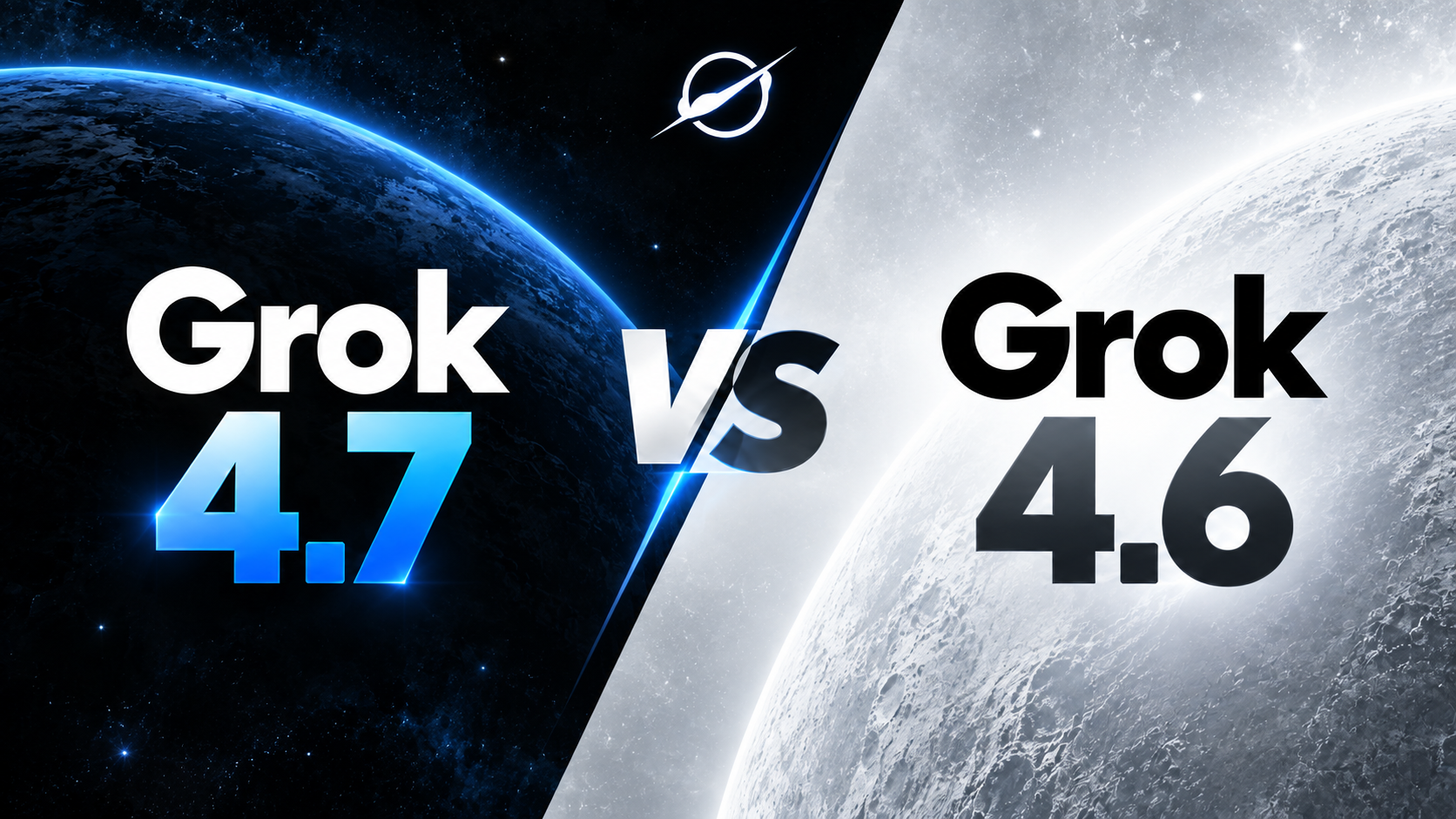
Grok 4.7 compared with Grok 4.6
Comparisons

Grok 4.7 vs Grok 4.6: What the Benchmark Jumps Actually Mean

Grok 4.7 keeps the same $2/$6 price as Grok 4.6 but rewrites the base model. Terminal-Bench nearly doubles, hallucinations drop from 34% to 29%, and accuracy stays flat. We compare the vendor table against independent testing, including the token usage that can offset the flat price.

Heat: 1,000
Grok 4.7, xAI's new model release
Models

Grok 4.7 Is Out: Same $2/$6 Price, a Bigger Base Model, and a 500K Context

xAI released Grok 4.7 on September 21 at the same $2/$6 pricing as Grok 4.6, built on a larger base model with longer reinforcement learning for long-horizon tasks. It nearly doubles its Terminal-Bench score but still trails Fable 5.1 on several tests, and it burns far more tokens per task.

Heat: 1,150