

Healactively back health coach
Healactively AG · AI Assistant
Healactively is an AI back health coach app that turns a free self-assessment into a personalized back pain program with physio exercises, walking routines, relaxation and 24/7 chat.
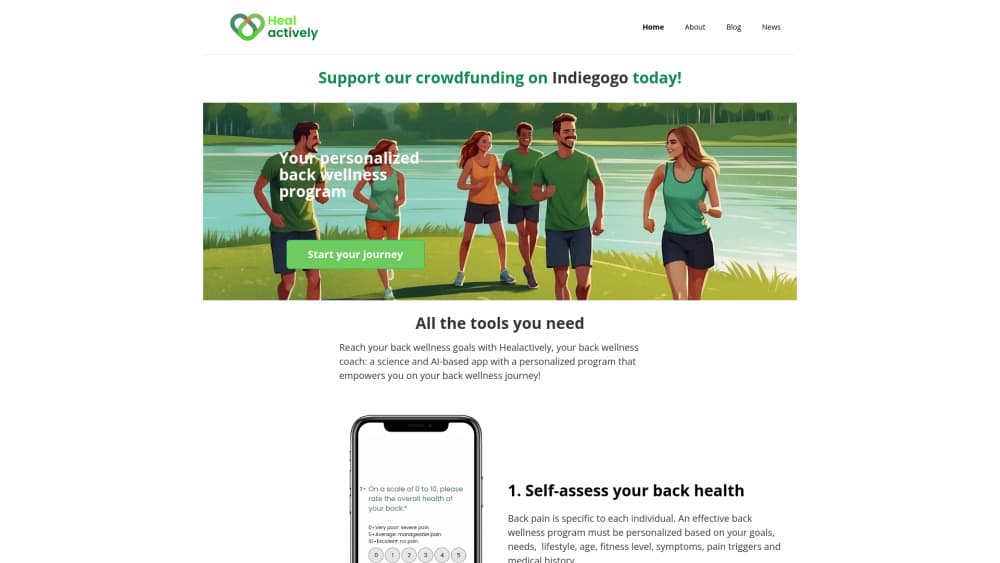
About Healactively back health coach
What Is Healactively
Healactively is a mobile back health app built around one idea: most persistent back pain gets better with the right movement done consistently, not with more appointments. You answer a self-assessment about your goals, pain triggers, fitness level and medical history, and the app assembles a week by week program you can run at home in about seven minutes a day.
The company says the program was developed with physiotherapists and draws on decades of published back research, including work associated with Stuart McGill, Robin McKenzie and Peter O'Sullivan. The app is distributed by Healactively AG, a Swiss company, and is aimed at people who want structure between clinic visits, or instead of them.
Two limits matter up front. Healactively is not a medical device and it does not diagnose anything, so serious symptoms still belong with a doctor. It also has no free trial, which means you decide on the strength of the assessment and the published pricing rather than a test run.
Getting Started
- Download the Healactively back pain app from the App Store or Google Play.
- Create an account with your email, then complete the self-assessment on goals, symptoms, triggers, age, fitness and medical history.
- Review the generated back strengthening program, which starts with pain relieving postures in week one and moves into pain free movement, strengthening and a long term routine.
- Set a training schedule that fits your week and pick a routine length of 5, 7 or 10 minutes.
- Start the first guided session, then rate each exercise as too easy, just right or too difficult so the level adjusts.
Product Information
A quick look at Healactively back health coach's pricing, supported platforms, and performance.
Best for
The users, tasks, and scenarios where this tool fits best.
Users
- Desk workers with recurring low back pain
- People who have tried passive treatment without much change
- Patients already seeing a physiotherapist
Tasks
- Running a structured daily back pain exercise routine
- Learning how to move without flaring pain
- Winding down in the evening
- Preparing for a physio visit
Scenarios
- Long stretches at a desk with little movement
- Travel and hotel weeks
- Maintaining gains after a course of clinic treatment
Key features
Self-Assessment With Safety Checks
The entry point is a questionnaire covering goals, pain triggers, symptoms, age, fitness and medical history. Answers decide the starting level and the content of your plan, and the safety checks flag answers that need a clinician's opinion before you train. It takes a few minutes and it replaces the generic "beginner back routine" you would otherwise follow.
Week by Week Program Structure
The plan is sequenced rather than random. Week one works on pain relieving postures, week two on moving without pain, week three introduces strengthening, and later weeks settle into a routine you keep. That order matters if you have been injured before, because loading a back that still hurts usually backfires.
Guided Physiotherapy Sessions
Every session comes with physiotherapist instruction plus audio and video guidance, so form is visible while you move. You choose 5, 7 or 10 minutes depending on the day, and you can skip ahead when a lesson feels too easy. The tradeoff is fixed content: sessions follow the generated plan, not whatever you feel like doing. It works as a physiotherapy at home app, not as a choose your own workout library.
AI Coach Available Around the Clock
A chat coach answers questions about exercises, sleep, nutrition and general back health at any hour, with replies shaped by your assessment. It's useful at 11pm when a twinge worries you and your physio is asleep. It is not a clinician and it won't give you a diagnosis.
Relaxation and Sound Therapy
The app includes guided relaxation sessions with deep breathing and sound therapy. These target the tension and poor sleep that tend to come with long running pain, and they work as a separate track from the exercise plan.
Progress Tracking and Clinician Sharing
You log well-being, sleep and back health, and the app turns those entries into a progress view you can share with a healthcare professional. For anyone coordinating care, that beats reconstructing six weeks from memory in a ten minute appointment.
Pros and cons
Pros
- Costs far less than a course of in person physiotherapy, with plans from $29 for three months.
- Program content is built with physiotherapists and grounded in published back pain research rather than generic fitness advice.
- Difficulty adapts through your feedback after each exercise, so the plan follows your capacity instead of a fixed script.
- The 24/7 AI coach covers the small questions that would otherwise wait for an appointment.
- Progress data can be shared with your clinician, which makes the app a bridge rather than a replacement.
Cons
- No free trial, so you pay before you know whether the format suits you.
- You can't edit the personalized plan directly, and the company says plan changes are a future feature; you adapt by rating exercises instead.
- Not a medical device, so it can't diagnose, treat or advise on red flag symptoms such as numbness or loss of bladder control.
- Chat support is AI only, with no live physiotherapist in the app for form checks or setbacks.
Frequently asked questions
It builds and guides a personalized back strengthening program from your self-assessment, then walks you through short daily sessions with video, audio and an AI coach. Think structured home physio rather than a library of random stretches.
Related content
Explore related tools, skills, and articles for Healactively back health coach.
Healactively back health coach Alternatives
Agibot
Agibot · Productivity · AI Assistant · ChatbotAgibot is a personal AI agent for Mac that keeps running after you close the window, runs routines on a schedule, and works from Telegram or Slack with your own API keys.

Foley
Hanamori Labs, LLC · Voice & Language · Productivity · AI AssistantFoley is a voice to-do list that turns a spoken sentence into a filed task, complete with project, date and time, then helps you plan the day around what is already there.

Ghost Core
Ghost · Productivity · AI AssistantGhost Core is a $3,499 screenless personal AI computer that runs local AI models on its own hardware, builds context from your apps and devices, and acts without waiting for a prompt.