

Hellometer
Hellometer, Inc. · Writing
Hellometer is an AI computer-vision platform for restaurants and retail. Camera-based timers track drive-thru, lobby and kitchen flow, and the same footage feeds loss-prevention alerts.
About Hellometer
What Is Hellometer
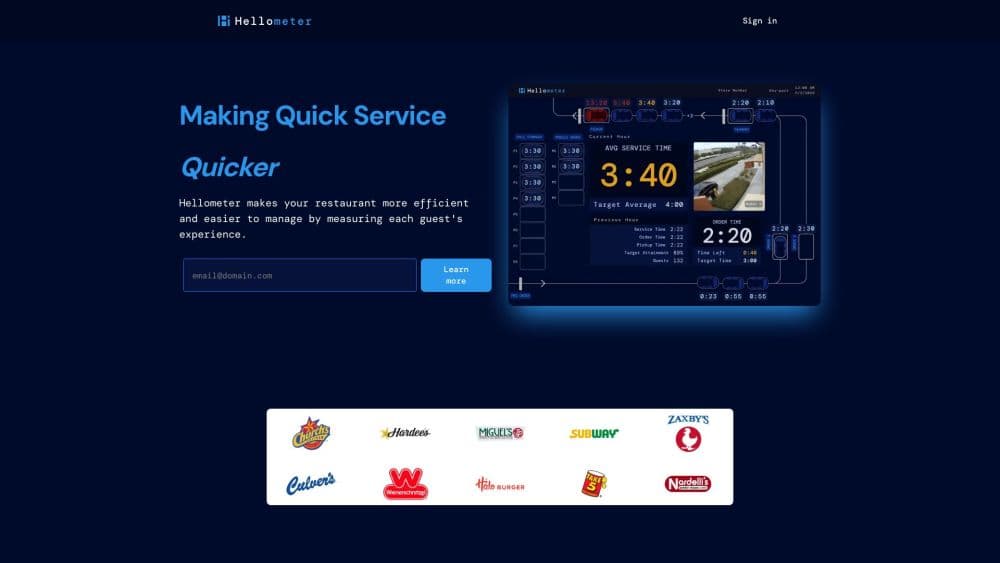
Hellometer is a computer vision platform for quick-service restaurants and retailers. Instead of putting sensors in the pavement or asking crew members to press buttons, it mounts cameras at the drive-thru lane, the front counter, the kitchen line and the register, then uses AI to work out how long each car or guest waited.
The company was founded in 2020 by Alex Popper and Alberto Rivera and went through Y Combinator that same year. It's based in Santa Monica, California, and sells four products that share one dashboard: Drive-Thru Timer, Lobby Timer, Kitchen Monitoring and Loss Prevention.
Hellometer sells itself as an AI restaurant operations platform rather than a single-purpose timer, and the four products share one login. The pitch is simple. An owner can't stand in every store, so the cameras watch the parts of the shift that decide whether service is fast and whether product walks out the back door. Hellometer says its customers cut wait times by around 47 seconds and gain roughly 1% in revenue for every 7 seconds saved. Those are vendor figures, not an independent audit.
The limits are worth knowing before a demo. You need cameras installed at each site and a network connection for them, so this isn't software you can switch on this afternoon. Pricing isn't published, there's no free tier, no self-serve signup and no public API. Everything starts with a sales conversation and a site walk.
Getting Started
- Book a demo through the Hellometer site. The team maps your lanes, counters and back-of-house areas and quotes the hardware and subscription together.
- Schedule installation. Cameras go up at the drive-thru order point, payment window, pickup window, entrance, counter, prep line and register, depending on which products you buy.
- Confirm the lane layout and service targets with your account team, so the system knows which stations count and what a good time looks like for each daypart.
- Open the dashboard on a phone, tablet or desktop. Live vehicle count, wait times and station delays appear within minutes of the first cars passing through.
- Set alert thresholds and add managers to SMS or email notifications, then use the weekly reports to compare stores and shifts.
Product Information
A quick look at Hellometer's pricing, supported platforms, and performance.
Best for
The users, tasks, and scenarios where this tool fits best.
Users
- Multi-unit fast food operators
- Franchisees with a slow drive-thru
- Restaurant owners who suspect shrink
- Retail managers
Tasks
- Cutting drive-thru wait times
- Measuring door-to-dine service
- Spotting kitchen slowdowns
- Reviewing incidents without scrubbing footage
Scenarios
- A 20-location burger chain that wants the same service standard across company stores and franchises.
- A single high-volume drive-thru where the afternoon rush pushes lane times past the brand target.
- A restaurant group preparing for a health inspection and wanting a dated record of kitchen practice.
- A retail district testing queue analytics before rolling cameras out to more stores.
Key features
Camera-Based Drive-Thru Timer
Hellometer detects each vehicle as it enters the lane and tracks it through the order point, payment window and pickup, giving a second-by-second timeline per car. Because it reads the lane with cameras, there's no loop to cut into the asphalt and no pressure sensor to recalibrate. The company says the system handles dual lanes and stacked queues, which is where older timer setups tend to lose count.
Lobby and Guest Journey Tracking
Lobby wait time tracking follows a guest from the door to the counter to the table, timing each stage without anyone touching a screen. That breakdown matters because a fast kitchen can still look slow if the register queue backs up. Hellometer says the system measures flow rather than identifying people, so it doesn't store faces or personal details.
Kitchen Line Monitoring
Cameras over prep stations and the pass track how orders move from screen to plate. Managers see which station is behind and how ticket times shift between a well-staffed shift and a short one. The system also logs food handling and cleanliness checks, which gives you a dated record before an inspector asks for one.
Loss Prevention Analytics
The loss prevention product records HD video at registers, storage rooms and entrances, then flags patterns like a drawer opened without a sale or after-hours access. Each alert arrives with the relevant clip and lands on an incident timeline. Hellometer has also integrated with Loop, so verified camera footage can be attached to Uber Eats refund disputes.
Multi-Location Benchmarking
Every store sits on one dashboard with leaderboards, side-by-side service times and organization-wide targets. A regional manager can drill into a single location without a separate login or a VPN. When one store finds a process fix that works, the before-and-after numbers make it easier to justify rolling it out.
Alerts and Scheduled Reports
Threshold alerts fire when lane times or lobby waits pass the target you set, through the dashboard, SMS or email. Weekly and monthly reports land in managers' inboxes with the biggest wins and the areas that need attention. That rhythm suits operators who want quick-service restaurant analytics they can review on a Monday rather than another live screen to watch.
Pros and cons
Pros
- No in-ground hardware: cameras replace loops and pressure sensors, so there's no road cutting and no sensor maintenance when a lane is repaved.
- One view across stores: drive-thru, lobby, kitchen and loss prevention share a dashboard, which cuts the number of logins a district manager juggles.
- Passive for the crew: nobody has to press a button or wear a tag, so service data doesn't depend on staff remembering to log anything.
- Footage does double duty: the same cameras that time a lane can supply evidence for a refund dispute or an internal investigation.
- Clear service targets: alerts and benchmarks turn vague goals like faster lunch into numbers a shift lead can act on.
Cons
- Hardware on every site: cameras, mounting and installation are part of the deal, so a new location can't go live the day it signs.
- No public pricing or free trial: you have to sit through a demo and a quote before you know whether the numbers work for a single store.
- No public API: data lives in the Hellometer dashboard, and there's no documented way to push it into a POS, BI tool or data warehouse.
- Camera placement decides quality: a blocked lens, bad angle or night lighting can weaken detection, and someone has to notice and fix it.
Frequently asked questions
Hellometer is an AI video platform for restaurants and retail. It uses ceiling and pole-mounted cameras plus computer vision to time drive-thru lanes, lobby queues and kitchen tickets, and to flag loss prevention incidents.
Related content
Explore related tools, skills, and articles for Hellometer.
Hellometer Alternatives
ToneBird
Ampliftai Inc. · Writing · ProductivityToneBird is a desktop AI reply assistant that drafts answers inside Gmail, Slack, WhatsApp, and other apps, using past conversations, notes about each person, and your own tone.

Emailwritr
Emailwritr · Writing · MarketingEmailwritr is an AI email copywriting tool built for affiliates, course creators, and online businesses that want more revenue from the list they already own. Instead of blank pages or generic chatbot prompts, this AI email writer generates welcome sequences, launch campaigns, cart recovery emails, and promo series from frameworks modeled on well-known direct-response copywriters. You connect your autoresponder, answer a few questions about your offer, and it writes the copy for you.

Swms
Swms AI · Writing · Productivity · BusinessSwms is an AI safety compliance tool that turns a plain description of a job into ready-to-use safety documents. Describe your project, trade, and known hazards, and it writes a safe work method statement, job hazard analysis, safe work procedure, RAMS, or safety data sheet in seconds. It also ships with Oscar, a chat assistant that answers workplace safety questions in any language. Teams in construction, mining, transport, and warehousing use it to cut the paperwork that usually eats into a workday.