

Intervool
Intervool · Productivity · Business
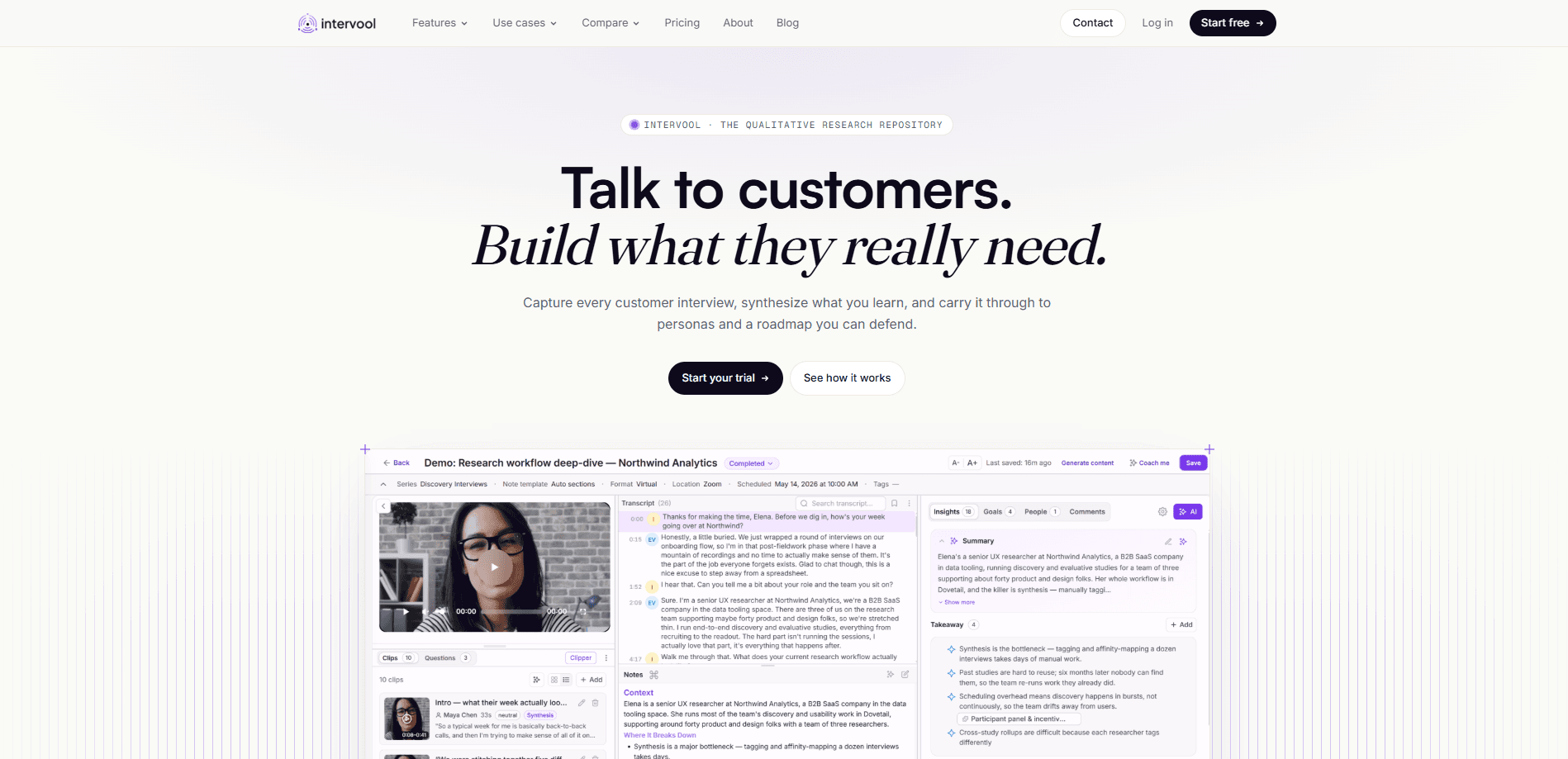
Intervool is a qualitative research repository where product teams store customer interviews and turn them into decisions they can back up. You upload a call as video, audio, or plain notes, and the tool keeps the recording, a full transcript, and the moments that matter in one place. From there it pulls out pain points, quotes, and feature requests, groups them into themes, and links each theme to the roadmap item it justifies.
About Intervool
What Is Intervool
Intervool is customer interview software built around a simple problem: teams run great conversations, then forget almost everything useful that was said. Instead of scattering recordings across cloud drives and pasting quotes into a slide deck, it gives you one repository where every call lives next to the insights pulled from it. The pitch is a research trail you can actually defend when someone asks why a feature made the cut. That's the whole idea.
The AI does the boring part. It transcribes each call, then surfaces the output types you asked for, whether that's pain points, opportunities, quotes, or feature requests. Every extracted row stays linked to the timestamp and speaker it came from, so nothing floats free of the conversation that produced it. That matters more than it sounds.
The catch is scope. Intervool is a workspace for organized qualitative research, not a research method in a box. If your team doesn't run interviews, or runs them too rarely to build a library, you'll spend more time feeding it than learning from it. It also assumes you're comfortable letting AI summarize human nuance, which won't suit every research lead.
Getting Started
- Sign up at app.intervool.com and start a free trial.
- Upload a customer call as video, audio, or written notes.
- Pick the insight types you want, such as pain points, quotes, or feature requests, and describe what to look for.
- Review the generated insights, promote the ones that matter, and refine the results with AI if needed.
- Cluster insights into evidence-linked themes, then use Copilot to question the research or build personas and roadmap items.
Product Information
A quick look at Intervool's pricing, supported platforms, and performance.
Best for
The users, tasks, and scenarios where this tool fits best.
Users
- Product managers building roadmaps
- Teams comparing tools
- UX researchers synthesizing themes
- Founders running early discovery
Tasks
- Turning raw interviews into themes
- Retrieving a specific quote
- Answering questions about your research
Scenarios
- Preparing a product review meeting
- Onboarding a new teammate
- Auditing a past decision
Key features
Interview capture and transcription
Upload a call as video, audio, or written notes. Intervool stores the recording plus a full transcript automatically. The transcript is what the rest of the workspace builds on, so a clean upload is the first step to useful insights. You get the whole conversation searchable, not just the highlights someone remembered to save.
Evidence-linked insights
You choose the output types you want, such as pain points, opportunities, quotes, or feature requests, and describe what to look for in your own words. Every call then surfaces exactly those, and each row links back to the moment it came from. This is the feature that separates a real research trail from a pile of AI summaries.
Copilot for research questions
Copilot answers questions about your interviews, themes, and customers, and it draws its answers from your own repository with sources attached. Ask it about the top pain points across your calls or the biggest gaps in your research so far. Because it cites the underlying calls, you can check its work. Don't just trust it blindly.
Themes and clustering
Clustering is quick. Insights roll up into evidence-linked themes you can scan at a glance. Intervool's AI proposes groupings, and you stay in control by renaming, merging, or reassigning them. Seeing what repeats across conversations is where scattered quotes finally turn into a pattern worth acting on.
Personas and segments that stay current
Themes feed into personas and segments built from real conversations rather than assumptions sketched in a workshop. They update as new calls arrive. Your personas reflect current customers, not the ones you interviewed a year ago. No stale research here. This keeps research useful long after the interview series ends.
Roadmap trail from insight to bet
Themes become feature ideas, and every roadmap bet stays one click from the customer quote behind it. That link is the point. When priorities are questioned, you can show the evidence rather than defend a hunch. It turns research from a one-off deliverable into an ongoing input to planning.
Pros and cons
Pros
- Keeps every interview, transcript, and insight in one searchable repository instead of scattered files.
- Links each insight back to its source timestamp and speaker, so claims stay verifiable.
- Copilot answers questions from your own research and shows its sources.
- AI suggests theme groupings while leaving you in control of the final structure.
- Turns themes into personas and roadmap items without a separate tool.
Cons
- The value depends on volume: a team that runs few interviews builds little of a library.
- No public pricing page means you have to contact the team or start a trial to learn real costs.
- It leans on AI to summarize subtle human conversations, which won't sit well with every researcher.
- Browser-only for now, with no mobile app for capturing or reviewing calls on the go.
Frequently asked questions
It's a repository for customer interviews. You upload calls, it transcribes them and extracts insights like pain points and feature requests, then helps you group those into themes, personas, and roadmap items, all linked back to the original conversation.
Related content
Explore related tools, skills, and articles for Intervool.
Intervool Alternatives

Base Code
Base44 (Wix) · Coding · ProductivityBase Code is a shared cloud development environment from Base44. Teammates describe changes to an existing GitHub codebase in chat, preview them live and send them back as pull requests.

Knocket
Knocket (Tencent RTC team) · Productivity · Business · ChatbotKnocket is a free live chat and contact page tool that lets visitors message you from your website, app, or a shareable link, with every reply handled from Telegram or one inbox.

FloorGen
Vinit Kumar (FloorGen) · Productivity · China AIFloorGen is a browser-based floor plan maker that turns a sentence or a sketch into an editable 2D plan and a 3D walkthrough. Export to PDF, DXF or video, and draw without an account.