

Klero.ai
Klero · Productivity
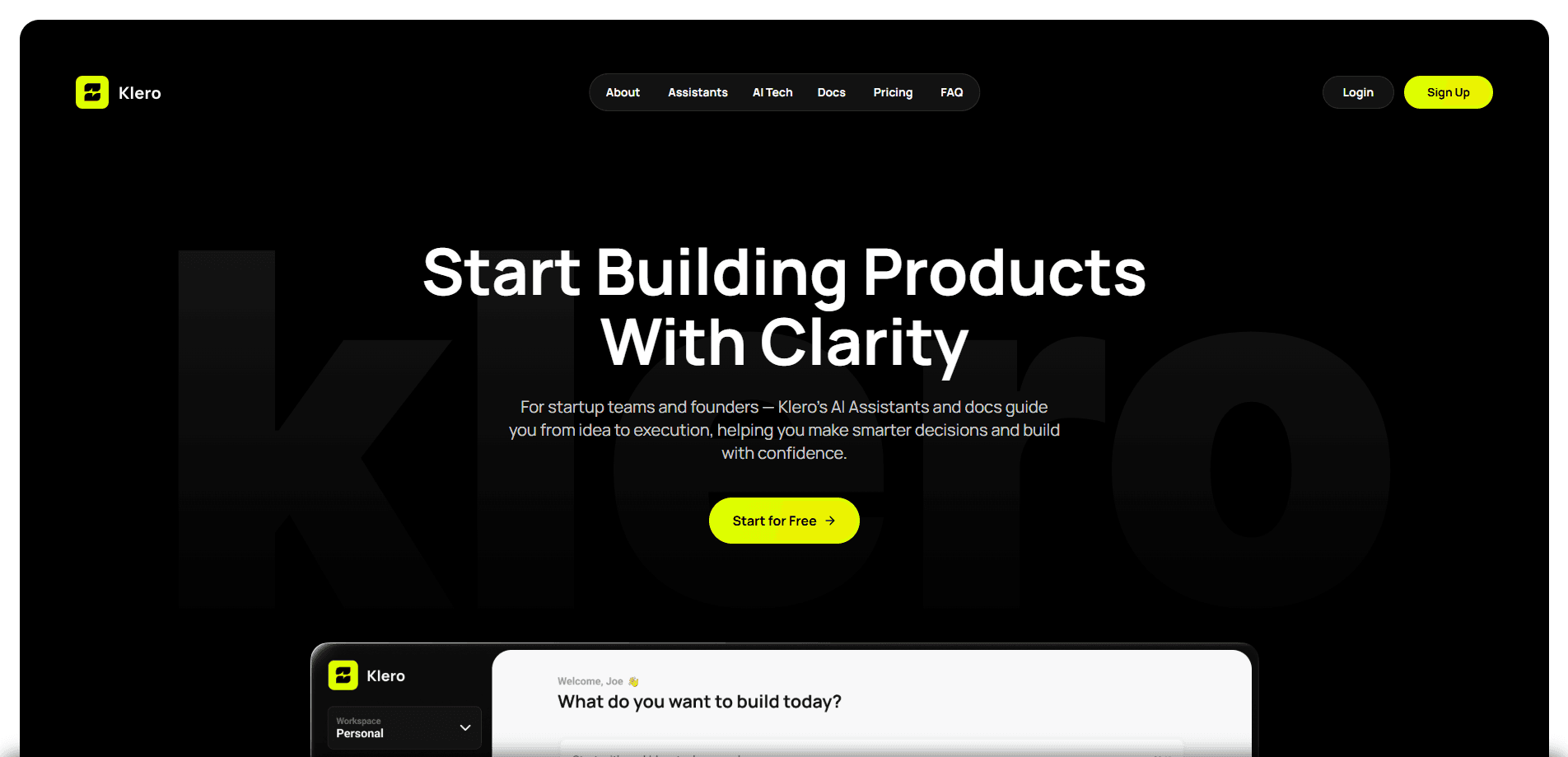
Klero is a customer feedback platform for product teams. It collects feedback and surveys, ranks demand with AI, then turns it into public roadmaps and changelogs users can follow.
About Klero.ai
What Is Klero
Klero is customer feedback software that gives product teams one place to collect user input and decide what to build next. Instead of juggling a spreadsheet, a survey tool and a changelog page while feedback scatters across chat and email, teams funnel everything into feedback boards, run surveys, and let AI group the themes. It doubles as a product management tool for the discovery side, and the bundled changelog software keeps release notes next to the feedback that prompted them. The same system then publishes a roadmap and a changelog, so customers can watch their requests turn into shipped features.
That loop is the reason teams pick it. Blind product work loses users quietly, and an open loop keeps them around because they can see progress. Klero is built for that: a public board, in-app widget, roadmap and changelog all feed off the same feedback items, so a status change in one place shows up everywhere else. The AI side handles the messy part, deduplicating near-identical requests so vote counts reflect real demand instead of how many times someone typed the same idea.
Two things matter before you commit. The free tier is genuinely usable, but it caps you at one board, one roadmap and a single team member, so it's a trial more than a working setup for a real team. And the monthly prices shown on the site ($20, $40, $96) differ from the figures in the official FAQ ($29, $79, $149), so confirm the current number on the pricing page or with sales before you budget.
Getting Started
- Sign up at app.klero.ai and pick a workspace name for your product
- Create your first feedback board and share its link, or drop the in-app widget into your product so feedback lands without users leaving the flow
- Connect the integrations you already use, such as Slack, Discord, Linear or GitHub, so new items reach the board without manual entry
- Let AI categorize incoming feedback, then set statuses that update your roadmap and changelog as work moves forward
Product Information
A quick look at Klero.ai's pricing, supported platforms, and performance.
Best for
The users, tasks, and scenarios where this tool fits best.
Users
- Product managers
- Startup founders running product solo
- Customer support and success teams
- Small product teams on a budget
Tasks
- Collecting feedback from multiple channels
- Running targeted surveys
- Ranking features by demand
- Publishing a public roadmap
- Writing and scheduling changelog posts
Scenarios
- A duplicate surge after a launch
- Support tickets asking "when will this ship"
- Beta programs and internal feedback
- A solo founder with no ops budget
- Shipping cadences that need announcements
Key features
AI Feedback Analysis and Deduplication
Klero's AI reads incoming posts, groups them by feature area and spots the ones that describe the same idea. It detects duplicate submissions so votes consolidate onto a single item instead of splitting across five near-identical posts. AI analyzer credits come with paid plans, at 1,000 per month on Explorer and 5,000 per month on Builder. Teams that collect a lot of feedback see the difference first, since deduplication is what keeps a busy board readable.
Feedback Boards
Every piece of feedback routes into a board where you can merge duplicates and see which ideas carry real demand. Submissions arrive from the board itself, the in-app widget, email and connected chat tools, so you're not chasing input across five places. Boards can be public or private, and guests can post without an account, which lowers the barrier for honest input. The free plan gives you one public board to start.
In-App Widget and Surveys
The widget embeds in your product so users can send feedback without leaving what they're doing, and surveys let you ask targeted questions and fold the answers back into the same pool. Both feed the boards, so survey responses and widget posts sit alongside everything else instead of in a separate silo. Guest posting and voting need Explorer or above, while the widget itself works from the free tier.
Product Roadmap and Public Board
The roadmap shows planned, in-progress and shipped work in one view, and it updates the moment you change a feedback status. Changed from "Under Review" to "Ship" and the public view follows, which is what turns a static page into something users check. You can run several roadmaps on paid tiers, and both private and public boards present them to the right audience.
AI Changelog
The changelog turns released work into posts users actually read. An AI rewrite assistant drafts entries, suggests titles and tags, and can schedule publishing, while pulling in closed feedback so the post reflects what shipped. Notifications go out to the users who voted on those items, so the people who asked for a feature hear about it when it lands. Changelog posts are unlimited on the free plan, with email subscribers capped at 250.
Integrations and Workflow Sync
Klero connects to the tools teams already run. Explorer includes Discord and Slack, Builder adds Zapier, Linear, GitHub and Notion, and Growth brings in Jira and Shopify. That spread matters because feedback rarely stays inside one product: a Linear issue closed today could be the changelog post your users read tomorrow. Syncing both ways keeps the board and your issue tracker from drifting apart.
AI Prioritization and Insights
Beyond sorting, the AI scores items by impact and effort to help with roadmap planning, and surfaces which features are likely to see the highest adoption. It also helps break a big feature into smaller tasks once you commit to building it. For teams that gather more feedback than they can read, the value is turning a wall of posts into a short list worth debating.
Pros and cons
Pros
- Covers collection, prioritization and publishing in one platform, so there's no feedback tool, survey tool and changelog service to stitch together
- AI deduplication and theme grouping keep a busy board usable instead of a pile of near-identical requests
- Public roadmap and changelog give users visible progress, which is what keeps them submitting
- Free plan is a real entry point with one board, unlimited posts and up to 250 changelog subscribers
- Integrations reach the common stack, with Slack, Discord, Linear, GitHub, Notion, Jira and Shopify covered across tiers
Cons
- The free plan allows a single team member and one board, so a real team outgrows it fast
- Prices listed on the pricing page and in the official FAQ differ, which means you have to confirm the current rate before budgeting
- Some of the strongest features, like custom fields and AI deduplication at higher volume, are held for the Growth tier
- No public API documentation surfaces, so teams that need to build custom integrations should ask sales first
Frequently asked questions
Klero is a customer feedback platform for product teams. It collects feedback and surveys, analyzes demand with AI, and publishes public roadmaps and changelogs, so users can see their requests turn into shipped features. Collection, prioritization and publishing sit in one product instead of separate tools.
Related content
Explore related tools, skills, and articles for Klero.ai.
Klero.ai Alternatives

Base Code
Base44 (Wix) · Coding · ProductivityBase Code is a shared cloud development environment from Base44. Teammates describe changes to an existing GitHub codebase in chat, preview them live and send them back as pull requests.

Knocket
Knocket (Tencent RTC team) · Productivity · Business · ChatbotKnocket is a free live chat and contact page tool that lets visitors message you from your website, app, or a shareable link, with every reply handled from Telegram or one inbox.

FloorGen
Vinit Kumar (FloorGen) · Productivity · China AIFloorGen is a browser-based floor plan maker that turns a sentence or a sketch into an editable 2D plan and a 3D walkthrough. Export to PDF, DXF or video, and draw without an account.