

Oatmeal Health
Oatmeal Health, Inc. · AI Assistant · AI Detection
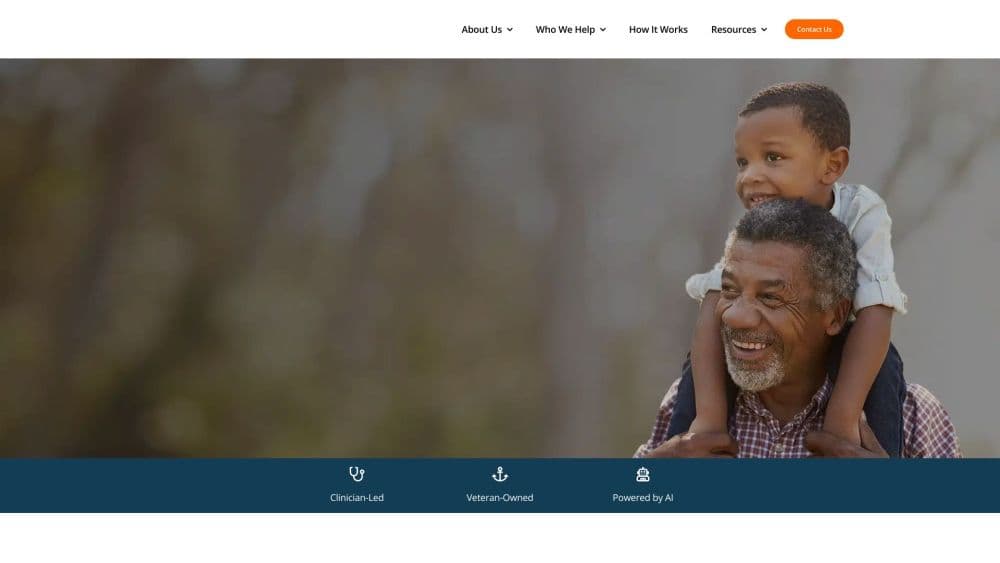
Oatmeal Health is an AI lung cancer screening platform for community health centers and health systems. LungIQ, LungNAV, and LungAI find eligible patients, book scans, and score nodules.
About Oatmeal Health
What Is Oatmeal Health
Oatmeal Health is a healthcare AI company based in Mountain View, California. Jonathan Govette, Yuri Ahuja, and Ashish Basuray founded it in 2022 to attack one number: roughly 70% of lung cancers are found after the cancer has spread, when five year survival sits near 10%.
The product is built around the messy front end of screening, not the scanner. LungIQ reads clinical notes, diagnoses, and medications to find patients who meet screening rules. LungNAV calls those patients and walks them toward a shared decision-making visit. LungAI adds AI nodule risk scoring to every low dose CT, with a 0 to 100 malignancy score for each nodule. The company sells lung cancer screening for FQHC teams, hospital systems, imaging centers, and research groups, and advertises the service at no cost to health centers because reimbursement and partners fund the work.
There are real limits. LungAI is an investigational device, has not been cleared by the FDA, and is not commercially available in the United States while a 510(k) submission is prepared. LungIQ runs on batch exports rather than a live EHR connection, so a worklist is a snapshot. And the eligibility logic follows USPSTF rules, which leaves some high risk patients in a waiting queue until guidelines widen.
Getting Started
- Sign a business associate agreement and send a flat file export from your EHR. Demographics, notes, diagnoses, and medications in CSV form are enough, and column names do not need to match a template.
- Oatmeal maps the columns, runs the chart review, and returns a ranked worklist. Every patient carries a plain language reason for the flag plus the missing fields, if any.
- Your navigators work the five queues and book shared decision-making visits. Add LungNAV if the call volume outruns staff hours.
- Patients get a low dose CT at a partner imaging site, and results go back to the care team.
- If LungAI is deployed, the radiologist sees a risk score and a PDF report inside the PACS or CADe viewer already in use.
Product Information
A quick look at Oatmeal Health's pricing, supported platforms, and performance.
Best for
The users, tasks, and scenarios where this tool fits best.
Users
- FQHC care teams
- Hospital and imaging center program leads
- Health plan quality teams
- Research and trial teams
Tasks
- Finding patients with a 20 pack-year history buried in free text notes
- Getting eligible patients to actually show up
- Adding quantitative context to a borderline CT read
Scenarios
- A rural FQHC network with 35,000 patients and no structured smoking field
- A screening program with open scanner slots and a short appointment list
- A radiology group that wants a second opinion without a new workstation
Key features
Chart Review That Recovers Pack-Years
LungIQ sends a large language model through clinical notes to rebuild pack-year smoking history, including packs per day and years smoked, then adds structured signals from diagnoses, procedures, and medications. A machine learning classifier ranks every patient by the probability of meeting USPSTF criteria, and deterministic rules confirm eligibility wherever the chart documents it. The company reports 0.96 AUROC at an external FQHC site and says 94% of the top 100 patients it flagged were confirmed eligible.
A Worklist Split Into Five Queues
A single list of names does not tell a navigator what to say. LungIQ sorts patients into USPSTF eligible, incomplete smoking history, needs review, not currently eligible, and non-candidate. Each row states the documented basis for the flag in plain language, and the incomplete queue names the exact fields that are missing, which turns a chart review into one question on a call.
AI Outreach in More Than 70 Languages
LungNAV is an optional add-on that sends a text, places a voice call, explains what a low dose CT is and whether it is covered, and prepares the patient for the shared decision-making visit. It transfers interested patients to the scheduling team with a call summary. The company cites 10,000+ patient calls a month and support for more than 70 languages.
Nodule Risk Scoring With Prior Scan Comparison
LungAI scores each nodule from 0 to 100 using morphology, the surrounding lung tissue, the change since the prior exam, and patient risk factors such as age, sex, and smoking history. Oatmeal reports 0.96 nodule level AUROC on a held-out subset of the National Lung Screening Trial, with pathology-confirmed outcomes and retrospective methods.
Delivery Inside the Existing Viewer
Radiologists do not open a new tab. LungAI runs alongside the CADe software or PACS viewer they already read in and sends one PDF report per exam with the nodule image, score, and probability key. It accepts nodule findings from any FDA cleared CADe device, works with LDCT scans from GE, Philips, and Siemens scanners, and can run on hospital servers or in Oatmeal's HIPAA compliant cloud.
No EHR Integration Project
LungIQ does not require a live connection or a build with your EHR vendor. A CSV export under a signed BAA is the whole onboarding path, and results come back as a workbook plus a flat file for loading into other systems. That keeps IT out of the critical path. The tradeoff is a worklist that refreshes only when you send a new export.
Pros and cons
Pros
- Works with records as they exist today, including free text notes and inconsistent column names, so a program can start without an interface build.
- Every flag comes with an explanation, which helps navigators trust the list and gives quality reviewers something to audit.
- The screening service is advertised as no cost to FQHCs, with reimbursement and partner funding covering the work.
- Covers the full pathway from finding patients to reading their scans, so teams do not stitch together three vendors.
Cons
- LungAI is investigational and not FDA cleared, so US clinicians can't use it for live reads today and the CPT 0721T reimbursement path only opens after clearance.
- Patients who quit more than 15 years ago fall outside USPSTF criteria and land in a queue that waits on guideline changes, even when ACS guidance already includes some of them.
- There is no self-serve trial or published price list. Every deployment runs through sales, a BAA, and a configuration call.
- Batch exports mean the worklist is only as current as the last file you sent, which is a problem for fast moving panels.
Frequently asked questions
The company advertises no cost lung screenings for federally qualified health centers and says reimbursement plus partner funding covers the service. Confirm the exact terms in your contract, since "no cost" refers to the screening workflow rather than every possible integration.
Related content
Explore related tools, skills, and articles for Oatmeal Health.
Oatmeal Health Alternatives
Agibot
Agibot · Productivity · AI Assistant · ChatbotAgibot is a personal AI agent for Mac that keeps running after you close the window, runs routines on a schedule, and works from Telegram or Slack with your own API keys.

Foley
Hanamori Labs, LLC · Voice & Language · Productivity · AI AssistantFoley is a voice to-do list that turns a spoken sentence into a filed task, complete with project, date and time, then helps you plan the day around what is already there.

Ghost Core
Ghost · Productivity · AI AssistantGhost Core is a $3,499 screenless personal AI computer that runs local AI models on its own hardware, builds context from your apps and devices, and acts without waiting for a prompt.