

PitchGrade
PitchGrade · Productivity
PitchGrade is an AI pitch deck review platform. It scores a deck across six dimensions, compares it with real investors, and adds live company financial research in the same account.
About PitchGrade
What Is PitchGrade
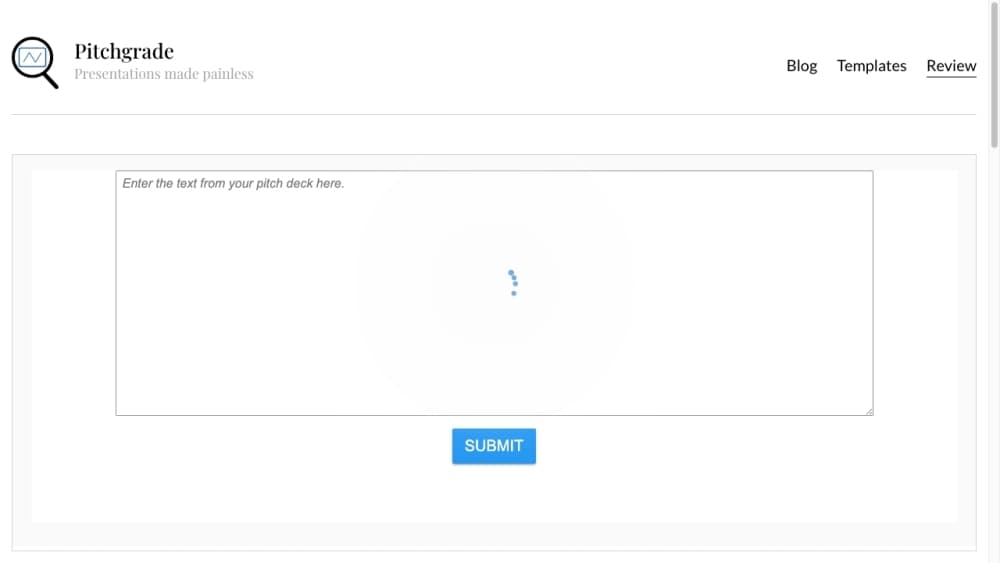
PitchGrade is a web app that reads a pitch deck and tells you where it stands. You paste your text or upload a PDF or PPTX, and the tool works through every slide, returning a pitch deck score plus written notes on what to fix. Six dimensions make up that score, so a weak market slide doesn't get hidden behind a strong team slide.
The second half is AI financial research. A built-in agent pulls SEC filings, builds a DCF model, runs peer comparisons, and drafts an investment thesis. Live quotes, income statements, and analyst consensus sit in the same dashboard. Founders use it to size a market before a raise. Analysts use it to get a first pass on a company in minutes.
The limit worth knowing up front: this is a tool for feedback and research, not a replacement for a warm introduction. A high pitch deck score doesn't promise a term sheet. The free tier gives you five deck reviews, and the paid plans are cheap enough to test properly before you commit.
Getting Started
- Create a free account at pitchgrade.com. No credit card is needed for the first five reviews.
- Paste your pitch text or upload the deck as a PDF or PPTX file.
- Run the review and read the six scores. Each slide comes back with specific suggestions rather than a single grade.
- Use the rewrite tool to rework weak slides, or edit them yourself in your own deck software.
- Open the research side if you need market numbers, then export the report as a PDF or PPTX.
Product Information
A quick look at PitchGrade's pricing, supported platforms, and performance.
Best for
The users, tasks, and scenarios where this tool fits best.
Users
- First-time founders
- Accelerator and incubator teams
- Early-stage investors
- MBA students and case competitors
Tasks
- Scoring a deck before an investor meeting
- Checking fit with a specific fund
- Building a quick valuation
- Generating a first draft deck
Scenarios
- A pre-seed founder rewriting a deck the night before a demo day
- A VC associate screening five companies before Monday
- A founder entering a new market
- A team preparing for a board meeting
Key features
AI Deck Review With Six Scores
The core tool reads each slide and returns a pitch deck score split into six dimensions, along with line-level notes. The split matters because a deck can look polished and still fail on market size or traction. Feedback arrives per slide, so you know which page to rewrite rather than rebuilding the whole file.
Investor Matching
PitchGrade compares your deck with the stated interests of more than 20 investors, including Sequoia, a16z, and Y Combinator. You can also type in a fund that isn't on the list. The output is a fit read, not a contact list, so the next step is still a warm intro or a cold email you write yourself.
Research Agent
The agent takes a company name or a task and works through it: it pulls SEC filings, builds a DCF model, runs peer comps, and writes an investment thesis. Results land in a persistent workspace, so a second session continues where the first stopped. This is the part that separates PitchGrade from deck-only reviewers.
Pitch Deck Generator
Give it a prompt and it produces styled, investor-ready PPTX slides you can download and edit. It's useful when you have the story but not the layout, or when you need a placeholder deck to react to. Treat the output as a starting point, since generic slides still need your numbers and proof.
Live Financial Data and Company Comparison
Real-time quotes, income statements, analyst consensus, and insider activity are available for thousands of public companies. The comparison view lines up to four companies on market cap, revenue, margins, and P/E ratio. Both feed the research side, which is why the tool works for analysts as well as founders.
Multilingual Review and Rewrite
The review engine handles decks in more than 180 languages, and the rewrite tool returns polished text in the language you choose. That helps founders pitching outside their home market, and teams that keep an English deck and a local-language version in parallel.
Pros and cons
Pros
- Six separate scores make it obvious which part of the deck is weak, instead of one opaque number.
- The free tier includes five full reviews, which is enough to test the pitch deck feedback against a real deck.
- Investor matching checks your story against named funds, which is faster than reading each fund's thesis page.
- The research agent produces DCF models, SEC filing analysis, and peer comps in one workspace.
- Pricing is low for the category at $7.99 per month, and annual billing drops the cost to $59.99.
Cons
- The score reflects patterns in successful decks, not a specific partner's taste, so treat it as a filter and not a verdict.
- Research output can be wrong on unusual companies, especially private ones with thin filings, and each figure needs a check.
- There's no public API, so teams can't pull the scoring into their own tools or a CRM.
- Exports and shareable links sit behind the paid plan, which limits what you can do with the five free reviews.
Frequently asked questions
PitchGrade reviews pitch decks and scores them across six dimensions, then adds company research with financial models and filings. Founders use the review side before fundraising, and analysts use the research side for quick due diligence.
Related content
Explore related tools, skills, and articles for PitchGrade.
PitchGrade Alternatives

Base Code
Base44 (Wix) · Coding · ProductivityBase Code is a shared cloud development environment from Base44. Teammates describe changes to an existing GitHub codebase in chat, preview them live and send them back as pull requests.

Knocket
Knocket (Tencent RTC team) · Productivity · Business · ChatbotKnocket is a free live chat and contact page tool that lets visitors message you from your website, app, or a shareable link, with every reply handled from Telegram or one inbox.

FloorGen
Vinit Kumar (FloorGen) · Productivity · China AIFloorGen is a browser-based floor plan maker that turns a sentence or a sketch into an editable 2D plan and a 3D walkthrough. Export to PDF, DXF or video, and draw without an account.