
Reqi
Reqi · Productivity
Reqi is a requirements management platform for regulated engineering projects. Its AI scores requirements, maps traceability and tracks supplier compliance in one shared workspace.
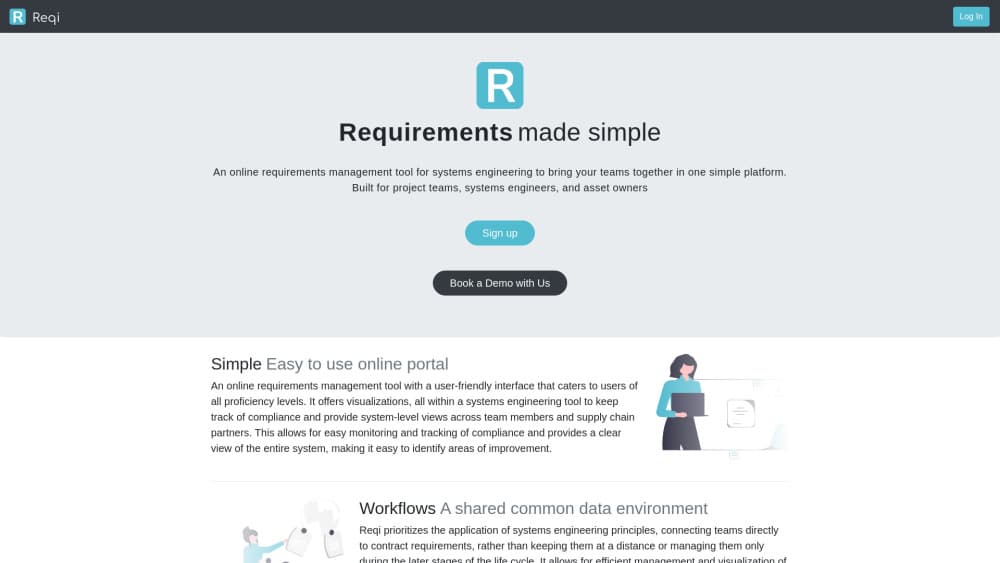
About Reqi
What Is Reqi
Reqi is requirements management software for engineering projects where a missed line item turns into rework. Defence programmes, rail upgrades, energy plants and hospital builds all run on hundreds of written requirements that pass through consultants, contractors and suppliers. Most teams still track those requirements in spreadsheets and email threads. Reqi puts them in one live register where you can see what's specified, who owns it, and what still needs evidence.
The product follows INCOSE systems engineering practice and takes a project from concept through the V-model to verification. A shared project space holds the baseline, so a supplier three tiers down from your engineering team still works from the current version. Compliance dashboards roll up status across the chain instead of waiting on a monthly report.
REX, the AI layer, handles the writing side. It scores a requirement against the INCOSE requirements guide, rewrites it, and shows what changed and why. It also extracts requirements from uploaded PDFs, allocates them to systems, drafts acceptance criteria, and lists assumptions, constraints and dependencies. The quality checker is free and needs no account. Two limits are worth knowing before you commit: Reqi runs in a browser only, and no public API is documented, so teams with an established PLM or ALM stack should ask about integration early.
Getting Started
- Sign up at reqi.io and create a free project. The single-project tier needs no credit card.
- Name the project, then invite engineers, reviewers and supplier contacts into the shared space.
- Upload the contract, specification or standards PDFs you're working from. REX scans them and pulls out a structured requirement list.
- Work through the quality scores. Fix the flagged rules, allocate each requirement to a system or component, then add acceptance criteria.
- Track progress from the compliance dashboard and export the register to Excel when a reviewer or auditor asks for it.
Product Information
A quick look at Reqi's pricing, supported platforms, and performance.
Best for
The users, tasks, and scenarios where this tool fits best.
Users
- Systems engineers
- Requirements managers on regulated programmes
- Supplier quality leads
Tasks
- Cleaning up badly written requirements
- Pulling requirements out of contracts and standards
- Connecting needs to verification evidence
- Building a system breakdown structure
Scenarios
- Bid to delivery handover on a defence or rail programme
- Multi-contractor infrastructure work
- Early design when scope is still moving
Key features
Requirement scoring against the INCOSE 42-Point Guide
Paste a requirement and REX returns a rewritten version plus a score across 42 rules in 14 categories. The rules cover ambiguity, singularity, completeness and quantification. You see the original score, the improved score and which rules changed. The full assessment downloads as a PDF, which is handy when a reviewer asks why a statement was reworded. Teams that only need a one-off check can use REX as a free AI requirements tool in the browser, no account needed.
Requirement extraction from documents
Upload a contract, specification or standard and REX scans it for requirement statements, then returns them as a structured list. Gaps and ambiguities get flagged in the same pass. On a long specification this replaces days of copy and paste, and it's the feature teams notice first.
AI stakeholder needs mapping
Point the AI at your project documents and it identifies stakeholders, places each one on a core, direct or indirect ring of influence, and drafts their needs with MoSCoW priorities. Every need cites the source document behind it, so a claim can be checked. You can drag stakeholders to refine the map and sort needs on an importance and urgency grid before exporting to Excel.
System breakdown and architecture views
Start from a top-level need and the AI proposes a full System Breakdown Structure. It splits the system into subsystems and components, and suggests owners and reviewers as it goes. Requirements then map onto an interactive network diagram, so you can see how they cluster, trace dependencies across interfaces and spot orphaned or overloaded elements.
Traceability from need to verification evidence
Each requirement keeps its parent need, allocated system, acceptance criteria and the evidence that proves it was met. Auditors follow the chain in one place instead of requesting a document set. Change a parent requirement and the affected children are visible, which is the part spreadsheets handle worst.
Supply chain collaboration and compliance dashboards
Suppliers get invited into shared project spaces where they review and respond to allocated requirements and update their own compliance status. Dashboards aggregate that status across the whole chain, and a risk register holds the assumptions, constraints and dependencies that would otherwise sit in someone's inbox.
Pros and cons
Pros
- REX is free to use with no signup, and the 42-point score gives you a concrete before and after instead of vague advice.
- The AI does the setup work teams usually avoid: stakeholder maps, breakdown structures and architecture diagrams arrive as editable drafts.
- Traceability from stakeholder need to verification evidence lives in one place, which is exactly what acceptance reviews ask for.
- Unlimited users on every plan, so inviting the programme team and your suppliers doesn't change the bill.
- The security position is documented (Azure hosting, AES-256 encryption, ISO 27001), which matters when requirements are commercially sensitive.
Cons
- No public API is documented, so syncing with an existing PLM or ALM toolchain means a conversation with sales rather than a config file.
- The free tier stops at 500 requirements and three months, which runs out quickly on a real programme.
- Pricing is per project at $190/mo, so an organisation running eight projects pays eight times, and GST is added on top.
- Document control comes through the GoSubmit partnership, so teams that need controlled document sets end up managing a second product.
Frequently asked questions
Reqi manages requirements on regulated engineering projects. Teams use it to capture stakeholder needs, score requirement statements, allocate them to systems and track verification evidence across the supply chain.
Related content
Explore related tools, skills, and articles for Reqi.
Reqi Alternatives

Base Code
Base44 (Wix) · Coding · ProductivityBase Code is a shared cloud development environment from Base44. Teammates describe changes to an existing GitHub codebase in chat, preview them live and send them back as pull requests.

Knocket
Knocket (Tencent RTC team) · Productivity · Business · ChatbotKnocket is a free live chat and contact page tool that lets visitors message you from your website, app, or a shareable link, with every reply handled from Telegram or one inbox.

FloorGen
Vinit Kumar (FloorGen) · Productivity · China AIFloorGen is a browser-based floor plan maker that turns a sentence or a sketch into an editable 2D plan and a 3D walkthrough. Export to PDF, DXF or video, and draw without an account.