

Rhythmic
Rhythmic AI, Inc. · Productivity
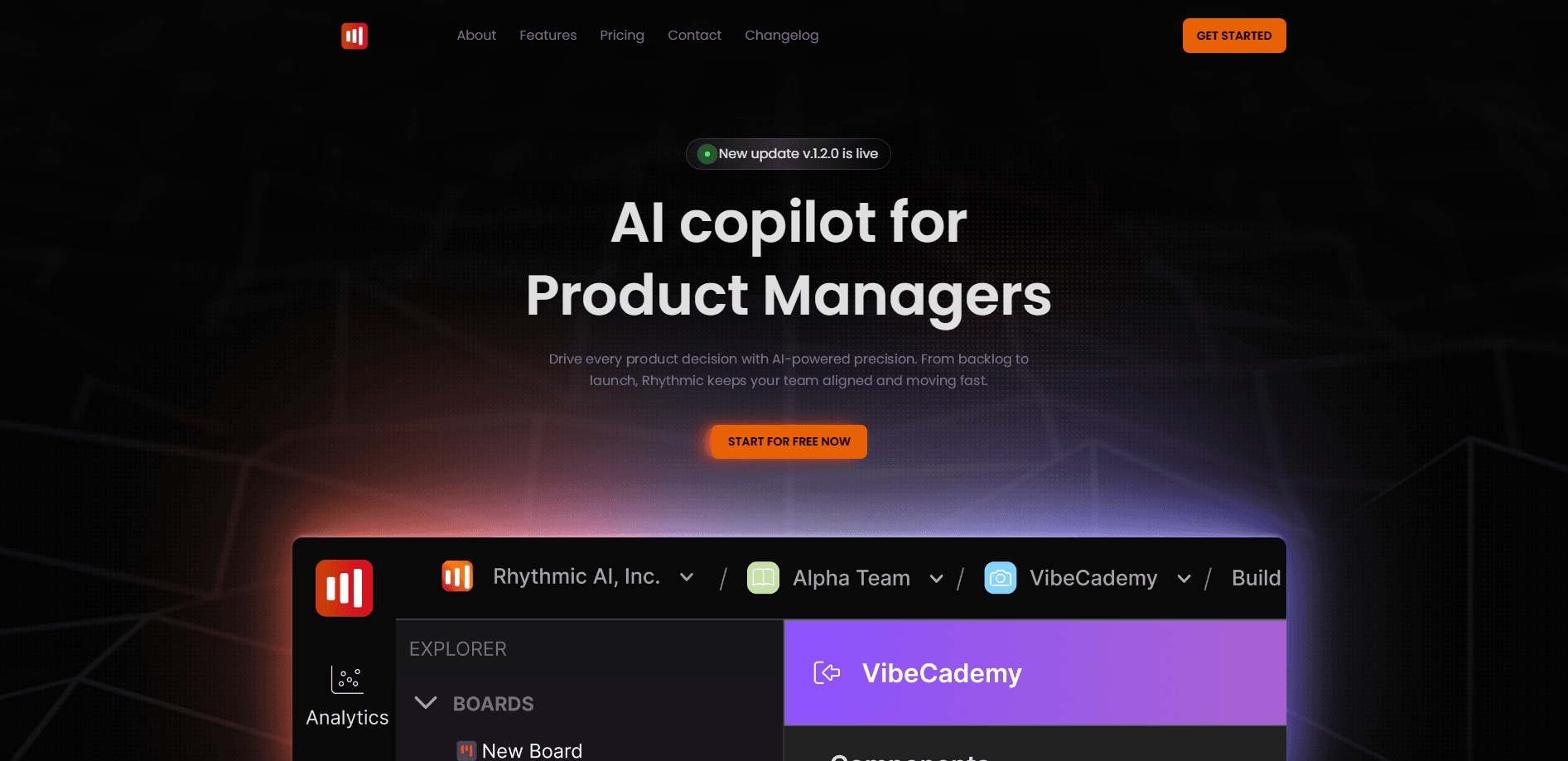
Rhythmic is an AI copilot for product managers. It turns briefs, epics, and backlog items into plans, estimates, and sprint advice, then syncs with Jira and Azure DevOps.
About Rhythmic
What Is Rhythmic
Rhythmic is an AI copilot built for product teams. It helps product managers turn scattered notes, specs, and feature ideas into backlog items, release plans, and sprint work without the manual grind. You point it at the context your team already has, and it drafts the documents and estimates you would otherwise write by hand.
The idea behind it stays simple. Most PMs lose hours to status reports, backlog refinement, and internal updates instead of talking to customers. Rhythmic targets that busywork specifically. It reads your product context, proposes user stories with acceptance criteria, and keeps plans current as priorities shift.
The limits matter too. Rhythmic is a product management assistant, not a general project tool, so it fits teams that already work in an agile backlog. It is also early. The platform launched in mid 2025 and lists Jira and Azure DevOps as its live integrations, with more promised rather than shipped.
Getting Started
- Sign up at app.gorhythmic.com; the 14-day trial starts without a credit card.
- Import your docs, specs, and backlog items so Rhythmic learns your product context.
- Connect Jira or Azure DevOps, or import a CSV, so plans and roadmaps stay in sync.
- Ask Rhythmic to generate a plan, break an epic into user stories, or estimate a batch of work.
- Review the output with your team, adjust the details, and push updates back to your dev tools.
Product Information
A quick look at Rhythmic's pricing, supported platforms, and performance.
Best for
The users, tasks, and scenarios where this tool fits best.
Users
- Product managers
- Agile coaches and team leads
- Small product teams without a dedicated PM
Tasks
- Breaking an epic into user stories
- Estimating engineering work
- Planning a sprint
Scenarios
- Turning a kickoff interview into a backlog
- Keeping a roadmap current
- Catching up on notes
Key features
AI plan generation
Rhythmic turns briefs, epics, and user stories into structured, prioritized work plans. You feed it the raw material and it returns a sequence of items with owners and rough scope, so a messy idea becomes something a team can schedule. The draft still needs a human pass, but it saves the blank-page problem.
Learning estimation engine
The VERA estimation engine studies your team's historical tickets and generates estimates that improve over time. Instead of guessing story points cold, you get a starting number grounded in what similar work actually took. That helps when a new PM joins or a squad scales up.
Epic story builder
A conversational workflow breaks a complex epic into fully scoped user stories, each with a title, description, acceptance criteria, and an initial complexity estimate. It is the fastest way to go from a vague feature request to tickets a developer can pick up.
Live sprint planning
Capacity-aware AI recommendations help you plan sprints that match how much the team can actually take on. The suggestions adapt as availability shifts, so you're not re-planning by hand every time someone takes leave.
Two-way dev tool sync
Rhythmic connects to Jira and Azure DevOps, and supports CSV import and export. Roadmaps, backlogs, and docs sync both ways, which cuts the double entry that piles up when a PM works in one tool and the team works in another.
Continuous feedback and notes
The platform gathers customer feedback and support tickets and turns them into signals your team can act on. It also drafts internal notes, summaries, and status updates, which keeps stakeholders aligned without another round of manual writing.
Pros and cons
Pros
- Cuts the repetitive writing around backlog grooming, status updates, and planning.
- Estimation engine learns from your own ticket history instead of generic averages.
- Two-way Jira and Azure DevOps sync keeps roadmaps current without double entry.
- Flexible deployment covers cloud, on-premises, or a managed setup for enterprise teams.
- Free tier plus a 14-day trial makes it easy to test before paying.
Cons
- Live integrations are limited to Jira, Azure DevOps, and CSV; other tools are promised for the future.
- It is early software, so features and pricing can shift between releases.
- Free plan data may be used to train the models unless you move to a paid tier.
- It assumes an agile backlog workflow, so teams working outside that model get less value.
Frequently asked questions
Rhythmic is an AI copilot for product management. It turns your briefs, epics, and backlog items into structured plans, user stories, and estimates, then syncs that work with tools like Jira and Azure DevOps. Think of it as an assistant for the writing and planning side of product work.
Related content
Explore related tools, skills, and articles for Rhythmic.
Rhythmic Alternatives

Base Code
Base44 (Wix) · Coding · ProductivityBase Code is a shared cloud development environment from Base44. Teammates describe changes to an existing GitHub codebase in chat, preview them live and send them back as pull requests.

Knocket
Knocket (Tencent RTC team) · Productivity · Business · ChatbotKnocket is a free live chat and contact page tool that lets visitors message you from your website, app, or a shareable link, with every reply handled from Telegram or one inbox.

FloorGen
Vinit Kumar (FloorGen) · Productivity · China AIFloorGen is a browser-based floor plan maker that turns a sentence or a sketch into an editable 2D plan and a 3D walkthrough. Export to PDF, DXF or video, and draw without an account.