

Roundups
Roundups · Productivity · AI Detection
Roundups is an AI buying guide generator that researches products and drafts SEO-ready roundups, which you can edit, share by link, or export to a blog and monetize through affiliate links.
About Roundups
What Is Roundups
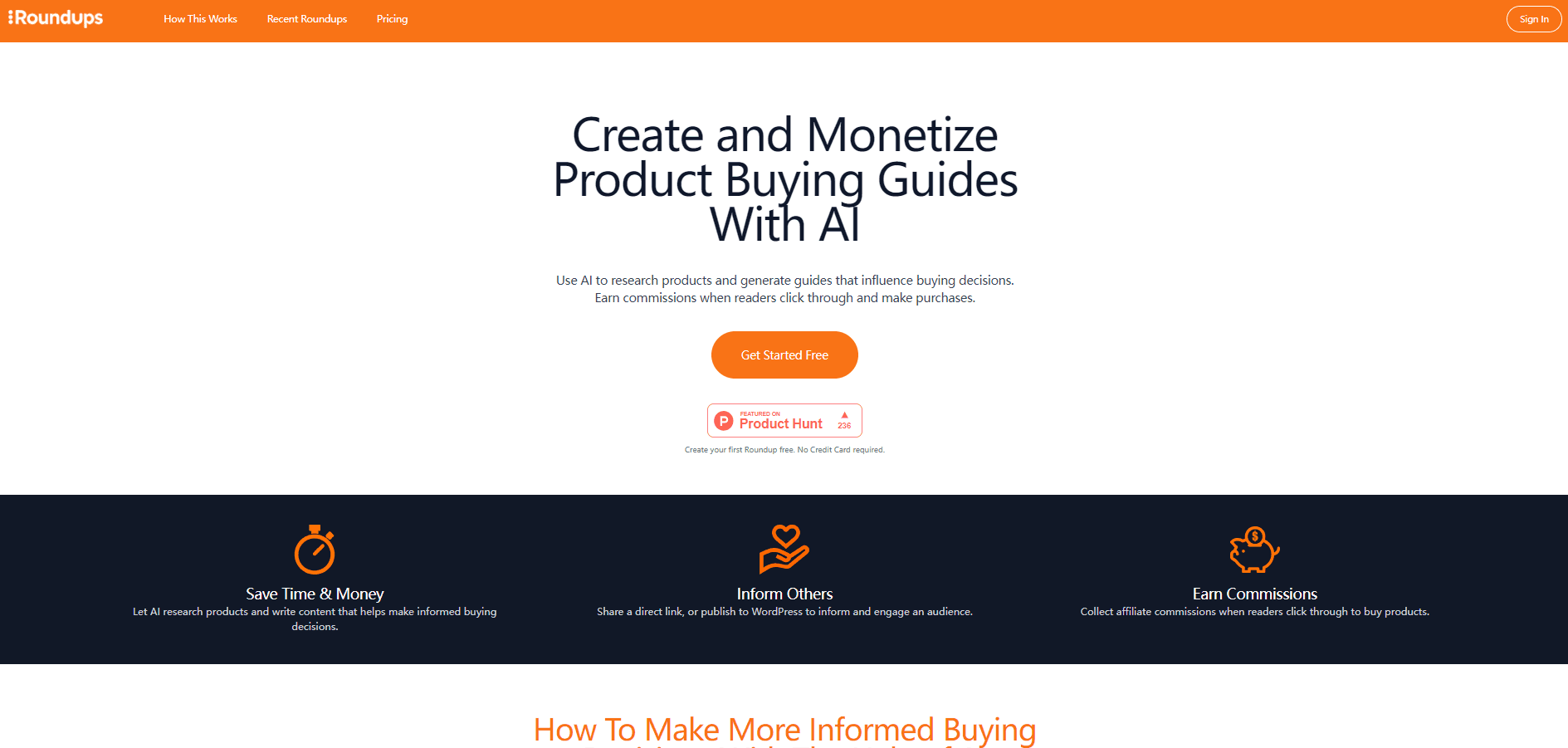
Roundups is a web app for turning product research into publishable buying guides. You add products from a marketplace or paste a URL, and the AI analyzes each one and writes a roundup that reads like a comparison, not a spec dump. The pitch is aimed at affiliate publishers and content marketers who already run blogs and want the research and drafting handled in one place.
As an AI product roundup tool, it treats the buying guide itself as the deliverable. That's different from a general writing assistant, which leaves the product data, the structure, and the affiliate framing for you to assemble. Roundups ships all three, then hands you an editor to add your own take.
The main limitation is where it earns. Commissions depend on affiliate programs, and the site names Amazon Associates as one it participates in, so the payout side works best for people who already have traffic. Output also stays generic until you edit it, and Google's stance on mass-produced affiliate content means thin, unedited roundups carry real ranking risk.
Getting Started
- Sign up at roundups.ai, which is free and needs no credit card.
- Add products by picking from marketplace integrations or importing them with a URL.
- Let the AI research the products and generate a draft buying guide.
- Open the editor to adjust the writing, reorder products, and add your own notes.
- Share the roundup by link, export it to a blog, or publish to WordPress in one click.
Product Information
A quick look at Roundups's pricing, supported platforms, and performance.
Best for
The users, tasks, and scenarios where this tool fits best.
Users
- Affiliate publishers
- Niche bloggers
- Small content agencies
Tasks
- AI buying guide generation
- Product research at scale
- Affiliate content production
Scenarios
- Launching an affiliate site
- Refreshing old roundups
- Publishing to a WordPress blog
Key features
AI roundup generation
The core move is taking a set of products and returning a structured buying guide as a roundup generator. Each entry covers what the product does and who it suits, which is the shape a reader expects from a roundup rather than a wall of specs. You get a first draft in minutes, then spend your time editing instead of starting from a blank page.
Product import and marketplace integrations
You can pull products from connected marketplaces or import a single item with its URL. The AI reads the listing and folds that data into the guide, which cuts the manual copying that normally eats most of the research time. Amazon and WordPress are among the integrations the site highlights.
SEO-oriented output
Roundups are built to be published, so the generated text is written for search rather than as an internal summary. The site advertises SEO optimization and support for 50+ languages, which means the same roundup can be repurposed for a non-English audience without a rewrite.
Built-in editor
The editor is where a generic draft becomes yours. You can rewrite sections, add opinions, and adjust the product order so the guide matches the angle of your site. This is the step that keeps the output from reading like every other AI-written roundup.
Affiliate link monetization
Guides are framed around links that earn commission when a reader buys. Roundups participates in affiliate programs such as Amazon Associates, and the site says users can earn referral fees from qualifying purchases. On its own the tool doesn't drive traffic, so the earnings depend on the audience you already have.
Credit-based pricing
Every roundup costs credits, and the cost scales with how many products you include: a base cost plus extra credits beyond the first few. Higher plans raise the monthly credit allowance and the product cap per roundup, so heavier publishers pay more without a separate seat for each project.
Pros and cons
Pros
- Turns product research into a finished buying guide instead of handing back notes you still have to write up.
- Import by URL and marketplace integrations reduce the manual product copying that slows down roundup production.
- The editor makes it realistic to publish AI drafts without them reading like unedited machine output.
- Support for 50+ languages lets one roundup cover more than one audience.
- Free plan and a credit model mean you can test the workflow before committing to a paid tier.
Cons
- Commission earnings depend on affiliate programs, so the payout side only works for creators who already have an audience.
- Drafts stay generic until edited, and unedited AI roundups risk ranking poorly under Google's guidance on mass-produced affiliate content.
- Public pricing for the Lite and Pro plans isn't listed on the marketing pages, so you have to check inside the app.
Frequently asked questions
It generates product roundups and buying guides with AI. You feed it products, it writes a comparison, and you publish the result as an affiliate post or a newsletter link.
Related content
Explore related tools, skills, and articles for Roundups.
Roundups Alternatives

Base Code
Base44 (Wix) · Coding · ProductivityBase Code is a shared cloud development environment from Base44. Teammates describe changes to an existing GitHub codebase in chat, preview them live and send them back as pull requests.

Knocket
Knocket (Tencent RTC team) · Productivity · Business · ChatbotKnocket is a free live chat and contact page tool that lets visitors message you from your website, app, or a shareable link, with every reply handled from Telegram or one inbox.

FloorGen
Vinit Kumar (FloorGen) · Productivity · China AIFloorGen is a browser-based floor plan maker that turns a sentence or a sketch into an editable 2D plan and a 3D walkthrough. Export to PDF, DXF or video, and draw without an account.