
StoryChief
StoryChief NV · Productivity · AI Detection
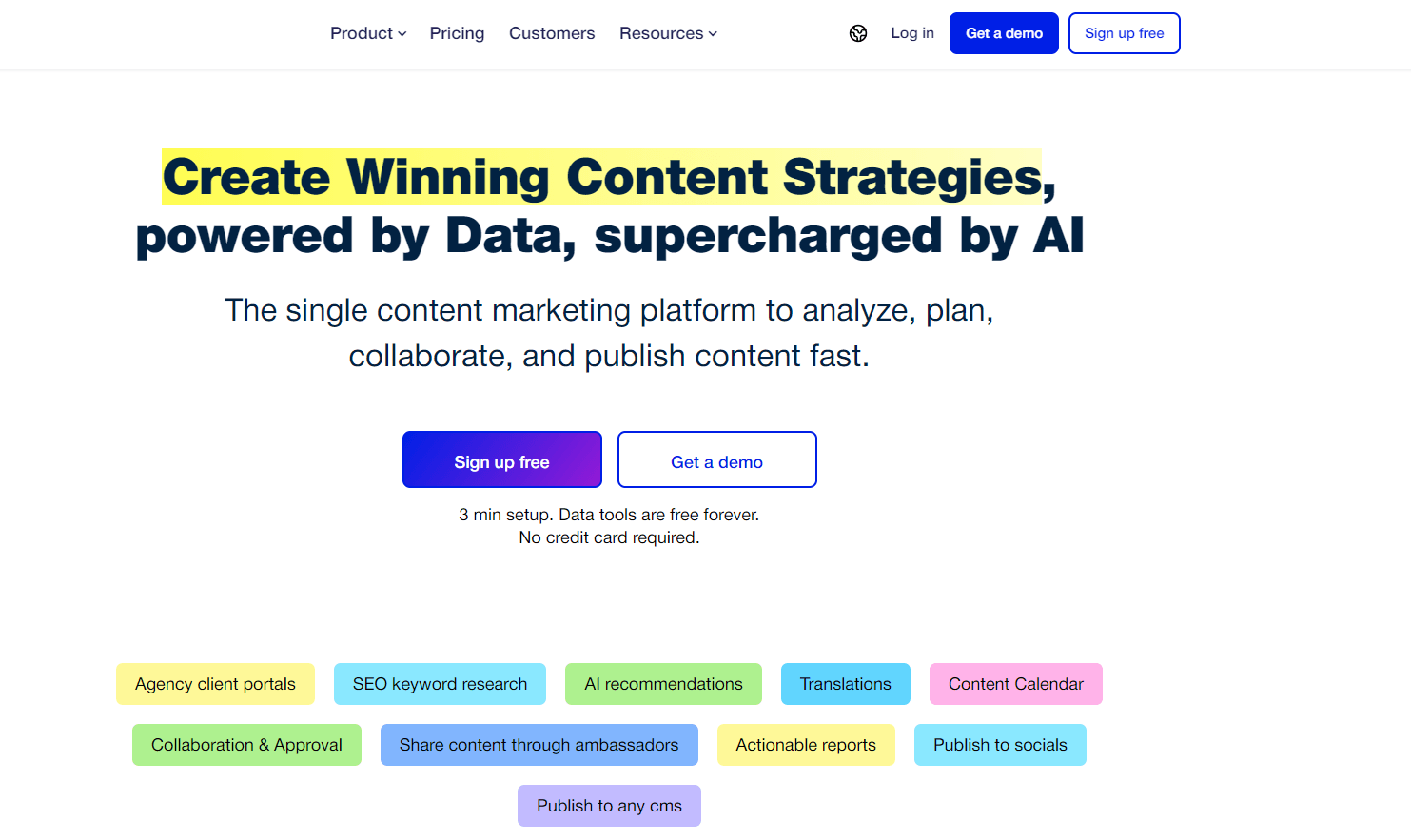
StoryChief is a content marketing platform that keeps briefs, drafts, reviews, publishing and results in one campaign, with an AI writing assistant your team approves before publishing.
About StoryChief
What Is StoryChief
StoryChief is content collaboration software for marketing teams that plan, write, review and publish on a schedule. It keeps the brief, the draft, the comment thread, the approval, the distribution list and the performance numbers attached to the same campaign record. The company works out of Ghent, Belgium, and says it serves more than 1,000 companies across 30 countries.
The gap it goes after is context loss. A brief sits in a document, feedback sits in a chat thread, the finished piece sits in a CMS, and traffic sits in a separate analytics tab. Split like that, brand voice drifts and nobody can point to the post that produced a demo request. StoryChief argues that one connected workflow fixes both problems at once, and the product is built around that claim rather than around a single editor.
The limits are scope and price. This is a team tool: the cheapest plan runs €49 a month for one user and 25 articles, so a solo blogger publishing twice a week hits the ceiling inside a quarter. Image and video generation also sit behind a paid add-on on the lower plans.
Getting Started
- Register at app.storychief.io and name the workspace. The trial opens on the Starter feature set, and no card is needed to look around.
- Connect the destinations first: a website or CMS endpoint, then the social channels and any newsletter tool you already send from. Publishing fails quietly when a destination is missing, so do this before writing.
- Create a campaign, add the brief and the target keyword, then let the AI writing assistant produce a first draft or paste your own. Assign a writer and a reviewer on the same screen.
- Move the draft through comments and approval, publish to every channel at once, then read the performance panel a week later to decide what gets a follow-up.
Product Information
A quick look at StoryChief's pricing, supported platforms, and performance.
Best for
The users, tasks, and scenarios where this tool fits best.
Users
- In-house marketing teams of three to ten people
- Agencies that publish for several clients
- Content leads at a scaling software company
Tasks
- Turning a keyword list into a monthly content calendar
- Pushing a draft through legal and brand review
- Publishing one article to a blog, LinkedIn and a newsletter without three copy-paste rounds
- Checking whether AI assistants mention your brand
Scenarios
- Quarterly planning week
- A product launch with six assets and four approvers
- A writer leaving mid-quarter
Key features
One campaign record instead of five tools
Every campaign holds its brief, drafts, comments, approvals, published links and results in one place. The practical gain shows up during review: a reviewer reads the brief beside the draft, which is where most brand voice arguments actually get settled. Campaign level reporting then ties traffic to the work that produced it.
AI writing assistant with monthly credits
The AI writing assistant moves from research to outline to draft, and it works from the campaign context rather than a blank prompt. Each plan ships a credit pool, from 15,000 a month on Starter to 50,000 on Scale, and extra credits can be bought in one-time packs that don't expire. Drafts arrive as drafts: a person still edits and approves before publishing.
Multi-channel publishing and CMS integrations
Write once, then push to the website, social channels, Medium, Dev.to and email tools from the same screen. CMS integrations cover the common WordPress style setups plus headless endpoints through a custom website API, so a Next.js or Webflow front end is reachable without a developer ticket. Scheduling is unlimited on every plan.
Review links, comments and approval workflows
Reviewers comment inline, and outside stakeholders get a public link that needs no login. Approval workflows arrive on Growth and above, with roles that decide who can publish and who can only suggest. For a two-person team the comments are enough. For a team with a legal reviewer, the workflow is the reason to pay for Growth.
Content audit, SEO insights and AI visibility
The content audit scores existing pages and flags thin or overlapping pieces, while SEO insights suggest what to refresh first. AI visibility tracking watches a set of prompts to see whether assistants name your brand in answers. Numbers here are directional, and the report is only as good as the prompt list you feed it.
Employee advocacy and broadcasts
Colleagues share approved posts from their phones through Slack, Teams or email, and the dashboard tracks participation, leaderboards and reach. This is the feature that usually justifies the Growth plan for a company with a large staff and a small paid media budget. Adoption depends on the posts being good, not on the tool.
Pros and cons
Pros
- Brief, draft, approval, publishing and reporting share one record, which removes the usual hunt for the latest version.
- Multi-channel publishing covers a blog, social, Medium, Dev.to and email from a single approved draft.
- The AI writing assistant works from campaign context, so drafts arrive closer to the brief than a generic chatbot reply.
- Content audit, SEO insights and AI visibility tracking give a small team a weekly agenda instead of a guess.
- Employee advocacy turns staff shares into a measured channel, with participation data attached.
Cons
- No free plan. The trial ends and the entry price is €49 a month for one user and 25 articles, which prices out hobby bloggers.
- Seats add up fast: €15 to €22 per extra user each month, and Starter stops at three users total.
- Image and video generation need the €38 AI add-on unless you are on Scale or above, so the advertised creative tools are not in the base price.
- The surface area is large. Expect a week of setup before the audit, the calendar and the approval flow all pull their weight.
Frequently asked questions
It runs the content production cycle for a marketing team: brief, draft, review, approval, publishing to several channels, then performance review. It replaces a document plus a spreadsheet plus a scheduler plus an analytics tab.
Related content
Explore related tools, skills, and articles for StoryChief.
StoryChief Alternatives

Base Code
Base44 (Wix) · Coding · ProductivityBase Code is a shared cloud development environment from Base44. Teammates describe changes to an existing GitHub codebase in chat, preview them live and send them back as pull requests.

Knocket
Knocket (Tencent RTC team) · Productivity · Business · ChatbotKnocket is a free live chat and contact page tool that lets visitors message you from your website, app, or a shareable link, with every reply handled from Telegram or one inbox.

FloorGen
Vinit Kumar (FloorGen) · Productivity · China AIFloorGen is a browser-based floor plan maker that turns a sentence or a sketch into an editable 2D plan and a 3D walkthrough. Export to PDF, DXF or video, and draw without an account.