

SubSchool
SubSchool · Leaning
SubSchool is an online teaching platform for tutors, teachers, and course authors who want to create, run, and sell lessons without hiring an IT team. Think of it as a course creation platform, a tutoring software suite, and a checkout, bundled together. It puts course building, AI grading, adaptive homework, and 1:1 tutoring in one place, so a single educator can run something that looks like a small school. You build courses on the web, publish them to the marketplace or keep them private, and take a cut of each sale. The Android app lets you check in on lessons and homework on the move.
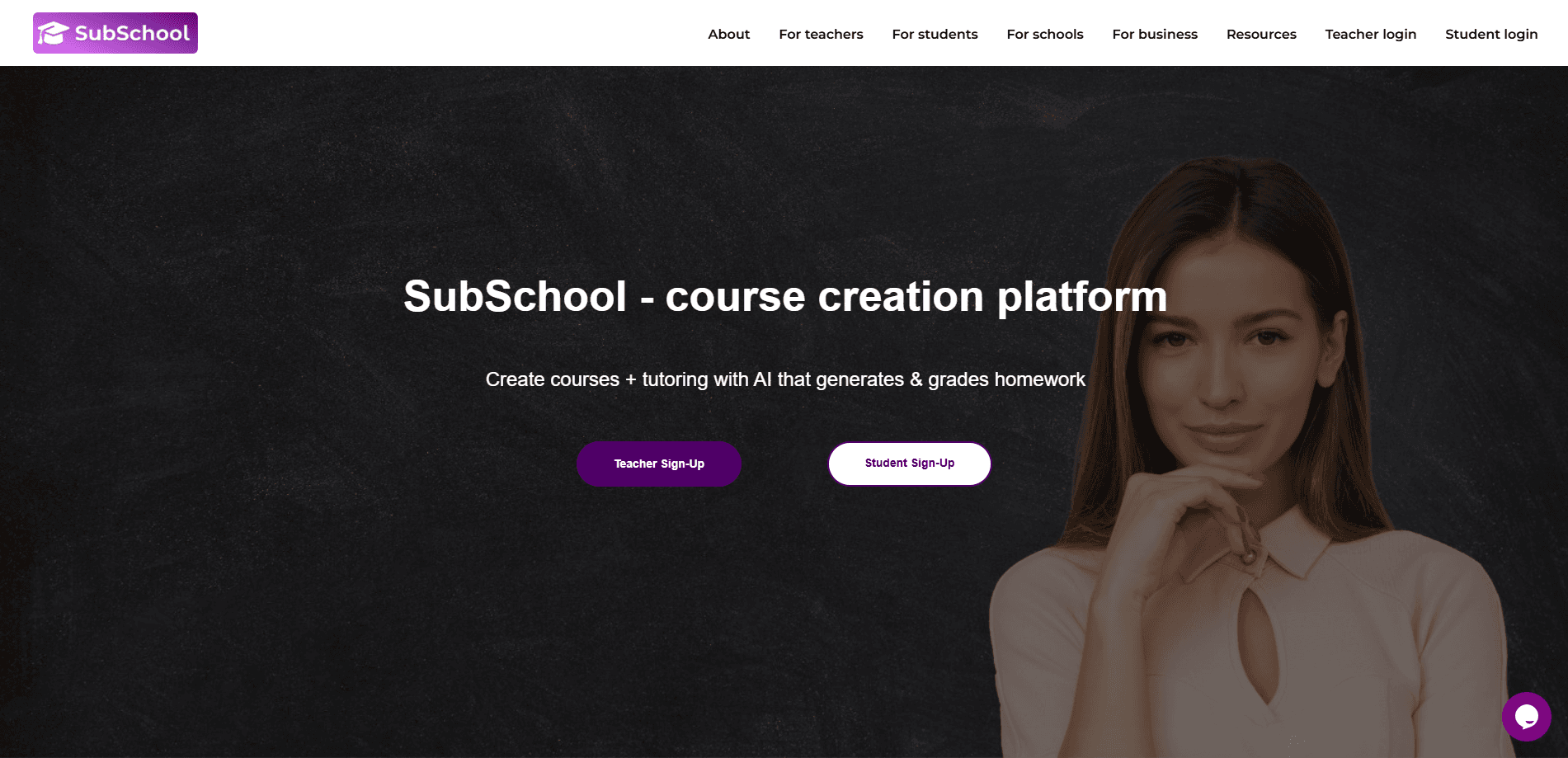
About SubSchool
What Is SubSchool
SubSchool is a web-first platform, with an Android companion app, built for people who teach one-on-one or sell their own courses. It handles the boring operational half of teaching: building a course page, generating homework, grading submitted work, scheduling tutoring calls, and collecting payment. The pitch is simple. You keep teaching, and the platform keeps the paperwork moving.
The thing that separates it from a plain course host is the AI layer, which turns your existing lesson materials into homework, checks, and even course visuals before grading essays and video answers automatically. That matters if you're a solo tutor juggling twelve students, because grading is where most of the unpaid hours disappear. Homework automation like this is the quiet selling point. It also lets students try a single lesson before committing to a full course, which lowers the barrier to a first sale. Want to sell courses online without building a storefront? That's the gap it fills.
The catch is the business model. SubSchool takes a 20% commission on every sale that happens through its marketplace, and hidden (private) courses run on a subscription of $29 a month for the first one. The referral route softens that: if a learner joins through your own link, the effective commission drops to 10%. And there's no public API. So anyone hoping to wire SubSchool into a custom LMS or a school's existing systems is out of luck for now.
Getting Started
- Create a teacher account at teacher.subschool.us and set up your profile.
- Build your first course or single lesson, uploading the source material you already have.
- Let SubSchool generate homework, checks, and visuals, then review and edit everything before publishing.
- Choose how students buy it: public in the marketplace, or private as a hidden course.
- Set your tutoring availability, then take bookings and run sessions from the same dashboard.
Product Information
A quick look at SubSchool's pricing, supported platforms, and performance.
Best for
The users, tasks, and scenarios where this tool fits best.
Users
- Independent tutors
- Course authors
- Small teaching teams
Tasks
- Grading essays and video answers
- Building homework from existing materials
- Running paid 1
- Selling courses by module or single lesson
Scenarios
- A tutor who wants income from teaching without doing marketing or IT work
- A course creator testing a new topic
- An instructor tracking real learning gains
Key features
AI-Powered Creation and Grading
SubSchool takes lesson materials you already have and turns them into homework, checks, and course visuals. It grades essays and video answers automatically, which is the part most solo teachers resent doing by hand. You review the output before anything goes live. The AI drafts, you decide.
Personalized Homework
Assignments adapt to how each student performs, so a learner who's ahead gets pushed and someone who's struggling gets steady footing. It's the difference between a worksheet everyone gets and one that fits the person in front of you. Set it once. It keeps adjusting as results come in.
Sell by Course, Module, or Single Lesson
You can sell a whole course, one module, or a single lesson. Letting students try one lesson first lowers the entry price and builds trust before the bigger purchase. More unit sizes means more ways for a learner to say yes. That's the whole idea.
Entry-to-Exit Exam Rating
SubSchool scores the gap between a student's entry exam and their exit exam. A bigger jump means a higher course rating on the platform. It's a rating built on measured progress instead of star ratings and vibes. Real gains, real score. It rewards teachers whose students actually improve.
Built-In 1:1 Tutoring
Set your availability, approve bookings, and run the lesson from one place. A session link gets created automatically, so there's no back-and-forth over scheduling. That alone removes a surprising amount of friction. Ask any tutor.
Recordings and Homework in One Thread
Every tutoring call is saved, and the homework sits right next to it. You assign, the student submits, you review, and progress gets tracked without hopping between apps. No more lost files. For anyone running several students, keeping the paper trail in one thread is the difference between organized and chaotic.
Single School Infrastructure
Course authors get automatic school creation, lesson schedules, and homework checking without standing up their own site, which means the platform handles hosting, checkout, and the operational plumbing on your behalf. You get the storefront without the sysadmin job.
Pros and cons
Pros
- AI grading covers both essays and video answers, which is rare and directly cuts marking time.
- Flexible selling by lesson, module, or full course lowers the price of a first purchase.
- Built-in tutoring tools keep bookings, recordings, and homework in one place.
- Entry-to-exit scoring ties course ratings to real student progress.
- Teachers keep full review control over AI-generated homework and visuals.
Cons
- The 20% marketplace commission is on the high side, and it only drops to 10% if the buyer comes through your own referral link.
- Hidden courses need a $29 a month subscription for the first one, so private teaching carries a fixed cost even before you sell anything.
- With no public API, you can't plug SubSchool into an existing school system or custom dashboard.
Frequently asked questions
It's an online teaching platform for creating, managing, and selling courses, plus running 1:1 tutoring. It bundles course building, AI grading, adaptive homework, and payments into one workflow for individual educators.
Related content
Explore related tools, skills, and articles for SubSchool.
SubSchool Alternatives
HireKey
HireKey · Voice & Language · Productivity · LeaningHireKey is an AI job search copilot built by a former tech recruiter. It checks role fit, tailors resumes, runs interview practice and tracks every application.

Lune
Retrograde Labs · Productivity · LeaningLune is a research search engine for scientific AI agents. It runs as an MCP server that lets Claude, ChatGPT and Cursor search peer-reviewed computer science papers and cite them.
Coddy
Coddy · Coding · LeaningCoddy is a gamified platform to learn to code through short interactive lessons in 20+ languages, with a browser editor, an AI tutor and free certificates.