

Synaptiq | Synaptiq Learning
Synaptiq Learning Inc. · Leaning
Synaptiq, now rebranded as Ora AI, is an adaptive study platform for medical students that combines a spaced-repetition question bank, flashcards, videos, and an AI tutor in one daily plan.
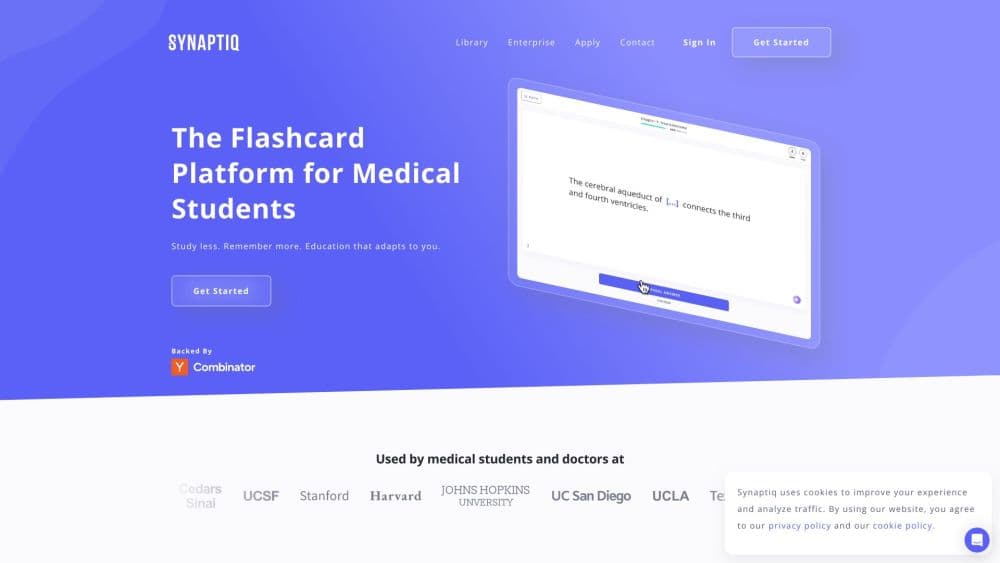
About Synaptiq | Synaptiq Learning
What Is Synaptiq
Synaptiq is a study platform built for medical education, developed by Synaptiq Learning Inc. In 2026 the company moved the product under a new name, Ora AI. The old domain now forwards there, and legacy accounts still sign in at synaptiq.app.
The pitch is simple. Instead of letting you pick what to review, the platform builds a daily schedule from your exam date, your past answers, and the concepts you keep missing. Questions, flashcards, videos, and short articles all feed the same engine, so a weak topic comes back as a question today and as a card tomorrow.
That focus cuts both ways. Everything is tuned to US medical training: preclinical coursework, USMLE Step 1 and Step 2 CK, COMLEX, and shelf exams. Students in other fields, or anyone prepping for a non-medical certification, won't find much here. There's also no public API, so schools and third-party tools can't plug into the question bank directly.
Getting Started
- Create a free account at app.oraai.com with an email address or your school single sign-on.
- Choose your track and enter your exam date: preclinical, Step 1, Step 2 CK, shelf, or COMLEX.
- Upload lecture slides or course objectives if you want your school's curriculum mapped to board-style questions. This step is optional.
- Open the daily plan and work through the questions, cards, and videos it lists. The order changes after every answer you submit.
Product Information
A quick look at Synaptiq | Synaptiq Learning's pricing, supported platforms, and performance.
Best for
The users, tasks, and scenarios where this tool fits best.
Users
- First and second year medical students
- Third and fourth year students on rotations
- International medical graduates and repeat test takers
Tasks
- Building a study schedule
- Working through a USMLE question bank
- Memorizing high-yield facts
- Finding weak spots before a shelf
Scenarios
- A six-week dedicated Step 1 block
- Balancing clerkship shifts with board prep
- A school rolling the platform out to a cohort
Key features
Spaced-Repetition Question Bank
Vignette questions in the style of board exams come back on a spaced schedule until each concept sticks. The company says this format produced a 100% first-attempt Step 1 pass rate in a randomized trial against UWorld, and a Step 2 CK score 11 points higher in the same trial. Treat those numbers as the vendor's own results, not an independent benchmark.
A Daily Plan That Rebuilds Itself
Every answer you submit changes what comes next. The engine weighs your exam date, accuracy by topic, and how long since you last saw a concept, then rebuilds the next day's list. You can add your own tasks, but the default path needs no planning on your side.
AI Tutor on Every Question
Each question links to a tutor that explains the reasoning, not just the correct option. It adapts to the part you got wrong, which helps when an explanation assumes knowledge you don't have yet. Think of it as a second pass through the concept without leaving the page.
Adaptive Flashcards That Replace Decks
The flashcard system runs on the same schedule as the question bank, so cards and questions reinforce each other. You don't have to download shared decks, tag them, or fix the ordering by hand. Students who describe themselves as former Anki users tend to mention this as the reason they switched, and for them it works as a full Anki alternative.
Curriculum Mapping From Your Lecture Slides
Upload a lecture deck or a list of course objectives and the platform matches its questions to what your school is teaching that week. It takes seconds according to the company, and it's the feature that makes this a medical school study app rather than a standalone test prep tool.
Faculty Command Center
Schools get a live view of cohort progress, topic-level performance, and students who look at risk before exam day. Faculty can also align the question pool to local curriculum goals. This side of the product is sold separately from the student plan.
Pros and cons
Pros
- The daily plan removes the hardest part of board prep, which is deciding what to study each morning.
- Questions, flashcards, videos, and articles share one schedule, so you stop juggling four apps and a spreadsheet.
- AI tutor explanations adapt to the specific distractor you chose, which is more useful than a static answer key.
- A free student tier means you can test the adaptive engine for a few weeks before paying anything.
- Curriculum mapping ties board-style questions to the lectures your school is running right now.
Cons
- The rebrand to Ora AI creates confusion: search results, old links, and campus advice often point to two different names for the same product.
- Content is limited to medicine, so nursing, pharmacy, and allied health students get little value.
- The strongest claims come from company-run trials. Independent replication of the UWorld comparison isn't available yet.
- No public API means you can't pull your review data into your own tools or a school dashboard.
Frequently asked questions
Both names point to the same product. Synaptiq Learning Inc. rebranded the platform as Ora AI in 2026, and synaptiq.co now forwards to oraai.com. Legacy users can still reach their old accounts at synaptiq.app.
Related content
Explore related tools, skills, and articles for Synaptiq | Synaptiq Learning.
Synaptiq | Synaptiq Learning Alternatives

HireKey
HireKey · Voice & Language · Productivity · LeaningHireKey is an AI job search copilot built by a former tech recruiter. It checks role fit, tailors resumes, runs interview practice and tracks every application.

Lune
Retrograde Labs · Productivity · LeaningLune is a research search engine for scientific AI agents. It runs as an MCP server that lets Claude, ChatGPT and Cursor search peer-reviewed computer science papers and cite them.
Coddy
Coddy · Coding · LeaningCoddy is a gamified platform to learn to code through short interactive lessons in 20+ languages, with a browser editor, an AI tutor and free certificates.