
The HS Code
The HS Code · Coding · Business
The HS Code is an AI web app that turns a plain product description into a six-digit HS code for customs, with no tariff book required. Its service now runs on TariffBase.
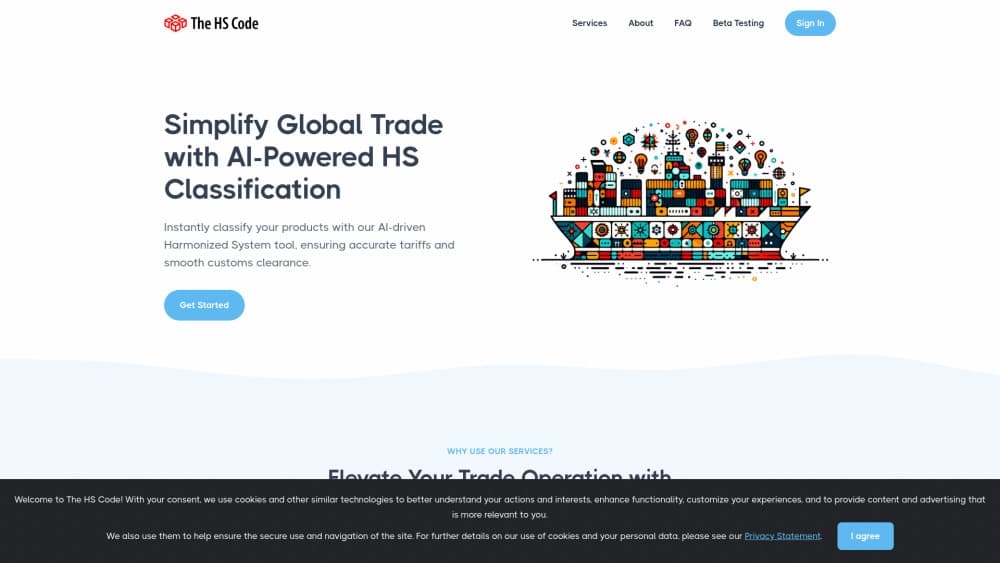
About The HS Code
What Is The HS Code
The HS Code is a web tool for HS code classification. You describe a product in everyday language, and it returns the six-digit code customs officers expect to see on an import or export declaration. It was built for small importers, online sellers, freight forwarders and customs brokers who need an HS code lookup before a shipment moves, not after a broker sends an invoice.
The Harmonized System is the numbering scheme the World Customs Organization maintains for traded goods. Every chapter and heading carries rules about materials, intended use and essential character. Pick the wrong line and a container can sit at the border while duties get recalculated. Doing it by hand means reading chapter notes and tariff tables for an afternoon. The HS Code reduces that first pass to a text box.
Two limits matter more than the marketing. It returns six-digit codes only, because the longer national tariff lines differ from country to country, so the final eight or ten digits still come from a local tariff book. Results are also estimates from AI models, not binding rulings, and the company says as much on its own site. Check a code with a broker or the customs authority before it goes on a real filing. The original thehscode.com service has been retired, and every feature now lives on TariffBase.
Getting Started
- Go to tariffbase.io and create an account with your email address.
- Describe the product in plain language, in any language you write comfortably. Material, function, key measurements and what it is used for all help.
- Read the suggested six-digit code. If the match looks wrong, add detail and run the query again.
- Look up the national tariff line in the destination country's tariff book, then confirm the classification with a broker or customs office before you file.
Product Information
A quick look at The HS Code's pricing, supported platforms, and performance.
Best for
The users, tasks, and scenarios where this tool fits best.
Users
- Small importers and exporters
- Online sellers shipping across borders
- Freight forwarders and customs brokers
Tasks
- Classifying a new product line
- Auditing supplier codes
- Preparing shipment paperwork
- Handling descriptions in another language
Scenarios
- Launching a product in a new market
- Onboarding a large catalog
- Quoting a cross-border deal
Key features
Plain-Language Product Descriptions
You type what the product is, not a tariff heading. The tool reads material, purpose and specifications, then matches them against customs data. That removes the usual first hurdle, which is knowing enough jargon to search a tariff database in the first place.
Six-Digit Codes Backed by Customs Data
The classification draws on databases from several countries, combined at the six-digit level where national systems agree. Six digits is the part of the harmonized system code that travels: the same code works in the EU, the US, Japan and most other markets. It is also the deepest level where cross-border data can be merged without contradictions.
Queries in Your Own Language
You can describe a product in the language you normally use with a supplier. The tool accepts multilingual input, which matters for buyers working from Chinese spec sheets or German technical data. No translation step, no lost detail in the handoff.
A Review Loop Before You Commit
Every result is a suggestion you can challenge. Rewrite the description, add a material or a use case, and the classification changes with it. The site explicitly asks users to review and adjust the query, which is the right posture for a task where a wrong code carries real money.
Round-the-Clock Access with Free Updates
The service runs in the browser, with no install and no maintenance window. Tariff updates come at no extra cost, so the underlying data does not freeze at the date you signed up. For a small trade team, that beats a desktop tariff package that needs manual refreshes.
Text-First Classification, No Photo Guessing
The team tested photo-based classification and dropped it. Image quality varies, a photo rarely shows composition, and similar looking goods can sit in different chapters. Text descriptions let you state the chemical makeup, dimensions and manufacturing process, which are the details customs actually argues about.
Pros and cons
Pros
- You skip the tariff book for the first pass, which turns an afternoon of chapter notes into a few minutes of typing.
- Multilingual input means a spec sheet does not need translating before you can classify the product.
- A six-digit code is portable across markets, so one query covers most of your export destinations.
- The company is candid about the six-digit limit and the lack of photo support, which makes it easier to judge where the tool fits.
- Browser access with included tariff updates keeps the cost predictable for a small team.
Cons
- The original service is discontinued. Bookmarks, saved links and old workflows have to move to TariffBase.
- It stops at six digits, so you still open a national tariff book and likely pay a broker for the final line.
- Results are AI estimates, not binding rulings. A wrong code can mean recalculated duty, storage fees or a penalty, and the liability stays with the importer.
- No public API is documented, so catalog automation means manual queries or a separate integration project.
Frequently asked questions
It converts a written product description into a six-digit Harmonized System code. You get the classification customs uses to set duty and check compliance, without searching a tariff database by heading number.
Related content
Explore related tools, skills, and articles for The HS Code.
The HS Code Alternatives

Udon
Udon · Coding · ProductivityUdon turns an Apple Silicon Mac into a home server you run from a browser, with container controls, file shares, and an optional AI sysadmin.

offstage
offstage cloud · Coding · Productivityoffstage gives AI coding agents and CI jobs a real Mac: a fresh macOS account on Apple silicon, driven over an API and billed by the second.

BotBus
Chengdu Tuyang Tusen Technology Co., Ltd. · Coding · ProductivityBotBus lets you control AI coding agents from your phone and watch: approve commands, start tasks and read results while the code stays on your desktop.