

Tyce
Tyce · Productivity
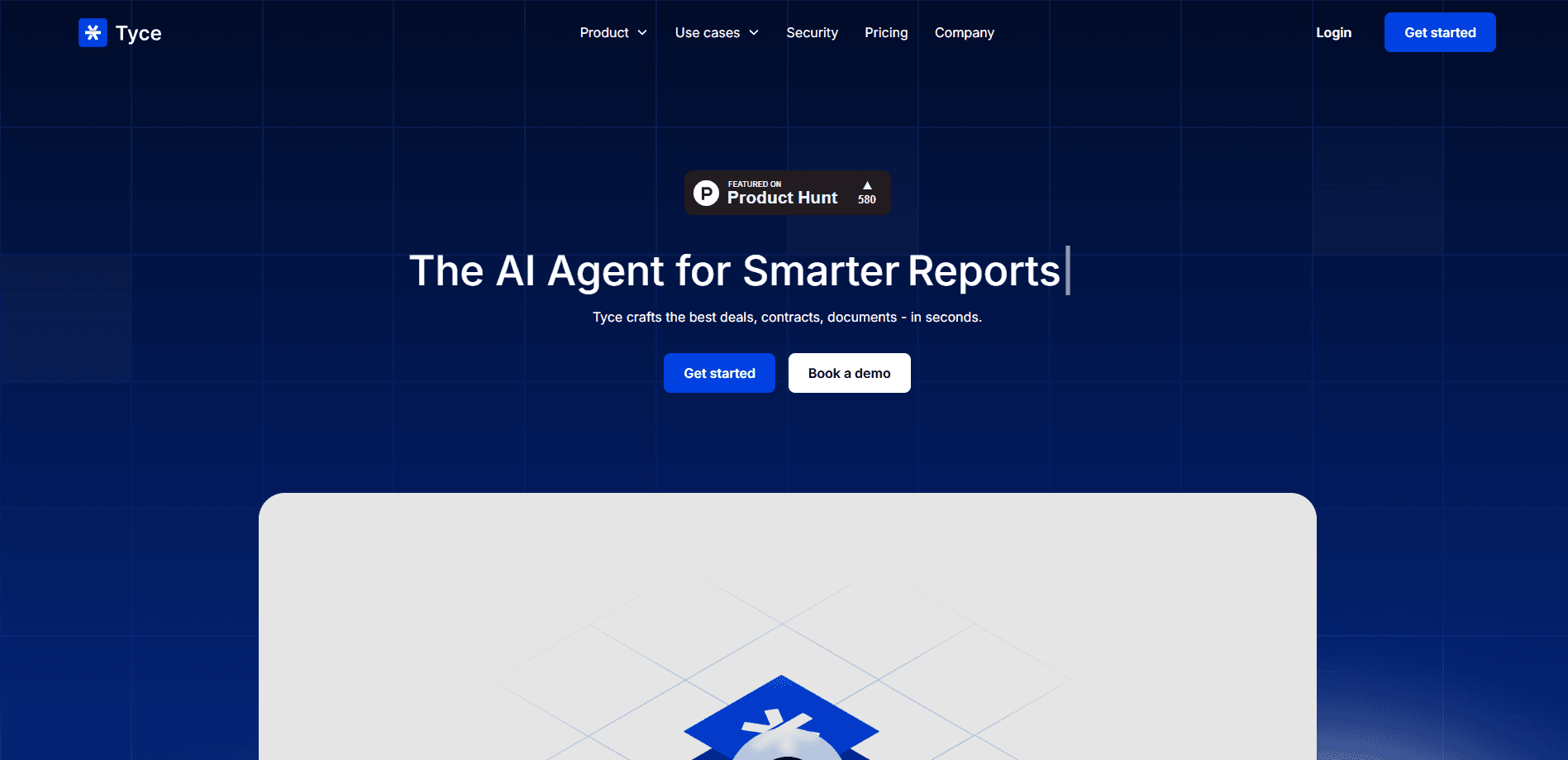
Tyce is an AI platform for AEC teams that indexes your drawings, specs, RFPs, and contracts, then uses that knowledge to draft proposals, benchmark estimates, and flag contract risk.
About Tyce
What Is Tyce
Tyce is an AI platform built for the architecture, engineering, and construction (AEC) industry. It works as construction document AI: it plugs into the document pile your firm already produces, the bids, proposals, RFPs, drawings, specifications, and contracts, and turns it into a searchable body of knowledge.
The problem it targets is familiar to anyone who works in preconstruction. Institutional knowledge sits in old jobs, scattered across file servers and formats, and nobody can find it when a new pursuit lands. Tyce indexes those files, builds a context graph that links related documents, and lets AI agents answer questions with citations back to the exact page or clause.
It isn't a general-purpose chatbot with a construction skin. Tyce reads drawings, specifications, and contracts as structured material, and it runs workflows for proposal drafting, estimating benchmarks, bid leveling, and contract review. As preconstruction AI, it leans on the estimating AI engine to check numbers and on contract risk analysis to catch risky clauses. Tyce is sold to firms, not individuals, and it doesn't publish self-serve pricing.
Getting Started
- Connect your company file systems so Tyce can ingest and sync your existing documents.
- Let Tyce parse and index each file, extracting key information and linking related entities across drawings, specs, contracts, and estimates.
- Open an agent for the workflow you need, such as proposal drafting, estimating review, bid leveling, or contract risk.
- Review the output, which arrives in your firm's templates and style, and check the citations that point back to source documents.
Product Information
A quick look at Tyce's pricing, supported platforms, and performance.
Best for
The users, tasks, and scenarios where this tool fits best.
Users
- Sales and proposal teams at AEC firms
- Estimators
- Contract and legal reviewers
- Project managers and preconstruction leads
Tasks
- Drafting a proposal for a new pursuit
- Checking whether an estimate is reasonable
- Drafting scopes of work across trades
- Reviewing a contract before signing
Scenarios
- Responding to an RFP under deadline
- Defending a number in a bid review
- Onboarding a new project with an unfamiliar scope
- Auditing a document set for missed scope
Key features
Context graph across your projects
Tyce indexes every drawing, spec, contract, and estimate and links them into a context graph. When a spec section references a detail on a drawing that ties to a line in an estimate, Tyce captures that relationship so an agent can traverse the whole set instead of reading one file at a time.
Document understanding tuned for AEC
The platform does more than optical character recognition. It builds a multi-modal understanding of floor plans, elevations, details, schedules, and title blocks, and it handles scanned, hand-marked, and stamped documents while keeping tables, callouts, and small text intact.
Proposal drafting in your firm's voice
For sales and proposal teams, Tyce drafts proposals using an intelligent library of past project references and style prompts that match the firm's voice. The drafting happens in an AI-native proposal editor, so the output stays in the format and tone the firm already uses.
Estimating benchmarks and pattern detection
The estimating engine benchmarks every new estimate against weighted historical project data. It identifies patterns in past estimates, runs scenarios for different projects, generates Excel-ready tables, and flags risks across estimating packages.
Bid scoping and leveling
Tyce analyzes complex drawings, specifications, and bid documents to draft scopes of work across trades. It levels bids using the company's own templates and includes a prompt library for scope writing.
Contract risk assessment
For contract teams, Tyce indexes supplemental clauses and provisions against industry contract standards, flags key risks against the company's risk profile, and recommends language. Contracts can be edited in an AI-native contract editor.
Citations and auditable answers
Every answer links back to the exact page, drawing, or clause it came from, across documents and across projects. Tyce states that answers are traceable down to the line of the source document, which matters when a number or a scope claim needs defending.
Enterprise-grade security controls
Tyce encrypts data in transit and at rest, supports SSO authentication, and states that company data isn't used to train large language models. Firms keep ownership of their data and model outputs.
Pros and cons
Pros
- Works from the documents AEC firms already have, so the value grows as more past projects get indexed.
- Answers are cited back to source pages and clauses, which helps estimators and reviewers defend their numbers.
- Covers several preconstruction workflows in one place, from proposals to estimating to contract review, instead of forcing teams to stitch together separate tools.
- Enterprise security features like SSO and an opt-out from model training fit firms with strict data policies.
- Understands drawings, specs, and contracts together rather than treating each as a flat PDF.
Cons
- There is no published pricing or self-serve plan, so you have to talk to sales before you know the cost, which slows down evaluation.
- It is aimed at firms, and smaller teams or solo practitioners may find it hard to justify the setup work.
- The payoff depends on uploading a solid history of past projects, so a firm with thin or disorganized archives will get less out of it early on.
- No public API is documented, so teams that want to build on top of Tyce can't plan for that today.
Frequently asked questions
Tyce is an AI platform for AEC firms that reads their construction documents and drafts proposals, benchmarks estimates, levels bids, and reviews contracts. It indexes drawings, specs, RFPs, and contracts, then uses AI agents to answer questions and produce deliverables with citations.
Related content
Explore related tools, skills, and articles for Tyce.
Tyce Alternatives

Base Code
Base44 (Wix) · Coding · ProductivityBase Code is a shared cloud development environment from Base44. Teammates describe changes to an existing GitHub codebase in chat, preview them live and send them back as pull requests.

Knocket
Knocket (Tencent RTC team) · Productivity · Business · ChatbotKnocket is a free live chat and contact page tool that lets visitors message you from your website, app, or a shareable link, with every reply handled from Telegram or one inbox.

FloorGen
Vinit Kumar (FloorGen) · Productivity · China AIFloorGen is a browser-based floor plan maker that turns a sentence or a sketch into an editable 2D plan and a 3D walkthrough. Export to PDF, DXF or video, and draw without an account.