

VehicleERP
BytezTech · Productivity · Business
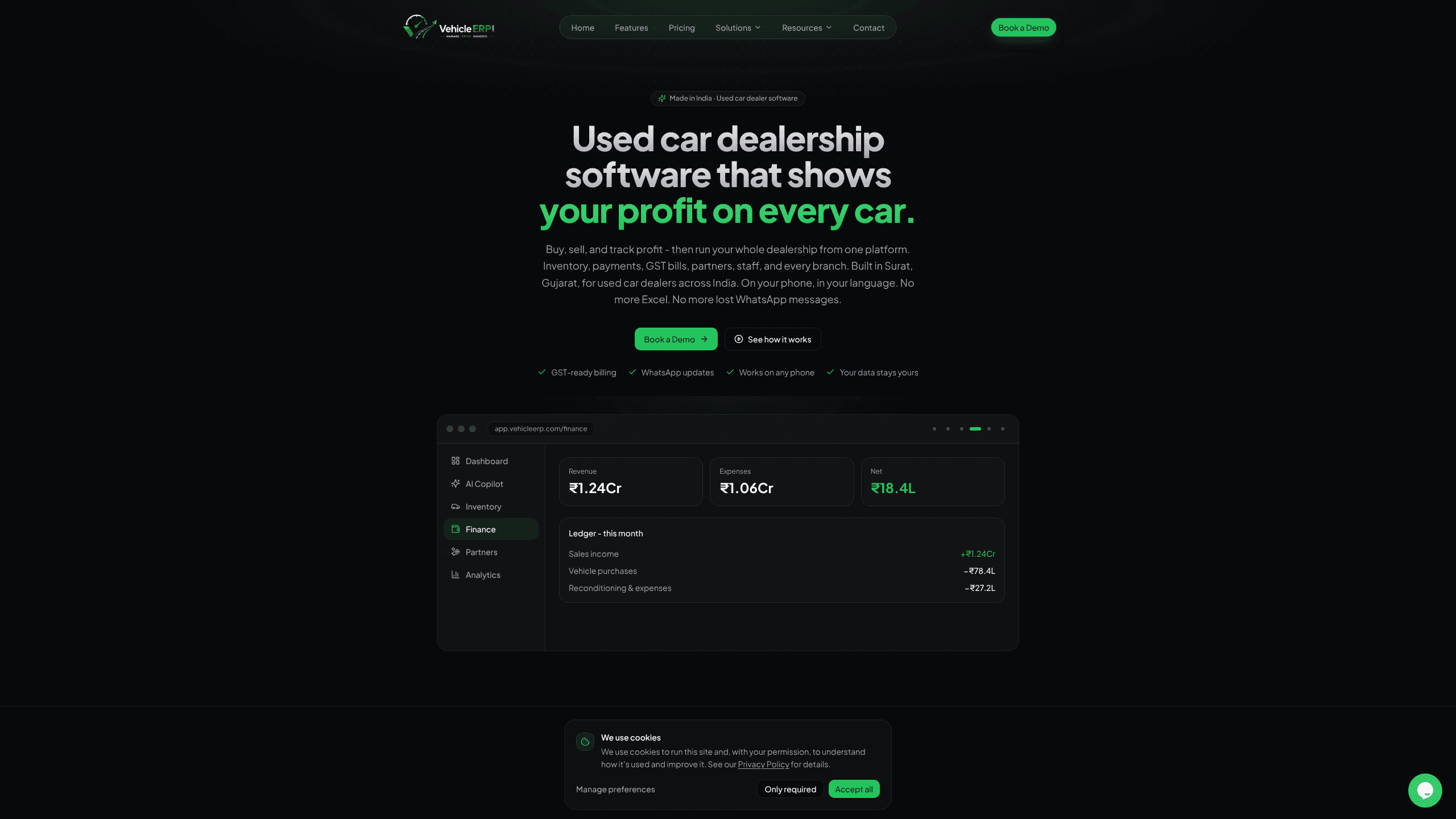
VehicleERP is cloud-based used car dealership software from India. It tracks real profit on every car, along with inventory, GST bills, partner shares, staff and branches in one place.
About VehicleERP
What Is VehicleERP
VehicleERP is used car management software for used car dealerships, built in Surat by a product studio called BytezTech. It covers the paperwork a dealer handles every day: buying a car, reconditioning it, selling it, billing under the GST margin scheme, paying partners, and running several branches from one login.
The product exists because most lots still run on a mix of Excel sheets and WhatsApp threads. Nobody knows the true margin on a car until the accountant closes the books, and pricing is gut feel. VehicleERP records purchase price, reconditioning, commission and expenses against the exact vehicle, then shows the profit the moment the sale is entered. Partner ledgers work the same way, so the share owed to each investor is calculated instead of argued over. Dealers shopping for car dealer software in India usually compare price and GST handling first, and both are settled inside the platform.
The limits are worth knowing up front. It's built for the Indian market: INR pricing, GST under the margin scheme, RC and Form 29/30 paperwork, and an interface in English, Hindi or Gujarati. A new car franchise running OEM processes won't find much here. There's nothing to install either, since it runs in a phone, tablet or desktop browser rather than as a native app, and the company doesn't publish API documentation, so plan on using the web interface and exports rather than building your own integrations.
Getting Started
- Book a demo from vehicleerp.com. The team maps your current stock, branches and partner structure before the trial starts.
- Start the 30-day trial, which opens the full Pro feature set at no cost.
- Add your branches and team, then set roles so staff see inventory and sales without touching partner ledgers or profit reports.
- Enter your live stock. Each car carries its purchase price, seller details, RC and transfer papers, and any reconditioning spend.
- Record a sale and check the profit screen. Once the numbers match what you expect, move to daily entry and GST billing.
Product Information
A quick look at VehicleERP's pricing, supported platforms, and performance.
Best for
The users, tasks, and scenarios where this tool fits best.
Users
- Independent used car dealers
- Multi-branch dealer groups
- Dealers with investor partners
- Dealership accountants and managers
Tasks
- Working out profit per car
- GST billing for used cars
- Tracking partner capital and loans
- Following up on enquiries across branches
Scenarios
- A car has sat for two months
- Year-end books and a filing deadline
- Opening a second branch
Key features
Profit on every car
Each vehicle carries its purchase price, reconditioning spend, commission and running costs. When you enter the sale, VehicleERP nets those out and shows what the car actually earned. Owners stop waiting for month-end to learn whether a deal worked.
Document scanning for purchases
A purchase can be logged by scanning the invoice and RC, with the AI reading the details and filling the fields. RC files, transfer paperwork and Form 29/30 documents stay attached to the vehicle, so the file is complete when a buyer or an inspector asks for it.
GST billing under the margin scheme
The platform produces GST-ready bills for used car sales and records tax paid against the matching transaction. Dealers registered under the margin scheme get bills that reflect the taxable margin rather than the full sale price, which is the part most generic accounting tools get wrong.
Partner ledgers and profit shares
Capital, vehicle-level loans, loan returns and salaries drawn by working partners each sit on their own ledger. When a car sells, the agreed share is calculated per partner and the balance updates without manual reconciliation. Disputes over who is owed what become a lookup rather than an argument.
One dashboard for every branch
Stock, sales, staff and expenses are recorded per branch, and the owner sees a consolidated view with drill-down. That combination matters for groups where each lot runs its own day but the money is shared. Teams evaluating multi-branch dealership software tend to test this exact case: can the owner get a combined number without merging spreadsheets by hand.
AI that prices stock and flags problems
The AI reads the data you already enter. It suggests a selling price from past sales, ageing stock and market movement, flags cars sitting too long, catches duplicate or unusual entries, and sends a short daily summary of sales, profit and stock at risk. A plain-language question such as which branch made the most profit this month returns an answer without a report to build. These AI features are what separate it from older car dealership software that only stores records.
Pros and cons
Pros
- Profit per car is calculated from real costs, not estimated margins, which makes pricing decisions easier to defend.
- GST margin scheme billing is built in, along with RC and Form 29/30 paperwork that generic accounting software ignores.
- Partner capital, loans and profit shares settle automatically, removing the most common source of disputes in Indian dealerships.
- Pricing starts at ₹1,499 per month per dealership with every module included, and yearly billing takes 10% off.
- It runs in a browser on any phone or tablet, with the interface available in English, Hindi and Gujarati.
Cons
- It's built for India only. Dealers outside the country get no use from the GST margin scheme, INR billing or RC paperwork.
- There's no native Android or iOS app, so the team works through a mobile browser and loses features like push notifications.
- A few AI items, including the ask-anything assistant, are still marked as rolling out on the pricing page, so you can't rely on them today.
- No public API documentation means integrations with your own tools or a marketplace listing have to wait.
Frequently asked questions
Used car dealers. Profit per car, partner shares, the GST margin scheme, brokerage and consignment deals, and reconditioning costs all follow how an independent lot or a multi-branch used car group works, not how an OEM franchise does.
Related content
Explore related tools, skills, and articles for VehicleERP.
VehicleERP Alternatives

Base Code
Base44 (Wix) · Coding · ProductivityBase Code is a shared cloud development environment from Base44. Teammates describe changes to an existing GitHub codebase in chat, preview them live and send them back as pull requests.

Knocket
Knocket (Tencent RTC team) · Productivity · Business · ChatbotKnocket is a free live chat and contact page tool that lets visitors message you from your website, app, or a shareable link, with every reply handled from Telegram or one inbox.

FloorGen
Vinit Kumar (FloorGen) · Productivity · China AIFloorGen is a browser-based floor plan maker that turns a sentence or a sketch into an editable 2D plan and a 3D walkthrough. Export to PDF, DXF or video, and draw without an account.