

Wirestock
Wirestock Inc. · Image
Wirestock is a marketplace where creators sell photos, video, design, and art as licensed AI training data, and AI labs buy curated multimodal datasets from a stock content marketplace built for them.
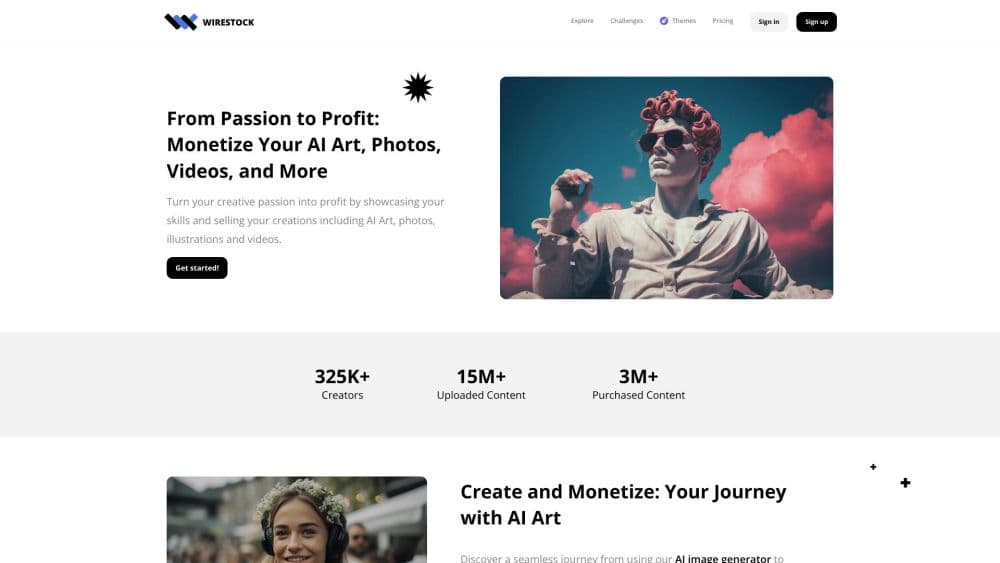
About Wirestock
What Is Wirestock
Wirestock is a platform that turns creative work into AI training data. Creators upload photos, video, illustrations, 3D assets, and music, then license that work to AI labs that need human-made data for training. The company positions itself as an ethical data layer: creators know where their work goes and get paid every time it's licensed.
The pitch sits somewhere between a stock content marketplace and a freelance creative jobs board. A photographer can drop a folder of shots into a project listing and earn passively as those files get licensed, or apply for defined briefs where a lab pays a fixed rate per approved asset. Wirestock handles the matching, the licensing paperwork, and the payouts, which is the part most creators don't want to manage themselves.
The catch is that you're selling usage rights, not credit. Once your work is licensed as training data, it may feed a model you'll never see. Wirestock leans hard on consent and transparency as its answer to that, but the tradeoff is real and worth understanding before you upload.
Getting Started
- Create a free account at wirestock.io and fill out your profile with your skills, specialties, and equipment.
- Open the Applications tab and browse the available creative opportunities.
- Apply to one, complete the unpaid test task, and wait for review.
- Once approved, you earn a certified skill and join the creator pool for that project type.
- Submit work against briefs, or let approved content earn commission each time it's licensed.
Product Information
A quick look at Wirestock's pricing, supported platforms, and performance.
Best for
The users, tasks, and scenarios where this tool fits best.
Users
- Photographers
- Illustrators and graphic designers
- Videographers and 3D artists
Tasks
- Earning from an existing portfolio
- Taking paid briefs
- Building a passive income stream
- Applying a new skill
Scenarios
- Freelancers between gigs
- Creators with a large archive
- Creatives testing the AI data market
Key features
Fixed Payment Projects
Fixed Payment projects work like freelance briefs. You get a brief, create to it, and get paid instantly once your submission passes review. Projects span photography, videography, graphic design, and animation, so the work matches the skills you already have. The rate is per approved asset, which makes the math simple: 20 photos submitted, 15 approved, and you're paid for 15.
Commission Based Licensing
With the commission model, your approved content sits in structured project listings by type, such as Photographs, Videos, and Illustrations. Wirestock offers that content to AI labs, and every time a buyer licenses one of your assets you earn 50% commission and get notified automatically. You do nothing after the initial upload, which is what makes this the passive side of the platform.
Curated and Custom Datasets
For AI teams, Wirestock goes beyond a fixed catalog. It assembles custom multimodal datasets built around a specific training goal, complete with rubrics, verifier tasks, and expert review. That means a lab can specify exactly what a model needs rather than filtering a generic library, and Wirestock sources it directly from its creator community.
Multimodal Coverage
The content isn't limited to photos. Wirestock covers images, video, illustrations, vector art, 3D assets, design work, and music, so a single platform serves many training needs. That breadth matters for labs building models that handle more than one type of input, and for creators whose skills sit outside traditional stock photography.
Ethical Sourcing and Consent
Wirestock built its pitch around consent. Creators understand what their work is used for and how they're compensated, and AI partners get content that's cleared and licensed rather than scraped. This shared transparency is the company's main differentiator against datasets pulled from the open web without permission.
Creator Pool and Certified Skills
Joining isn't automatic. You apply, complete an unpaid test task, and if the team approves your work you earn a certified skill and join the creator pool for that project type. Approval doesn't guarantee a project invitation right away, but it qualifies your profile so project managers can find you when matching work comes up.
Pros and cons
Pros
- Two clear earning paths, fixed payment per approved asset and 50% commission per license, let creators pick between predictable pay and passive income.
- The platform handles matching, licensing, and payouts, so there's less admin work than selling directly to buyers.
- Multimodal coverage across photos, video, illustration, 3D, design, and music suits creators whose skills go beyond still photography.
- A free account with no subscription means there's no cost to test whether the platform fits your work.
- Commission Based listings keep earning from older approved content long after you upload it.
Cons
- Getting into a creator pool requires an unpaid test task, and approval doesn't guarantee immediate paid work.
- Content licensed as AI training data may end up in models you never see, which won't suit creators who want tight control over how their work is used.
- Premium plans and the old marketplace were retired in 2026, so creators returning after a break may find their setup has changed and unapproved content removed.
Frequently asked questions
Wirestock is a platform that licenses creative work as AI training data. Creators upload photos, video, design, and art; AI labs license that content, and creators get paid when their work is used.
Related content
Explore related tools, skills, and articles for Wirestock.
Wirestock Alternatives

Google EmbeddingGemma 2
Google DeepMind · Writing · Image · CodingGoogle EmbeddingGemma 2 is a 740M-parameter open model that turns text, code, images, audio, and video frames into vectors in one 768-dimension space, running on phones and laptops.

Tractionwave
TractionWave · Image · MarketingTractionWave is an AI attention heatmap tool for static ads. Upload a PNG or JPG and it returns predicted attention, ranked hotspots, and fixes before you spend budget.

Imejis.io
Imejis.io · Image · MarketingImejis.io is an AI design studio for agents and marketing teams. Describe an image in plain words, and it writes the copy, builds the layout, reflows it to every size, then exports a finished file.