Google just gave its assistant permission to fill a grocery cart at four US retailers. The useful question isn't what Gemini can start. It's where it still stops and asks you.
Four grocery chains now work with Gemini Connected Apps
Google added grocery shopping to the assistant in the US this week, and the partner list says plenty about the direction. Albertsons, Safeway, Shaw's and Target are now grocery options in both Search and the Gemini app. Before this, Instacart was the only grocery service wired into Search, and it showed up in July.
Here is the short version of who brings what.
| Retailer | What the connection is for | | Target | Mass-market chain with a deep grocery aisle, handy for a single mixed basket | | Albertsons | National supermarket group, strongest across the western and southern states | | Safeway | Supermarket banner inside the Albertsons group, common in California and the Pacific northwest | | Shaw's | New England chain, the pick for readers who shop regionally |
Android Authority reported the additions on 21 November, a few days before Thanksgiving and with the holiday shopping stretch already running.
What a Gemini connected app actually is
Strip away the branding and a Connected App is one thing: an account you link once, which then lets the assistant read your data inside that service and act on it during a conversation. Without the link, the assistant can only send you to a website.
That's the difference between advice and a basket. Ask a plain chatbot what to cook for four people and you get suggestions. Ask an assistant with a grocery app linked, and it can check what the store actually stocks and start the order.
The permission is opt-in. You authorise the connection, and the permission can be pulled later. Nothing in the announcement suggests otherwise, and the retailers keep their own systems and their own accounts.
The Universal Commerce Protocol behind gemini grocery
A basket needs a shared language, which is why the plumbing matters more than the rollout. These grocery integrations run on the Universal Commerce Protocol, a standard for agent-driven commerce in which software reads a catalogue, assembles a basket and carries it through checkout.
Because it's a protocol rather than a Google-only product, the same integration can appear in Search and in the Gemini app without two separate builds. That's also why the gemini grocery list didn't arrive as a single app update with a switch inside it.
Google gemini integrations spread past the grocery aisle
Groceries are the visible part of a wider set of account links. Experian already worked inside the Gemini app, and it now also shows up in Search for credit scores and personal-loan shopping. H&R Block can prepare taxes and estimate a refund inside Search, which is a strange sentence to write about a chatbot, and a true one.
Angi and Thumbtack are next, with account linking promised for Search in the coming weeks for repairs and local services.
Promised, not live.
Anyone testing those two today will find nothing.
Where gemini shopping hands the job back to you
So what does the finished order actually look like? The limits are worth stating plainly, because they explain most of the disappointing first attempts. Everything here is US-only for now, with no announced date for the UK, Ireland or mainland Europe. Coverage is a handful of chains, not every retailer, and regional coverage inside a chain varies by store.
You need an account, and you need to link it. A guest checkout won't do.
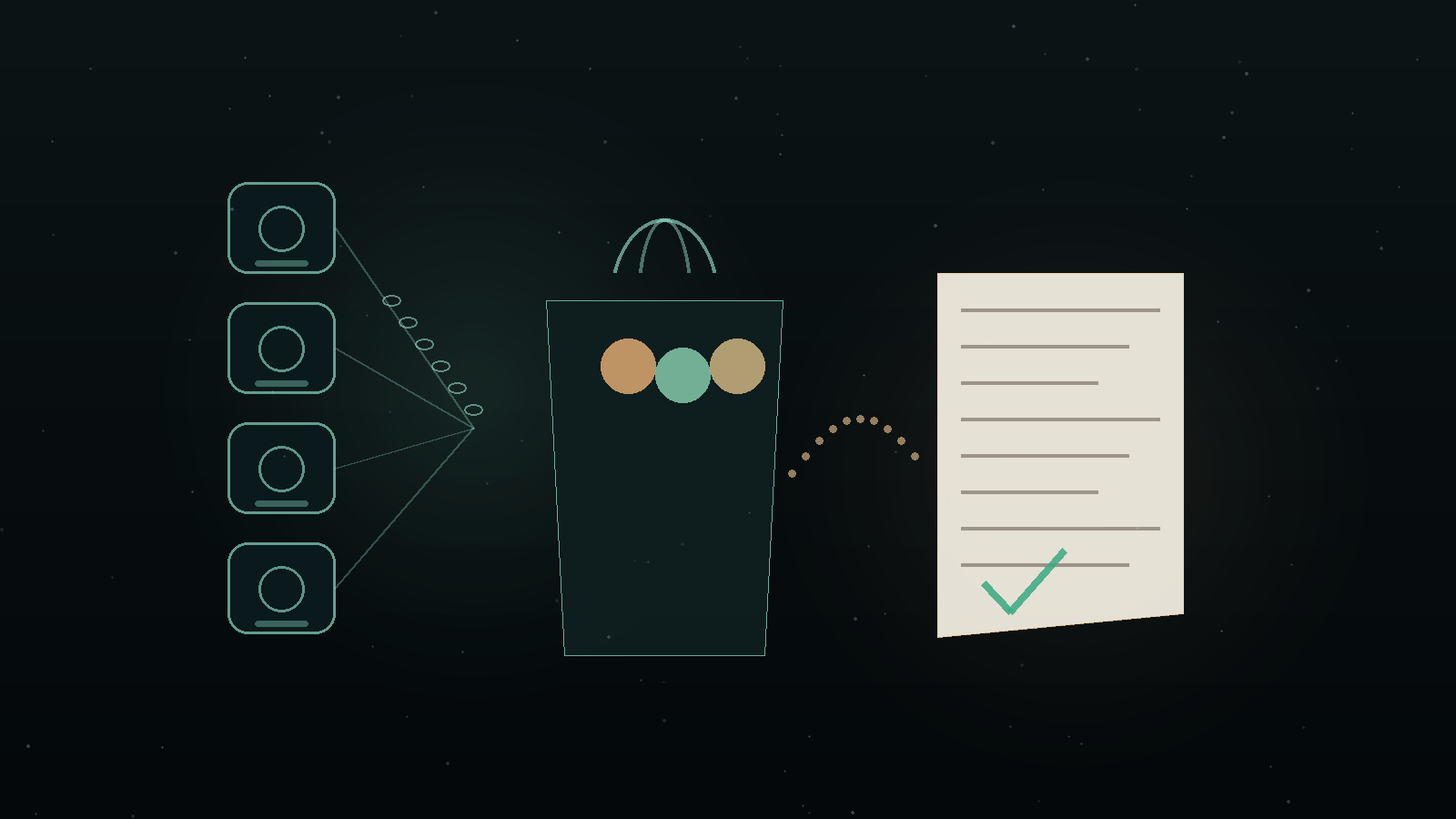
Then there's the handoff. Google says the integrations can assemble an order and take it through checkout, which reduces site-hopping during the holidays. A person still confirms the purchase. That confirmation step is the line between an assistant that prepares a cart and one that spends your money, and it's staying in place.
What linking an account shares, and how to unlink it
Linking lets the assistant read the data that service holds about you and act inside it. In practice that means order history, saved addresses and loyalty details, at the level the retailer exposes through the connection you approve.
An assistant with commerce permissions carries a different risk from one that only answers questions. A wrong answer costs you nothing. A wrong basket costs money, and a stale delivery address costs a wasted evening.
Revoking is a per-account action in your Google settings, and it takes effect on the assistant side even if the retailer keeps its own record. If you linked a chain for one holiday shop, you can unlink it in January without touching the retailer account itself.
How to tell whether gemini target works on your account
Here's a test that costs nothing. Ask Gemini for a grocery list for a specific store and watch the reply. If it offers to open the retailer's cart, or asks which location you mean, the connection is live. If it just describes what you could buy, you're talking to the plain assistant.
Try the same prompt in Search and in the app. The two surfaces should behave the same way, and a difference tells you which one has the integration enabled for your account.
For readers outside the US, the honest answer is that none of this exists yet. The likeliest signal will be a retailer announcement in your market rather than a Gemini changelog, since the chain has to join the protocol first.
Grocery is a test case for a bigger claim, which is that an assistant can finish errands rather than describe them. Watch the checkout step. If it stays manual, the permission is narrow. If it starts skipping the confirmation, the story changes.