

Anura Lite
NuraLogix · Image · AI Assistant
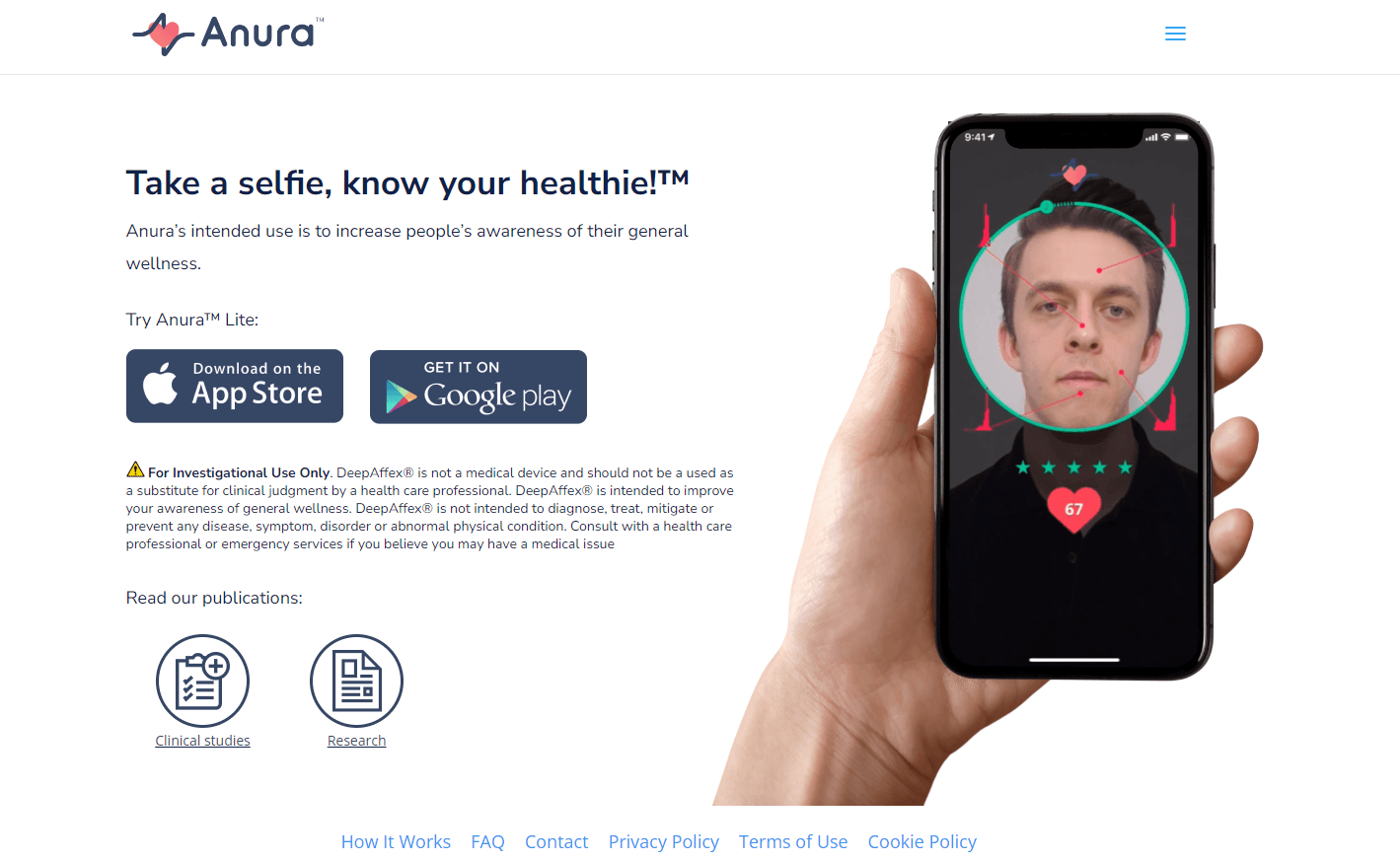
Anura Lite turns a 30-second selfie video into wellness readings like blood pressure, heart rate and stress, with no cuff and no wearable.
About Anura Lite
What Is Anura Lite
Anura Lite is a selfie health app from NuraLogix that reads physical and psychological indexes from a short selfie video. You open the camera, hold still for about 30 seconds, and the app returns readings such as blood pressure, heart rate, breathing rate, stress level, and body mass index. It needs no cuff, no finger clip, and no wearable of any kind.
The engine behind it is DeepAffex, an affective AI platform the company describes as the meeting point of affective computing and machine learning. The measurement itself relies on patented Transdermal Optical Imaging, which uses light and the translucency of skin to track blood flow changes in the face. A regular phone camera is enough to capture them.
Anura Lite is built for awareness, not diagnosis. The company labels it for investigational use and states plainly that DeepAffex is not a medical device. It is meant to help someone notice their general wellness over time. Read a single scan as a rough signal rather than a clinical result.
The main limits sit around precision and framing. Results depend on steady lighting and a still face, and the app only reflects what the camera can see. It won't replace a real blood pressure cuff for anyone managing a diagnosed condition, and it doesn't claim to.
Getting Started
- Install Anura Lite on an Android or iOS phone. The personal version downloads at no cost.
- Open the app and grant camera access, then find even lighting and hold the phone at face level.
- Start a scan and stay still for about 30 seconds while the camera records. Keep your face inside the frame.
- Read the results screen, which lists blood pressure, heart rate, stress and other indexes after processing.
- Save each scan so you can compare readings over days and weeks instead of judging one number alone.
Product Information
A quick look at Anura Lite's pricing, supported platforms, and performance.
Best for
The users, tasks, and scenarios where this tool fits best.
Users
- People who want a quick wellness check without gear
- Anyone tracking trends over time
- Teams and developers building health features
Tasks
- Checking blood pressure without a cuff
- Spotting stress build-up
- Logging a wellness routine
Scenarios
- A quiet moment at the desk
- Traveling light
- A daily habit
Key features
Contactless measurement from a selfie
The core idea is simple to start. You point the front camera at your face, hold still for about 30 seconds, and the app does the rest. There is nothing to strap on and nothing to clip to a finger. The company built it around the claim of being a first app for contactless blood pressure measurement, using only a phone.
Transdermal Optical Imaging
The measurement leans on patented Transdermal Optical Imaging. Light passes into the skin, and because skin is translucent, the camera can pick up subtle changes in facial blood flow. Machine learning then reads those changes and models the indexes the app reports. It is the same principle behind the readings whether you check blood pressure, pulse, or stress.
DeepAffex affective AI engine
DeepAffex is the engine that turns captured signals into results. NuraLogix frames it as a mix of neuroscience, psychology, physiology, and deep learning. The same platform can be licensed and embedded in other products, which is why the technology appears beyond this one app.
A set of physical and psychological indexes
A scan covers more than one number. Reported indexes include blood pressure, heart rate, breathing rate, stress level, and body mass index, along with cardiovascular risk estimates. Seeing several signals at once gives a fuller picture than a single reading, and each stays a wellness estimate rather than a clinical figure.
Tracking over time
One scan is a snapshot. As a wellness tracking app, Anura Lite shows its value when readings stack up. Saving each result lets you compare a stressed week against a calm one, or see how a routine shift moves the numbers. Trends are where a contactless tool earns its place, not any single measurement.
Backed by clinical research
The company points to global clinical studies, peer-reviewed publications, and US patents behind the algorithm, and notes coverage in outlets such as the American Heart Association. That research base is part of the pitch. The disclaimers stay firm all the same: this is a wellness tool, not a medical device.
Pros and cons
Pros
- No equipment needed: there's no cuff, clip, or wearable, so a phone camera is the only hardware required.
- Fast to run: a scan takes about 30 seconds, which makes a check easy to fit into a normal day.
- Multiple indexes at once: blood pressure, heart rate, breathing rate, stress, and BMI come from a single capture.
- Free personal download: the personal app installs at no cost, so trying it costs nothing.
- Research-backed engine: the algorithm leans on published clinical studies and patents, not just marketing copy.
Cons
- Wellness only: the company states it is not a medical device, so it can't replace clinical measurement or advice.
- Sensitive to conditions: steady lighting and a still face matter, and a shaky scan can weaken the result.
- Accuracy is a guide, not a gauge: readings are best read as a signal over time rather than a precise figure at any moment.
- Phone camera required: it depends on a working front camera, so it isn't useful on a device without one.
Frequently asked questions
Anura Lite measures general wellness from a short selfie video. Point the camera at your face for about 30 seconds and it reports indexes such as blood pressure, heart rate, breathing rate, stress, and BMI, all without a cuff or a wearable.
Related content
Explore related tools, skills, and articles for Anura Lite.
Anura Lite Alternatives

Tractionwave
TractionWave · Image · MarketingTractionWave is an AI attention heatmap tool for static ads. Upload a PNG or JPG and it returns predicted attention, ranked hotspots, and fixes before you spend budget.

Imejis.io
Imejis.io · Image · MarketingImejis.io is an AI design studio for agents and marketing teams. Describe an image in plain words, and it writes the copy, builds the layout, reflows it to every size, then exports a finished file.

Layoutr
Van Dijk Ontwikkeling · Image · China AILayoutr is a browser floor plan tool that scales your own plan, places furniture at true size, shows the room in 3D and renders it with AI.