

BRAIV
BRAIV · Video
BRAIV is a precision psychiatry platform that turns patient records, lab results, and symptom scores into ranked psychiatric medication options for clinicians.
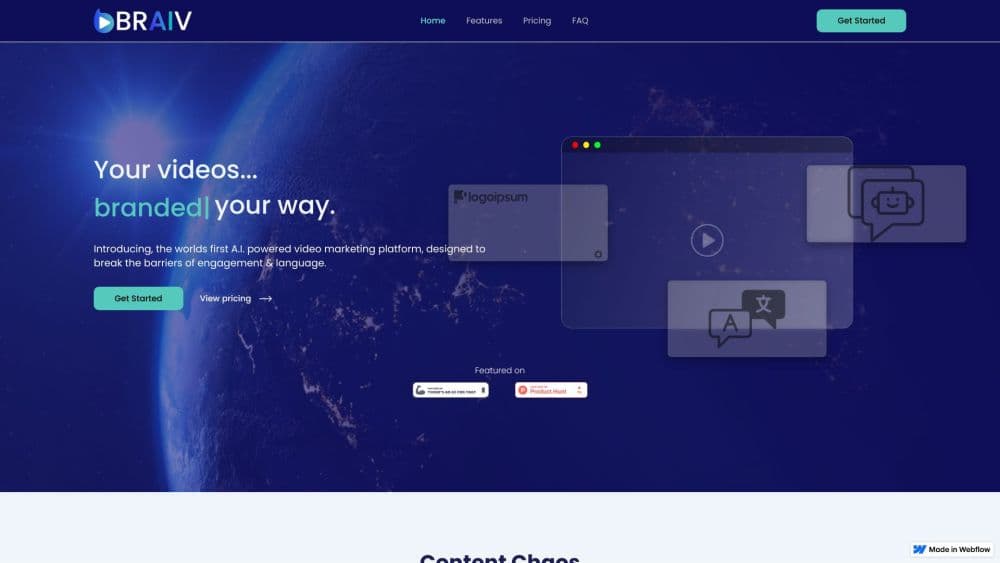
About BRAIV
What Is BRAIV
BRAIV is a clinical decision support platform for psychiatry, built by a Chicago startup of the same name with ties to Johns Hopkins and the University of Chicago. It's made for the people who write psychiatric prescriptions: psychiatrists, psychiatric nurse practitioners, and primary care doctors who handle depression, anxiety, ADHD, and similar conditions.
The problem it targets is medication trial and error. According to BRAIV, the average patient tries two or three drugs over six to eight months before finding one that works. Each failed trial costs weeks of side effects and lost function, and some patients stop treatment before they get a match. BRAIV's pitch is that a model trained on real treatment outcomes can rank the likely winners earlier, so the first or second prescription has a better chance.
Hospitals shopping for AI prescribing software should note what BRAIV is and isn't. It's a web platform that plugs into an EHR and returns a ranked list with confidence scores and written rationales. It doesn't talk to patients, doesn't refill prescriptions, and doesn't make the final call. The company is also early: its main validation study at the University of Chicago Medical Center is still in progress, and no peer reviewed results are posted on the site.
Getting Started
- Open the demo from the BRAIV site with the sample patient, or request a walkthrough for your practice.
- Connect the platform to your EHR through the secure API, or enter the intake data by hand if you're testing it.
- Choose Guideline Mode for a step-by-step APA guideline path, or AI Mode for a model ranked list.
- Review the inputs, read the confidence scores and rationales, then document your choice and keep tracking the patient's response.
Product Information
A quick look at BRAIV's pricing, supported platforms, and performance.
Best for
The users, tasks, and scenarios where this tool fits best.
Users
- Outpatient psychiatrists
- Psychiatric nurse practitioners
- Primary care doctors
- Clinic informatics leads
Tasks
- Picking a first-line antidepressant after intake
- Reassessing a patient who failed two trials
- Documenting a medication switch
- Teaching differential prescribing
Scenarios
- A community mental health clinic with long waitlists
- A telepsychiatry group with records spread across systems
- A residency clinic
Key features
Guideline Mode
A wizard walks you through the APA clinical practice guidelines, collecting diagnosis, symptom severity, prior trials, and lab values. Each step produces a recommendation you can trace back to a specific guideline line. It's the safer option when you want an answer that's easy to justify to a reviewer, and it's also the mode to use when the model's suggestion looks odd.
AI Mode With Confidence Scores
This mode runs patient data through BRAIV's model and returns a ranked list of medications, each with a confidence score and a plain-language rationale. The score is a ranking signal, not a probability that the drug will work for your patient, so treat it as triage rather than proof. Seeing the factors behind each pick is the useful part, because it makes disagreement concrete.
EHR Integration
BRAIV connects to Epic, Cerner, and other systems through a secure API, so the chart you already have open is the chart the platform reads. Demographics, diagnosis codes, current prescriptions, and lab results come across without retyping. The catch is that integration is an IT project, not a signup step, and smaller practices may wait longer for a slot.
Patient Snapshot
The platform assembles a single view of the patient: primary diagnosis, PHQ-9 score, CBC and CMP results, current prescriptions, and prior medication history. That snapshot is what both modes read from. When a field is missing, the recommendation gets weaker, and the interface flags the gap instead of guessing.
BRAIV Treat
BRAIV Treat is the prescribing module and the part most clinicians will use first. It covers depression and anxiety today, with bipolar disorder, PTSD, schizophrenia, ADHD, OCD, eating disorders, substance use, and epilepsy listed as conditions in the research program. The output is a short list of options with dosing context, not a full treatment plan.
BRAIV Detect and Track
BRAIV Detect is aimed at primary care screening, using questionnaires and interaction patterns to flag patients who may need a closer look. Track keeps outcome data flowing after a prescription so the next visit starts with evidence rather than memory. Both modules are described on the site, and both depend on data being captured consistently between visits.
Pros and cons
Pros
- The reasoning is visible. Confidence scores and written rationales make it possible to agree or disagree with a specific factor instead of a black box answer.
- Two modes cover different needs. Guideline Mode gives a defensible standard path, while AI Mode is built for cases where the standard path already failed.
- It fits the charting workflow. Reading from an existing EHR cuts duplicate entry and keeps the decision next to the record it belongs to.
- The training base is unusually large for a startup. BRAIV cites 75,000 plus patients and 13 years of treatment data, which is more than most psychiatry tools publish.
Cons
- No public pricing. You can't compare cost per clinician before a sales call, which slows budgeting for a small practice.
- Validation is unfinished. The University of Chicago study is a retrospective cohort that's still running, so the accuracy claims rest on company statements for now.
- The value depends on data quality. Missing labs, stale PHQ-9 scores, or incomplete medication history weaken every recommendation the model makes.
- Integration takes IT work. Epic and Cerner connections are real, but they aren't something a solo practitioner can switch on in an afternoon.
Frequently asked questions
BRAIV helps clinicians choose psychiatric medications. It reads patient data, compares it with treatment patterns from a large patient dataset, and returns a ranked list of options with confidence scores and rationales. It's used before a prescription is written, not after.
Related content
Explore related tools, skills, and articles for BRAIV.
BRAIV Alternatives

ngram 2.0
ngram · Video · Marketingngram 2.0 is an AI video generator for teams. It turns a prompt, a screen recording, or a product URL into a narrated explainer, product demo, or AI avatar video, and every scene stays editable.

OpenScreen 2
OpenScreen (open-source project) · Video · ProductivityOpenScreen 2 is a free, open-source screen recorder and demo video editor for Windows, macOS, and Linux, with automatic zooms, styled frames, local captions, and agent edits.

Skreno
Skreno · Video · ProductivitySkreno is a browser screen recorder that captures a tab, a window or your whole display, then attaches AI transcripts, summaries and console logs to one share link.