

CamelAI
CamelAI · Coding
CamelAI is the Y Combinator company behind camelCode, an open-source AI coding agent that builds and deploys apps, and camelRun, a hosted runtime that keeps AI agents running.
About CamelAI
What Is CamelAI
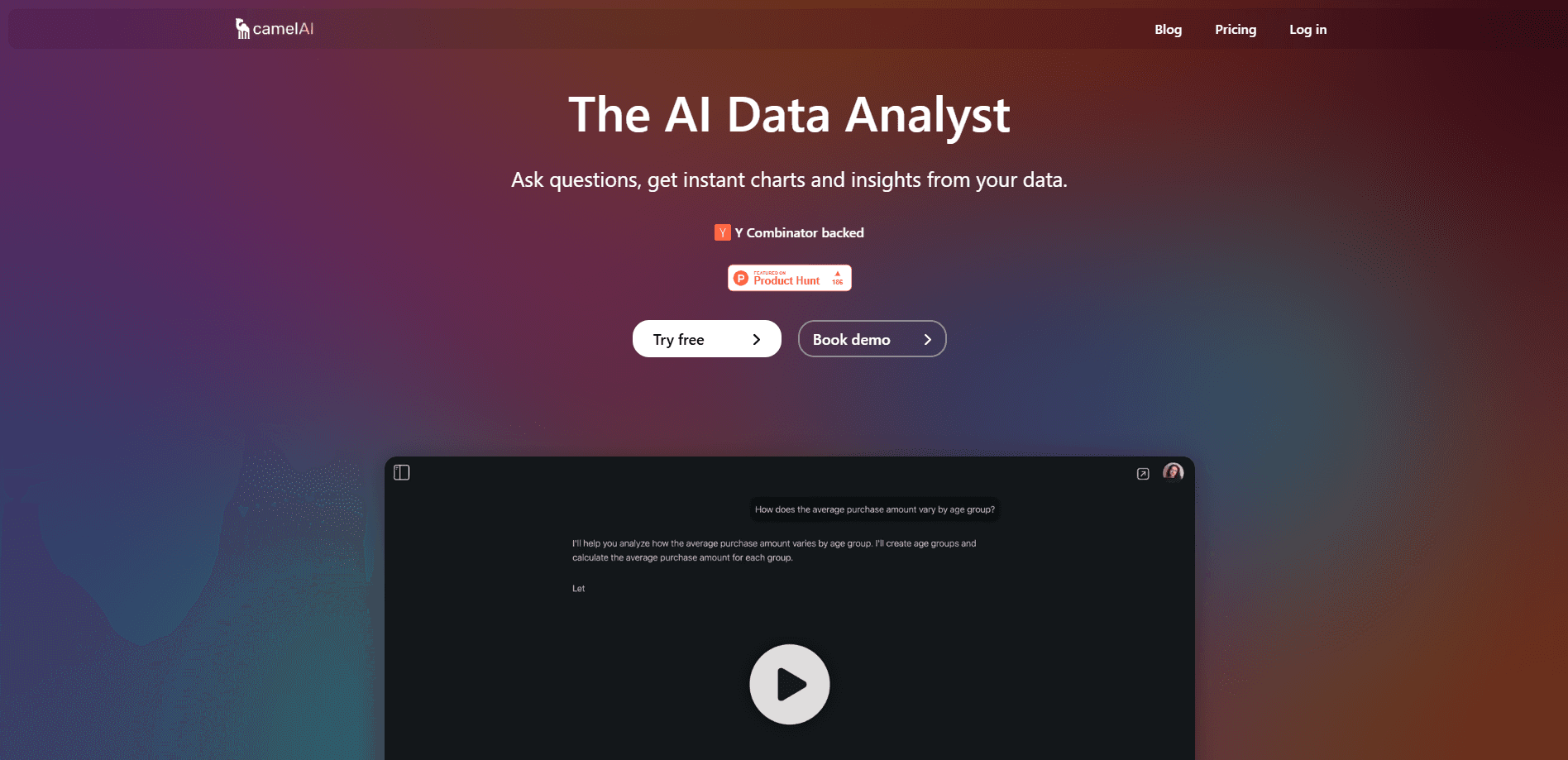
CamelAI is a Y Combinator company that gives AI agents a permanent place to work. The pitch is simple: most agents forget everything when a session ends, so they restart from scratch every time. CamelAI keeps the files, databases and history in one place, so an agent picks up where it left off instead of relearning the project. As an open-source AI agent platform, it runs the coding agent and the hosting runtime under one roof.
The company ships two products. camelCode is an open-source AI coding assistant that works on a computer with its own files, builds full-stack apps and scheduled automations, and publishes them to a live URL. camelRun is a hosted runtime for developers who put agents inside their own products: you define a model, instructions, tools and channels, and it runs the loop, stores the history and scales to thousands of agents at once. Both are open source, camelCode under MIT and camelRun under AGPL.
There is a limit worth knowing up front. CamelAI is a small team, and the platform leans on you bringing your own model provider key or paying the provider's list price through them. It started life as a data analytics tool, and that older product still runs on a separate legacy plan, so make sure you are looking at the coding and hosting product before you sign up.
Getting Started
- Go to camelai.com and pick a track: camelCode for building apps from a description, or camelRun for hosting agents you build yourself.
- Sign in with GitHub or Google, or start on the free plan, which needs no credit card and asks only for your own model API key.
- Describe what you want in plain English, or define an agent's model, instructions, tools and channels in the console.
- Let the agent build and deploy to a live URL, then wire in email, Slack or a scheduled job so the work keeps running on its own.
Product Information
A quick look at CamelAI's pricing, supported platforms, and performance.
Best for
The users, tasks, and scenarios where this tool fits best.
Users
- Solo builders without an engineering team
- Developers embedding agents in a product
- Teams that want to self-host
- Data analysts moving off SQL grunt work
Tasks
- Building an internal tool or dashboard
- Automating a recurring job
- Hosting an AI Slack bot or email assistant
- Scaling an agent to many users
Scenarios
- Standing up an app from a conversation
- Keeping a data pipeline on schedule
- Adding AI to an existing product
- Running agents without cloud lock-in
Key features
A permanent computer for agents
The core idea behind CamelAI is that an agent should keep its files, databases and history between sessions. camelCode's workspace holds every project past 100GB of storage and never resets, so a new conversation starts with the agent already knowing the full picture. For camelRun, an agent's history, files and pending work live in the runtime rather than your app, so a restarted server picks up exactly where it left off.
Descriptions become deployed apps
camelCode takes a plain-English request and turns it into a running application. It builds the frontend, backend and database, then publishes the result to a live URL, so an AI app builder stops being a demo and starts being something your team can open and use. When you want a change, you describe it, and the agent edits the app on its persistent computer.
Scheduled and event-driven automation
Agents don't wait for you to click run. camelCode schedules jobs on cron, from a weekly report to a 15-minute sync, and camelRun wakes an agent when there's work such as a new message or pull request. Both mean a task can run around the clock, pull reports, flag anomalies or reconcile systems while nobody is watching.
Any model, no lock-in
camelRun works with models from Anthropic, OpenAI, OpenRouter and Amazon Bedrock, and with any server that speaks the OpenAI or Anthropic API, such as vLLM or Ollama. You can switch an agent's model mid-project and it keeps its history. Bring your own keys and tokens are free, or pay the provider's list price through CamelAI with no markup.
Channels that meet people where they work
An agent doesn't have to live in a chat box. camelCode gives every workspace its own email address and connects to Slack, so teammates reach the agent from the inbox or the team channel. camelRun connects Slack, Discord, email, GitHub and your own app, and every thread, email or pull request gets its own agent, with webhooks from services like Sentry, Linear and Stripe supported too.
Real multi-user workspaces
The workspace is shared by design. Multiple people chat in the same thread and the agent tracks who said what with author signatures, so nothing gets lost when several teammates contribute. Anyone can deploy, and everyone sees the same projects and files, reachable from the web app, email or Slack.
Security that keeps credentials out of the model
camelRun makes every tool call itself, so the model never sees your credentials. If your app stops answering, the call fails and the agent keeps working instead of getting stuck. Every tool call has a deadline, tools in your own process get 15 seconds by default, and a failed or timed-out call is reported back without derailing the run.
Pros and cons
Pros
- The persistent workspace is the differentiator. Files, databases and history survive between sessions, so an agent builds on its own work instead of starting over.
- Both products are open source. camelCode ships under MIT and camelRun under AGPL, so you can read, fork and self-host either one.
- Self-hosting is genuinely simple. camelRun takes one Docker container with Postgres and no AWS, and camelCode includes a Docker Compose setup for a single machine.
- Model choice stays open. Bring your own provider keys or pay list price through CamelAI with no markup, and switch models without losing agent history.
Cons
- It is a small team. CamelAI started as three engineers from UT Dallas, so the pace and breadth depend on a lean group.
- You supply the model. The free plan needs your own API key, so the true cost includes what you pay your model provider.
- Storage adds up on agent hosting. Idle and sleeping agents still cost $0.10 per GB-month, so long-lived agents with big files aren't free to keep.
- The name covers two eras. An older data analytics product still runs on a legacy plan, which can confuse anyone searching for the current coding and hosting tools.
Frequently asked questions
CamelAI is a Y Combinator company building an open-source home for AI agents. Its two products are camelCode, an AI coding assistant that builds and deploys apps, and camelRun, a hosted runtime that runs agents you define and keeps their history.
Related content
Explore related tools, skills, and articles for CamelAI.
CamelAI Alternatives

GitGlow
GitGlow · Coding · ProductivityGitGlow is a local-first desktop Git client that lets independent developers review their own code and their AI agents' changes in one place before shipping.

Together Link
Together AI · CodingTogether Link is a free, open-source tool from Together AI that points coding agents like Claude Code and Codex at open models, with an auto router and a cost receipt for every session.

HeyPi
Proactive Intelligence Ltd. · Coding · Productivity · BusinessHeyPi is an AI meeting platform where an assistant called Pi listens to the call, remembers context from earlier sessions, works inside your connected apps, and builds pages, decks, and videos live.