
DAWN AI
DAWN AI Inc. · Leaning
DAWN AI, branded DAWN AI STUDY, is an education and neurotechnology platform built on AIDA, an AI agent that screens for dyslexia, ADHD and autism, then hands parents, teachers and clinicians a plan.
About DAWN AI
What Is DAWN AI
DAWN AI is a web platform for neurodivergent learners and the adults around them. Everything runs through one agent called AIDA. You describe a child by voice, text or a photo of their work, and AIDA turns that description into a NeuroProfile. The same profile then becomes a parent's daily activity list, a teacher's adapted lesson plan, or a clinician's intake summary.
The problem it goes after is the waitlist. DAWN's own pitch is that one in five African children is neurodivergent, while assessment capacity sits in a handful of cities. A screening that takes ten minutes at home is the only version many families will get this year.
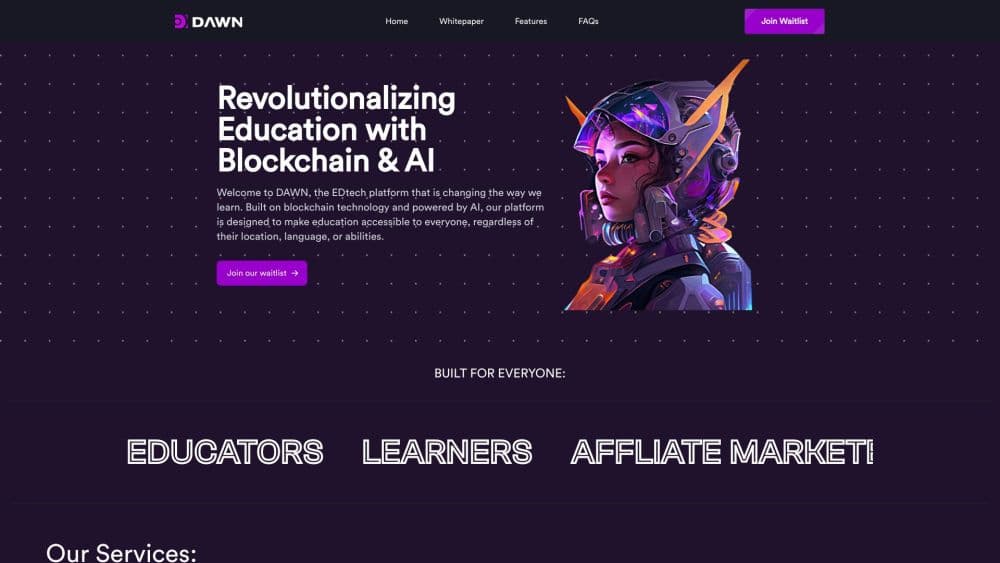
Three limits shape what you can expect. AIDA does not issue a medical diagnosis, and DAWN says so in its own FAQ: it screens, drafts and routes, while a qualified clinician signs off. The catalog reads naira-first, with card, transfer, USSD and mobile money handled through Paystack. And despite the "blockchain and AI" line in older listings, the live product is an education and neurotechnology service, not a token or credential system.
Independent verification is thin. The counters on the homepage, which include 200,000+ families and 87% diagnostic alignment, come from DAWN itself. Treat them as company figures until an outside study backs them.
Getting Started
- Open dawnaistudy.com and choose a path: parent or caregiver, teacher, clinician, learner, adult, or school and hospital admin.
- Answer the intake questions, or talk AIDA through what you're seeing at home or in class. The one-tap demo needs no sign-up.
- Read the resulting profile. Parents get a plain-language summary and a PDF to share, clinicians get structured intake data.
- Switch on the follow-up layer: daily activities for a child, three-tier plans for a class, or session transcription for a caseload. Invite a teacher or clinician if you want them in the loop.
Product Information
A quick look at DAWN AI's pricing, supported platforms, and performance.
Best for
The users, tasks, and scenarios where this tool fits best.
Users
- Parents who suspect dyslexia or ADHD and can't get an appointment
- Teachers and SENCOs juggling mixed-ability classes
- Clinicians in private practice
Tasks
- Screening before a formal assessment
- Writing IEP goals and accommodation plans
- Documenting sessions
Scenarios
- A household where the nearest educational psychologist is hours away
- A multilingual home where the adults read little English
- A school rolling inclusive education out across every classroom
Key features
AIDA Screening Across Modalities
AIDA takes what it can get: a spoken description, typed notes, or a photo of a worksheet. Speech, behavioural and psychometric signals are combined into one profile rather than scored in isolation, which matters because dyslexia and ADHD often show up together. The demo runs in a browser tab with no account, so you can see the output before you decide anything.
NeuroProfile Reports
The profile is the product's center of gravity. It tracks a learner over time, so a second screening shows movement instead of starting from zero, and it ships as a PDF that parents can email to a school or bring to an appointment. Read-only views let you share the same record with a teacher or clinician without handing over the account.
Three-Tier Lesson Planning
Teachers get one activity rewritten at three levels: standard, modified and intensive. That is the daily job of a classroom teacher with 40 learners, and it is where most planning time disappears. AIDA also answers follow-up questions in a co-teacher chat, with a cap of ten messages a day on the free plan.
Classroom and Caseload Tools
The teacher side carries a roster with strengths and accommodations, behaviour logs, sensory and mood check-ins, and an offline hub that syncs when the connection returns. The clinician side adds standardised intake instruments, session transcription, AI-drafted clinical impressions and care plan exports. Both share the same learner record, which is the point of putting education and neurotechnology on one platform. Learners get their own corner too: five short daily activities, streaks and certificates, which is where the AI tutor side shows up.
Multilingual, Low-Bandwidth Access
Voice interaction in more than 12 African languages is the feature that separates DAWN from imported edtech. It assumes low literacy rather than treating it as an edge case, and the offline-first layer means a spotty connection doesn't wipe out a session. The public site itself is English only, so the multilingual promise applies to AIDA's interactions, not to every menu.
API and Research Access
Developers can start on a free API tier with 1,000 calls a month and text modality, then move to a paid plan at 100,000 calls with voice and multimodal input. Research access opens anonymised datasets and read-only profile exports to universities and NGOs under a data-use agreement. It is a narrow door, not an open platform, and each tier needs approval.
Pros and cons
Pros
- Screening, lesson planning and clinical documentation share one learner record, so a profile written at home still helps a teacher the next morning.
- Voice input in more than 12 African languages lowers the barrier for parents who wouldn't fill in an English questionnaire.
- The free tiers are real: a teacher gets one class of 15 learners, and the public demo needs no account at all.
- Offline mode and low-bandwidth design fit the places DAWN is actually selling into, instead of assuming fibre.
- Published compliance work covers NDPR, GDPR, WCAG 2.2 AA and HIPAA awareness, which is more than most small edtech vendors state.
Cons
- AIDA doesn't diagnose. Families still need a clinician for anything that carries legal or medical weight, so the tool shortens the wait rather than replacing the appointment.
- Prices are quoted in naira and settled through Paystack. Buyers outside Nigeria can pay, but the currency switcher and the plan lineup take patience to read.
- There's no native mobile app. Everything runs in a browser, which is workable on a tablet and awkward on a low-end phone.
- The plan list is crowded with overlapping names, including older Starter and Parent Gold entries. Comparing two tiers means opening the feature table and reading carefully.
Frequently asked questions
Partly. There's a free teacher plan with one classroom of up to 15 learners, five AI lesson plans a month and ten co-teacher messages a day, plus a no-sign-up demo for parents. Ongoing family profiles, unlimited planning and clinical reports sit behind paid tiers.
Related content
Explore related tools, skills, and articles for DAWN AI.
DAWN AI Alternatives
Coddy
Coddy · Coding · LeaningCoddy is a gamified platform to learn to code through short interactive lessons in 20+ languages, with a browser editor, an AI tutor and free certificates.

Marv
Cameron (independent developer) · Coding · Productivity · LeaningMarv is an AI cursor companion for Windows and Mac. It sees your screen, answers out loud, and draws arrows and highlights that show you the next click.

Teachoo
iAsk AI · Leaning · ChatbotTeachoo is a free AI homework helper that walks students through math, science, writing and coding problems one step at a time, with photo input, hints and flashcards.