
DeepHow
DeepHow Corp. · Video
DeepHow is an AI operational knowledge platform for factories. An expert films a task once, and it becomes a step-by-step smart video, a digital SOP and a live check that work matches the standard.
About DeepHow
What Is DeepHow
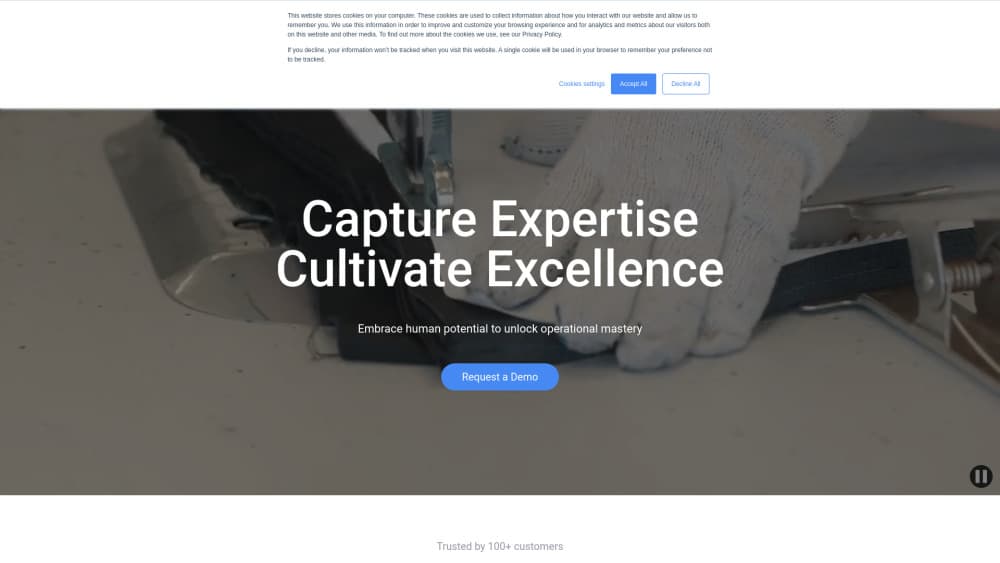
The manufacturing training platform targets plants where most of the know-how sits with a handful of experienced operators. A technician records a job on a phone or tablet, narrating as they go. The platform cuts that footage into short steps, adds titles and captions, and publishes a smart video that a new hire can follow station by station. The company was founded in 2018 and counts more than 100 enterprise customers, including electronics manufacturers such as Foxconn.
The scope has grown past AI video training software. Smart Instructions rebuild static PDFs and clips into visual digital SOPs that mix text, photos and video. Vision models can watch a camera feed at the workstation and check each step against the approved procedure, either while the operator works or after the job is done. Time and motion reports show where the real process drifts from the documented one.
Three limits shape the fit. It is sold through sales demos and annual contracts, with no self-serve signup and no public price list. Live verification needs cameras and a site survey, so it is a project, not a switch. And the AI output, especially translations of technical terms, still needs a human review before it goes to the floor.
Getting Started
- Contact sales and request a demo. A team maps your lines, your SOPs and the systems you already run, then sets up a workspace.
- Capture a task with the mobile app on iOS or Android, or upload an existing video. The operator talks through the job while the camera records.
- Let the AI segment the footage, transcribe the narration, translate it and build a quiz. Edit any step that sounds wrong.
- Turn the result into a Smart Instruction, or import a PDF SOP and add photos, text and video to each step.
- Publish to your workspace and share to an LMS, MES or QMS. Add cameras at selected stations if you want live SOP verification.
Product Information
A quick look at DeepHow's pricing, supported platforms, and performance.
Best for
The users, tasks, and scenarios where this tool fits best.
Users
- Manufacturing and process engineers
- Frontline trainers and L&D teams
- Pharma and medical device quality teams
Tasks
- Turning an expert demonstration into onboarding material
- Rewriting a text-heavy PDF SOP as a visual instruction
- Training a crew that speaks several languages
- Checking standard work at the station
Scenarios
- Ramping a new line or plant
- Facing the retirement of a veteran operator
- Preparing for a customer or regulatory audit
Key features
Smart Video Capture and Segmentation
A phone or tablet is enough to record a task. The AI splits the clip into logical steps, writes a title for each one, and produces a navigable smart video instead of a long unedited file. That step structure is what makes the material usable at a workstation, where nobody wants to scrub through ten minutes of footage to find one action.
Agentic Smart Instructions
Smart Instructions handle SOP digitization with a mix of text, photos and video instead of a static document. You can build one by chatting with the agent, importing a PDF, or starting from an existing smart video, then adjust the steps on the spot. A compare view highlights where two versions of an asset diverge, which helps when a procedure has been edited in several places.
Translation, Quizzes and Q&A
One recording can serve a multilingual crew. The platform translates content into more than 50 languages, generates quizzes to check retention, and answers worker questions from the video content itself. The quiz and Q&A layer turns passive viewing into something closer to a short course, but technical terms in the translation deserve a review by someone who speaks the local shop language.
Live SOP Verification
Cameras at the station feed a vision model that recognizes actions, sequence and conditions. The system compares what it sees with the approved standard work instructions and alerts the operator when a step is skipped, done out of order, or performed incorrectly. This is the piece that separates documented procedure from verified execution, and it is also the piece that needs the most site preparation.
On-demand Visual Inspection
When live monitoring is not practical, the platform can inspect completed work instead. Photos or video of the finished job are checked against the standard to confirm the right steps, parts and sequence were used. Quality teams use it to catch defects before a batch moves on, and to keep a record of what was checked.
Time and Motion Analysis and Process Drift
Physical AI classifies tasks from camera feeds and builds time and motion reports without a stopwatch study. Process drift analysis then shows where actual work differs from the documented standard, along with the cost of that gap. The output is aimed at continuous improvement teams who need evidence before they rewrite a line balance.
Pros and cons
Pros
- Capture works with ordinary phones and tablets, so a supervisor can record a task without a video crew.
- Training content and execution checks live in one platform, which avoids buying a separate vision system for SOP adherence.
- Translation into more than 50 languages with quizzes and Q&A covers multilingual plants without a second production pass.
- Integrations reach LMS, MES and QMS systems, so instructions can appear inside the tools operators already open.
- Enterprise controls include data governance and the option to run closed models inside the vendor cloud.
Cons
- There is no public price list and no self-serve free tier, so you cannot test the full product before a sales conversation.
- Live SOP verification depends on camera placement and a site survey, which adds cost and lead time beyond the software subscription.
- AI segmentation and translation still need a human pass, and a poor recording produces a poor instruction no matter what the model does.
- The feature set is broad, so a full rollout across several plants takes planning and internal owner time.
Frequently asked questions
It captures an expert performing a task on video, then turns that footage into step-by-step instructions, translations and quizzes for frontline workers. Newer modules add camera-based checks that confirm the work followed the approved procedure.
Related content
Explore related tools, skills, and articles for DeepHow.
DeepHow Alternatives

ngram 2.0
ngram · Video · Marketingngram 2.0 is an AI video generator for teams. It turns a prompt, a screen recording, or a product URL into a narrated explainer, product demo, or AI avatar video, and every scene stays editable.

OpenScreen 2
OpenScreen (open-source project) · Video · ProductivityOpenScreen 2 is a free, open-source screen recorder and demo video editor for Windows, macOS, and Linux, with automatic zooms, styled frames, local captions, and agent edits.

Skreno
Skreno · Video · ProductivitySkreno is a browser screen recorder that captures a tab, a window or your whole display, then attaches AI transcripts, summaries and console logs to one share link.