

Etshop
Etshop · Marketing · Business
Etshop is an all-in-one Etsy business platform. It combines Etsy product research, store analysis and an SEO keyword finder to help sellers pick products and rank listings.
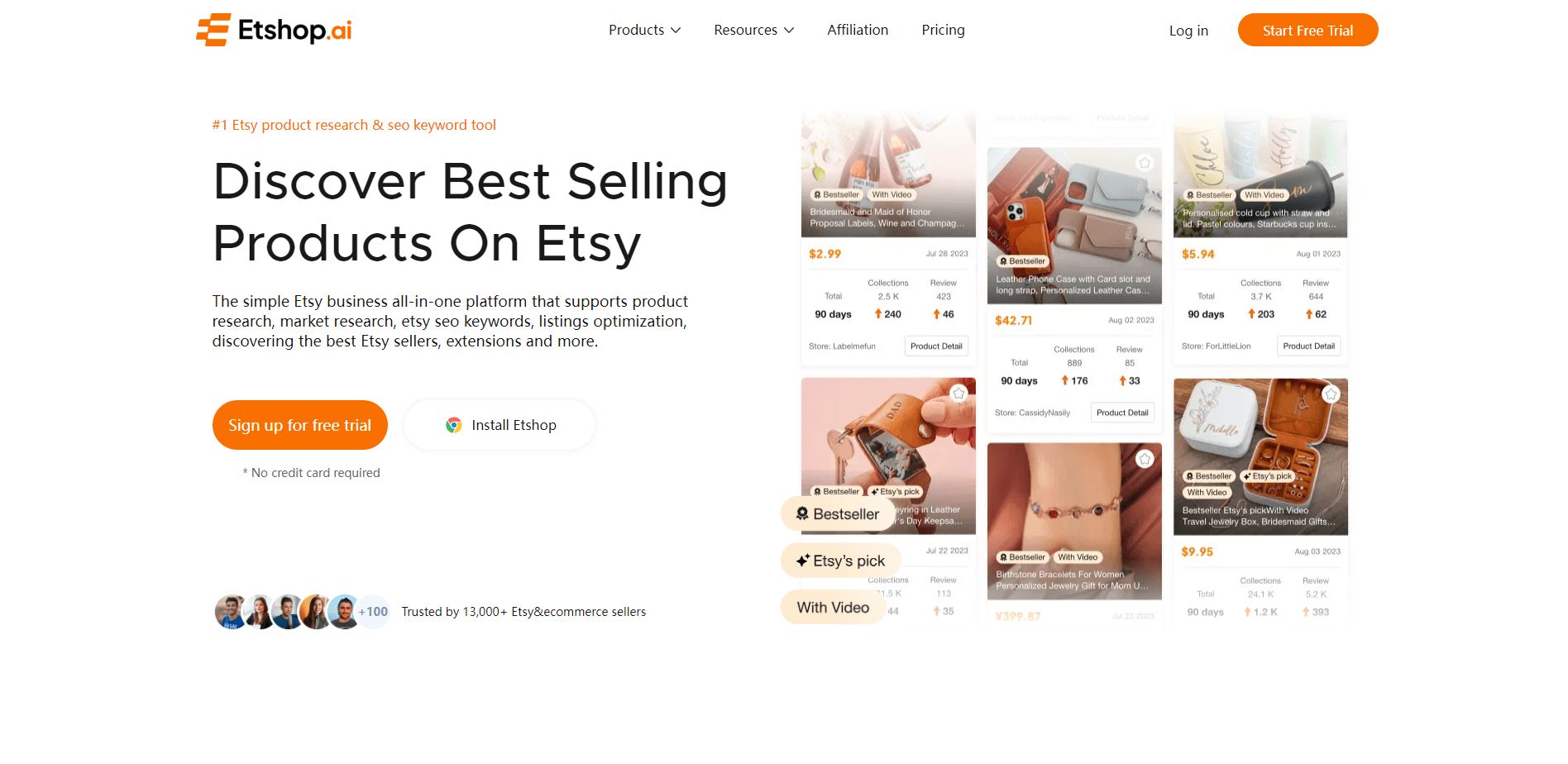
About Etshop
What Is Etshop
Etshop is a data platform for Etsy sellers. It pulls Etsy marketplace data into one dashboard so you can spot bestsellers, study competing shops and pull the keywords shoppers actually search. The site leans on AI to surface which items are gaining traction, then shows the listing keywords behind them. More than 13,000 Etsy and ecommerce sellers use it, according to the company.
An Etshop review usually starts with the problem it solves. Picking a product on Etsy is guesswork unless you can see what already sells, and writing a listing title is guesswork unless you know which tags buyers type. Etshop answers both questions from the same dataset. Its numbers are large, with the company claiming coverage of 200,000+ bestseller products, 600,000+ Etsy's pick items and 180,000+ star seller stores.
The catch is that a good signal still needs a decision behind it. Etshop shows demand and competition; it does not tell you whether a niche fits your budget or your supplier. The free tools and the browser extension lower the barrier to trying it, but the deeper product and store libraries sit behind a paid plan.
Getting Started
- Create an account with your email to start the free trial, no card required
- Open Product Research and filter for bestsellers or trending items by sales, reviews and favorites
- Study a product or shop you like, then pull its listing keywords from the keyword tool
- Build your own title and tags around those keywords, and track your shop and competitors from the dashboard
Product Information
A quick look at Etshop's pricing, supported platforms, and performance.
Best for
The users, tasks, and scenarios where this tool fits best.
Users
- New Etsy sellers
- Existing Etsy shop owners
- Amazon and Shopify sellers
- Etsy dropshippers
Tasks
- Product research
- Keyword research
- Store analysis
- Listing optimization
- Competitor tracking
- Ad and content sourcing
Scenarios
- Testing a niche before you buy inventory
- Reviving a flat shop
- Sourcing ad creatives
- Cross-selling off Etsy
- Watching a rival shop
Key features
Etsy Bestseller Product Library
The product research side starts with a bestseller library. You filter items by query, then sort by sales, reviews and favorites to isolate real sellers rather than items that just look popular. The library also flags Etsy's pick items and products with video, which are the ones the platform is surfacing. For a new seller the value is simple: you see what is already selling before you commit money to a product.
Etsy Keyword Finder and Analytics
The SEO keyword tool is the core of the keyword workload. You pull a keyword list with product and Google ads data attached, then dig into tags and categories to see how a term is used across Etsy. The point is finding low-competition keywords, the ones with real search demand and fewer sellers already ranking. Once you have them, you build titles and tags around those terms instead of guessing.
Store Research and Store Analyzer
Store research covers the competition rather than the product. The Store Library surfaces shops that sell well over time, and Top Store ranks sellers by weekly and monthly sales pulled from real activity. The Store Analyzer drills into one shop: daily sales changes, its hottest products, and what is driving them. That is how you study a competitor's playbook instead of just watching a single ranking.
Etsy For TikTok and Ad Sourcing
Etsy For TikTok pulls items that fit short-video and paid social campaigns. You find Etsy products to feed Shopify or Amazon storefronts and pick material for Facebook, TikTok and Google ads. The feature matters for sellers who sell on a video channel or who run ads off the back of marketplace demand, because it links the product data to the ad use case in one view.
Chrome Extension for Etsy Pages
The browser extension brings Etshop data onto Etsy itself. You can read a shop's or a listing's numbers while you browse, rather than switching back to the dashboard for every check. For sellers who research competitors page by page, the extension cuts the back and forth. It installs on Chrome and works alongside the web app.
Free Trial and Credit Based Plans
Every tool sits under one account, and trials need only an email, no card required. Paid plans meter usage in credits: the Starter plan covers 5,000 analysis credits a month, five tracked stores and 1,000 keywords, while Unlimited raises that to 200,000 credits, 100 stores and 50,000 keywords. That structure lets a handful of sellers start small and scale the credit limits as the store grows.
Pros and cons
Pros
- Product research, store analysis and keyword tooling sit in one account instead of three separate subscriptions
- Free trial needs only an email and no card, so you can test the data before paying
- Starter plan at $9.9 a month keeps the entry cost low for a solo seller
- Store Top rankings use real sales movement, which is harder to fake than a simple listing snapshot
- The Chrome extension and free tools mean you can pull some data without a paid plan
Cons
- Refunds are not offered, so you commit to paying once a month starts
- Product and store libraries beyond the free tools require a paid plan, which limits a real trial
- No public API, so you cannot pull Etshop data into your own tools or automate reports
- The platform shows demand and competition but leaves the sourcing and margin call to you
Frequently asked questions
Etshop is an all-in-one Etsy business platform that bundles product research, market analysis and an SEO keyword finder. Sellers use it to spot bestsellers, study competing shops and pull the keywords shoppers search, so they can pick products and improve listings on one dashboard rather than several tools.
Related content
Explore related tools, skills, and articles for Etshop.
Etshop Alternatives

Tractionwave
TractionWave · Image · MarketingTractionWave is an AI attention heatmap tool for static ads. Upload a PNG or JPG and it returns predicted attention, ranked hotspots, and fixes before you spend budget.

OpenSEO - AI Visibility
EveryApp · Coding · Marketing · BusinessOpenSEO is an open source SEO platform for keyword research, backlinks, rank tracking, site audits, and AI visibility, with usage-based pricing and MCP access for AI agents.

Plugins Radar
Plugins Radar · Marketing · BusinessPlugins Radar tracks where your ChatGPT plugin ranks in directory and in-chat search, which competitors outrank it and what changed, with hourly checks on 9,885 listings.