

Figure
Figure · Chatbot
Figure is an AI robotics company building Figure 03, a general-purpose humanoid robot that uses its Helix AI to handle chores like laundry, dishes, and tidying.
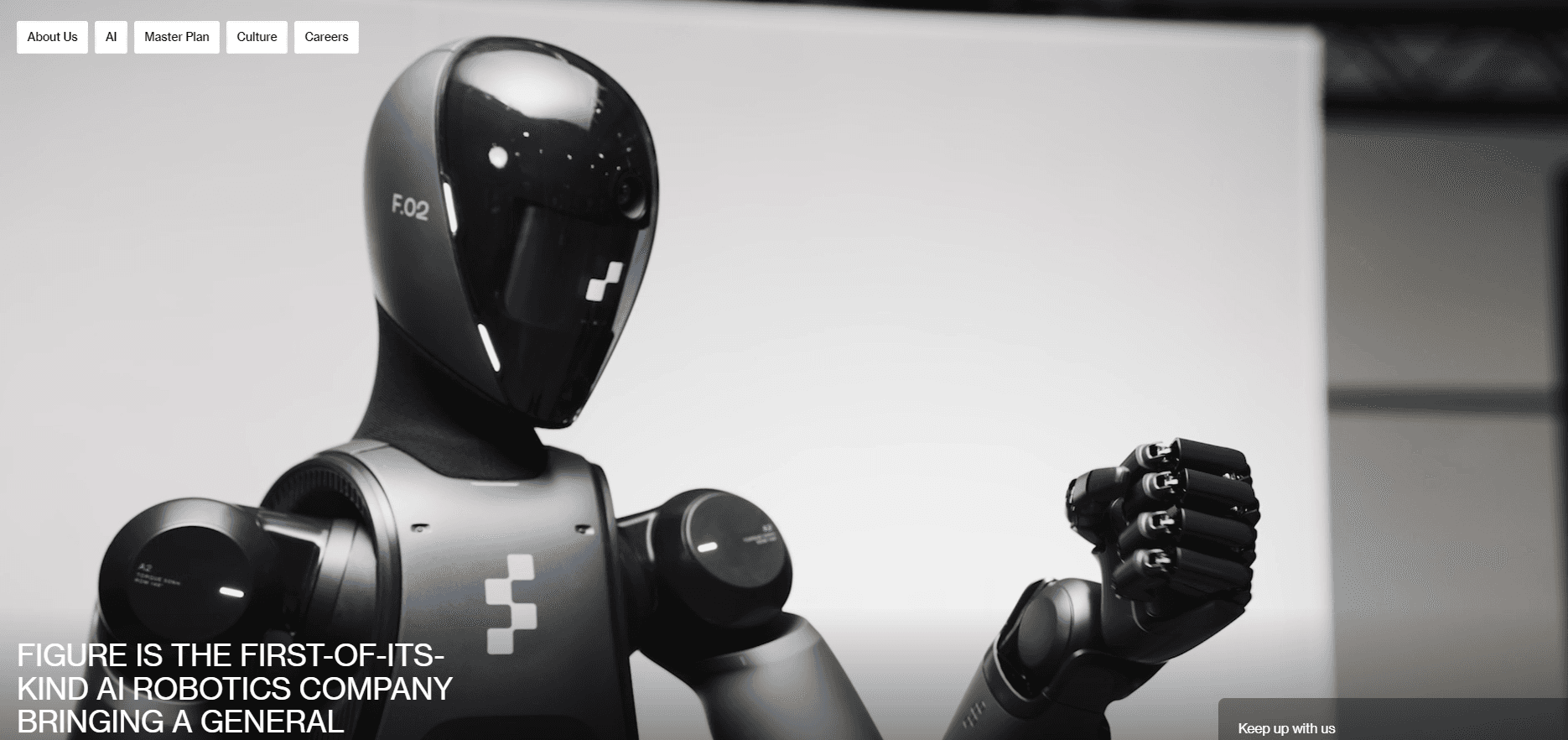
About Figure
What Is Figure
Figure is a robotics company developing a general-purpose humanoid robot, currently in its third generation. The pitch is simple: instead of a single-task machine bolted to a factory floor, Figure builds a human-shaped body that can walk into a normal home and do the jobs you'd rather skip.
What separates the current model, Figure 03, from earlier robots is the shift from scripted motion to learned behavior. Its Helix system is a vision-language-action model that reads a scene, understands a spoken instruction, and drives the whole upper body in real time. That means the robot can pick up a mug it has never seen before, follow a verbal request, and correct itself when a grab slips.
Figure is still young, and the limits are real. The robot isn't something you can buy at retail, pricing isn't public, and the company says Helix needs far more training data before the robot is a reliable household helper. Treat it as a fast-moving platform, not a finished appliance.
Getting Started
- Figure sells to businesses and partners first, not to individual buyers, so there's no consumer signup or checkout.
- Companies interested in deployment or pilot programs reach out through the official Figure site to talk about a commercial or logistics use case.
- For the home robot, expect a rollout through partners and regional programs rather than a direct store purchase.
- If you want to help train Helix, you can contribute motion data through the free Index app and get paid for real-world task clips.
Product Information
A quick look at Figure's pricing, supported platforms, and performance.
Best for
The users, tasks, and scenarios where this tool fits best.
Users
- Robotics researchers and labs
- Logistics and warehouse operators
- Early-adopter households
Tasks
- Household chores
- Package handling and sorting
- Data collection for robot training
Scenarios
- Testing a general-purpose robot before a big purchase
- Automating repetitive physical work
- Contributing to embodied AI
Key features
Helix vision-language-action model
Helix is the brain behind the robot. It runs two systems in parallel: a slower one for understanding language and scenes, and a fast one that turns those plans into continuous motion at high rates. Figure says the slower system runs at 7 to 9 Hz while the fast one hits 200 Hz, which lets the robot think about a goal and react to a slip at the same time. The company reports that one set of model weights handles picking, placing, drawers, and multi-robot handoffs without task-specific retraining.
Whole-body dexterous control
The Figure 03 is built to move the way we do. Its upper body runs a large action space covering individual fingers, wrists, head, and torso, all coordinated so the robot can track its own hands with its head while shifting its stance for reach. That coordination is what separates a robot that waves from one that folds a stack of towels.
Vision system tuned for motion
The robot's camera setup is designed for high-rate visual-motor control. Figure says the newer architecture doubles the frame rate, cuts latency to a quarter, and widens each camera's field of view by 60 percent. There's also a wide-angle camera in each palm, so the robot still senses what it's grabbing when its main view is blocked inside a cabinet.
Tactile sensing fingertips
Figure built its own tactile sensors for the fingertips. The hands can detect pressure as light as three grams, about the weight of a paperclip, which matters for grabbing eggs, tomatoes, or a single card without crushing them. The company says the sensors help the robot tell a firm grip from one that's about to slip.
Wireless charging and home-ready design
The robot charges by induction through coils in its feet, stepping onto a base to top up at up to 2 kW without a cable. Figure also softened the exterior with fabric and foam, cut weight compared with the previous generation, and made the outer shell washable and swappable, all with an eye toward living spaces rather than factories.
Built for mass production
Figure designed Figure 03 around manufacturing from the start. It uses casting and injection processes instead of slow machining, runs its own BotQ factory, and says the first line can build up to 12,000 robots a year. The company frames this as the step that turns a prototype into a product you can actually buy at scale.
Index data network
Index is Figure's crowdsourced effort to gather human motion data at a scale no single lab can match. Contributors film everyday tasks through an app and get paid, and Figure uses the footage to pretrain Helix so the robot arrives in a new home with knowledge it never had to learn first-hand.
Pros and cons
Pros
- Autonomy that's demonstrated, not just promised: Figure shows the robot doing chores and sorting packages with no remote operator.
- A single model handles many tasks, which cuts the usual per-job programming and keeps the robot flexible.
- Home-focused hardware choices, like washable fabric and wireless charging, fit daily life better than metal and cables.
- The Index program lets ordinary people contribute and earn from the same data pipeline that trains the robot.
Cons
- No consumer pricing or release date, so you can't plan a purchase or compare it with rivals on cost.
- Company demos aren't independent test results, so real-world reliability and failure rates stay unverified to outside observers.
- The robot depends on expensive hardware and a factory ramp that's still early, meaning supply and cost remain open questions.
- Helix's household performance hinges on more training data, which Figure itself says is the current bottleneck.
Frequently asked questions
Figure builds general-purpose humanoid robots meant for physical work, from household chores like laundry and dishes to commercial jobs like package sorting and logistics triage.
Related content
Explore related tools, skills, and articles for Figure.
Figure Alternatives

Knocket
Knocket (Tencent RTC team) · Productivity · Business · ChatbotKnocket is a free live chat and contact page tool that lets visitors message you from your website, app, or a shareable link, with every reply handled from Telegram or one inbox.
Agibot
Agibot · Productivity · AI Assistant · ChatbotAgibot is a personal AI agent for Mac that keeps running after you close the window, runs routines on a schedule, and works from Telegram or Slack with your own API keys.

Melete
Melete · Productivity · AI Assistant · ChatbotMelete is an AI workspace for teams where agents research, draft, and act in Slack, Notion, Linear, and GitHub. Shared memory and approval gates keep people in control.