
Foundry
Foundry · Coding · Other
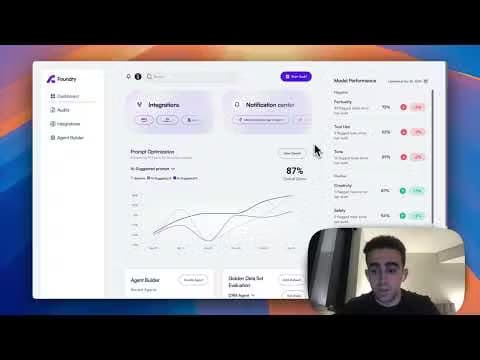
Foundry is an AI browser agent benchmarking platform that pairs web agent simulation with fast AI agent evaluation for teams building autonomous browsing agents.
About Foundry
What Is Foundry
Foundry is a browser automation platform built for people who ship AI web agents. Instead of guessing whether an agent can handle a checkout flow or a multi-step form, you run it against simulated websites and known tasks, then compare the results on a leaderboard. The team behind it comes from browser-automation backgrounds, and the company is backed by Y Combinator.
The core problem it solves is trust. Browser agents fail in messy, hard-to-reproduce ways. A demo that works once tells you almost nothing about reliability. Foundry gives you repeatable tasks, consistent scoring, and a shared reference point. Did your last prompt change actually help? Now you can tell.
The biggest limitation right now is access. Foundry is in private beta, so you join a waitlist before unlocking the full platform. There's no public pricing page either, which makes budgeting tricky until you're in. If you need a self-serve tool today with published plans, this isn't it yet. If you're evaluating agents and can wait for an invite, the setup is quick once you're in.
Getting Started
- Request access to the private beta through the site and wait for your invite.
- Install the Python SDK so Foundry can hook into your existing agent workflow.
- Pick a benchmark that matches what your agent is meant to do, from navigation to form completion.
- Submit your agent and let it run the tasks inside Foundry's simulated web environment for AI agent testing.
- Read your scores on the leaderboard and compare runs to see what changed.
Product Information
A quick look at Foundry's pricing, supported platforms, and performance.
Best for
The users, tasks, and scenarios where this tool fits best.
Users
- AI engineers building browser agents
- QA and evaluation teams
- Startup teams shipping web automation
Tasks
- Benchmarking a browsing agent against standard tasks
- Stress-testing multi-step flows like checkout or signup
- Comparing two agent versions after a prompt or model change
- Publishing results to a shared leaderboard
Scenarios
- Pre-release reliability checks
- Research on web-agent capability
- Demoing agent progress to a team or an investor
Key features
Simulated Web Environments
Foundry runs agents against simulated websites that mimic real pages without the unpredictability of the live web. A task fails or passes for a reason you can inspect. Not because a captcha popped up or a site went down mid-run. That control is the whole point. No flaky test runs to chase.
Benchmark Suite
There's a set of standard tasks your agent can be scored against, covering common browsing jobs like navigation, search, and completing forms. Shared tasks are what make your number comparable to someone else's. That's the whole point of browser agent benchmarking.
Python SDK Integration
You plug Foundry into your workflow through a Python SDK, so you don't rewrite your agent to test it. The SDK handles submitting the agent and pulling back results. Setup runs about five minutes if your agent already works headless. No new stack to learn.
Leaderboard and Scoring
Results land on a leaderboard so you can see how your agent stacks up against others running the same tasks. It's useful both as a sanity check and as a way to spot which tasks trip up every agent, not just yours.
Faster Evaluation Runs
Foundry says its AI agent evaluation is up to 10x faster than building your own test setup, mainly because the environments and tasks ship pre-built. Faster loops mean you iterate more in the same afternoon. That matters when you're tuning prompts.
Data and Simulation Engine
Beyond scoring runs, Foundry bills itself as a data and simulation engine for web agents. The pitch: realistic, controllable environments help you both test and improve an agent, not just grade it. For teams with a long roadmap and a steady stream of agent changes to validate, that broader promise is the bigger sell.
Pros and cons
Pros
- Realistic simulated sites make failures reproducible and easier to debug.
- Standard benchmark tasks give you a number you can compare across runs and teams.
- Python SDK fits into existing agent workflows with minimal rewrite.
- Leaderboard adds an external reference point for agent capability that a private test suite can't provide on its own.
- Reporting indicates faster eval loops than building your own test setup by hand.
Cons
- Private beta means you wait for an invite before you can use the full platform.
- No public pricing, so you can't budget or compare cost without talking to the team first.
- Simulated environments won't perfectly match every production site's quirks.
- Small teams without Python experience face a steeper first step.
Frequently asked questions
Foundry is a platform for testing and benchmarking AI web agents. You run your agent against simulated websites and standard tasks, then compare the scores on a leaderboard. That's how you judge reliability.
Related content
Explore related tools, skills, and articles for Foundry.
Foundry Alternatives
Forefront
Forefront · CodingForefront is a web platform for building with open-source AI. It lets you fine-tune leading open-source language models on your own data, evaluate how they perform, and run them through an API or export them to host yourself. Developers who want the convenience of a closed-source platform but insist on owning their models and data are the target audience here.

Startkit
StartKit.AI · CodingStartkit is a boilerplate for building AI SaaS and AI wrapper products. Think of it as an AI startup boilerplate with the boring parts already wired up: authentication, Stripe and Lemon Squeezy payments, usage limits, transactional email, and an AI API starter that talks to OpenAI, Anthropic, Groq, or Llama. You clone the repo, set your price, and start on the part of your product that people actually pay for. It's Next.js under React and Tailwind, so most of the boilerplate code already feels familiar.
Testim
Tricentis · CodingTestim is an AI-powered test automation platform for building and running end-to-end tests across web, mobile, and Salesforce applications. It leans on machine learning to keep tests stable when an interface changes, so teams spend less time fixing broken selectors. Not bad for an automated testing tool you can start using today. You create tests by recording actions in a browser, then optionally add JavaScript when you need more control. It's a solid pick for busy QA teams.