

Goose
Gooseworks · Coding · Productivity
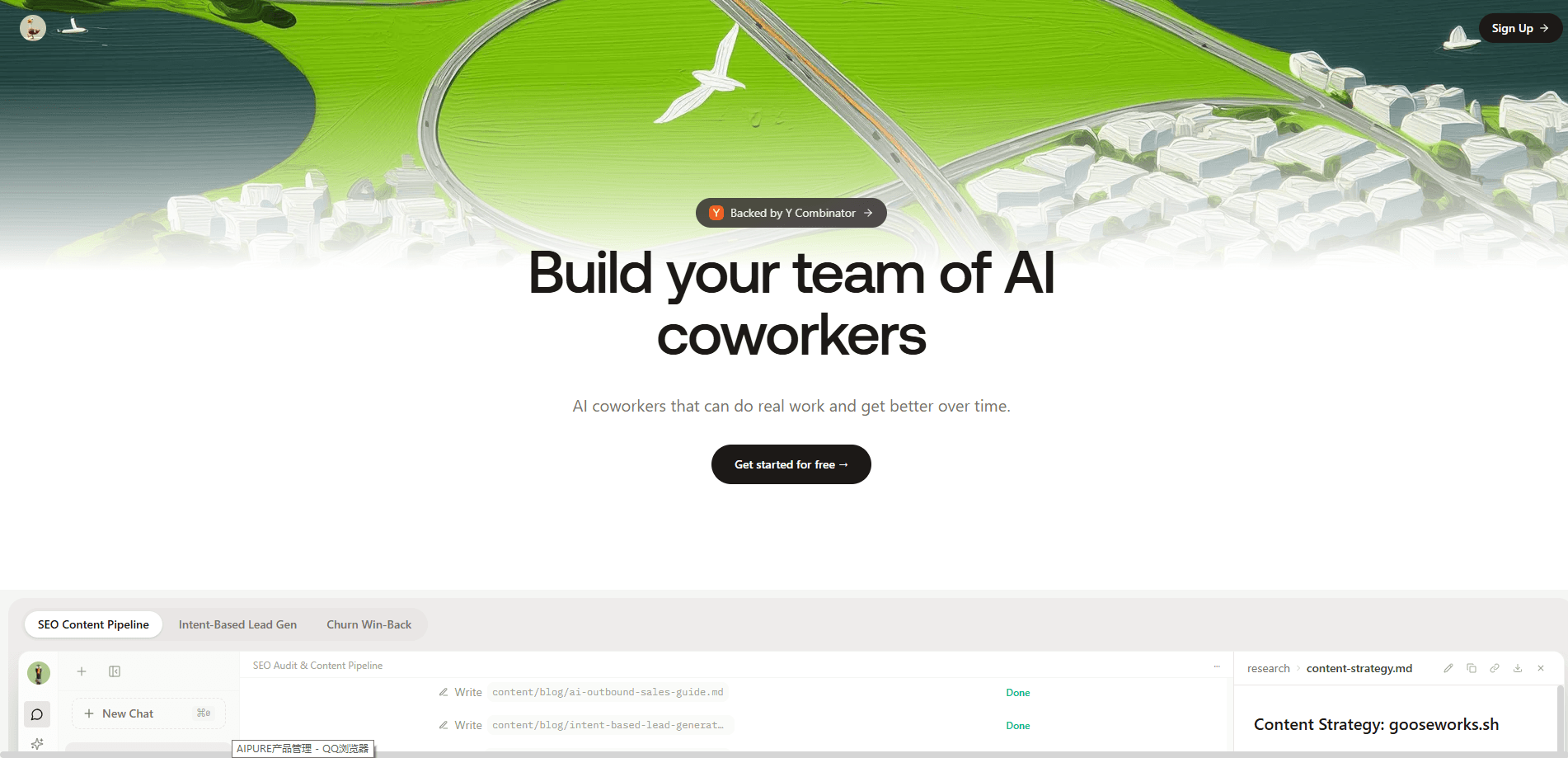
Goose is an AI coworker built by Gooseworks for growth and marketing teams. Think of it as an AI growth team you don't have to hire. An ad creative generator that makes static ads, video ads, and product photos in your brand style. A social media automation layer that plans and publishes content. And an AI ads platform that pushes campaigns straight to Meta, then matches your ad spend back to the individual creative that earned it. Instead of giving every person their own assistant, one shared Goose learns from your whole team and gets sharper with each conversation.
About Goose
What Is Goose
Goose is a shared AI coworker that runs the creative, social, and ads side of a consumer brand's growth. It's built by Gooseworks, a Y Combinator-backed startup, and it plugs into the places your team already works: Slack, WhatsApp, iMessage, Telegram, Claude, and ChatGPT. The pitch is simple. Most AI tools hand each person their own assistant that knows nothing about the business. Goose is one coworker your whole team talks to, and it gets better every time any of you corrects it.
The platform handles the full loop of paid growth, not just the fun half. Goose makes static and video ad creatives and product photos, sets up a social content plan, and publishes on a schedule. On the paid side, it pushes new ad sets to Meta using targeting copied from campaigns that already run. Then comes the part most tools skip: Goose reads your ad account and ties spend back to the individual creative that produced it, so you know what to make more of. That's the difference between an ad creative generator and a growth platform. One makes assets. The other tells you which ones paid off.
There are real limits to know before you sign up. Goose leans heaviest on Meta for paid advertising, so teams buying inventory on other networks will find less of the workflow covered. Creative output is capped by a monthly credit allowance, and video ads draw more from that allowance than statics. The cheapest paid tier, Entry at $99 a month, is sized for a solo founder spending under $5k a month, so if you're running serious budgets you'll want Growth or Scale. Know your budget first.
Getting Started
- Visit the Gooseworks site and start the free plan, which needs no credit card.
- Connect your brand so Goose can ingest your assets and build a brand brain it reuses across every piece of creative.
- Bring your team in by adding Goose to Slack, or message it from WhatsApp, iMessage, or Telegram.
- Ask for your first static ads, or point Goose at existing campaigns and let it propose what to make next.
- Review the output, push approved ad sets to Meta, and let Goose report which creatives matched their spend.
Product Information
A quick look at Goose's pricing, supported platforms, and performance.
Best for
The users, tasks, and scenarios where this tool fits best.
Users
- Solo founders running their own paid growth
- Small marketing teams spending $5k to $50k a month
- Agencies managing several brands
Tasks
- Making ad creative fast
- Planning and publishing social posts
- Finding out which ads earned their money
- Competitive research
- Replacing scattered point tools
Scenarios
- A founder answering a Sunday message from WhatsApp and getting work done without opening a dashboard.
- A two-person team that hands one brief to one shared coworker instead of re-explaining the brand to a separate assistant each.
- A category where new ad angles matter weekly and you need fresh creative on demand.
Key features
One Shared Coworker, One Brain
Goose works as a single assistant for the whole team rather than one locked to each person. Everyone reaches the same coworker from Slack, WhatsApp, iMessage, Telegram, Claude, or ChatGPT. Nobody logs into a new tool. A correction from one teammate becomes a standing preference for everyone, so the brand knowledge compounds instead of staying siloed. That shared brain is the whole point.
Ad Creative in Your Brand
Goose produces static ads, video ads, and product photos designed to look like they came from your brand. According to Gooseworks, the Entry plan supports roughly 200 static ads or about 30 video ads a month, and higher tiers scale that up. It removes the usual wait for a designer to turn a brief into finished creative, which matters when a campaign needs fresh angles by Friday. Speed is the feature here.
Social Planning and Publishing
The social side covers the whole workflow. Goose drafts a content plan, writes posts in your voice, and publishes on a schedule. Social research and listening are included from the Growth plan up, which helps you see what's landing in your category before you commit to a direction. No more guessing what to post.
Direct Push to Meta
Goose can push new ad sets straight to Meta, copying targeting from campaigns that already run. As a Meta ads tool, it skips a lot of manual rebuilding inside Ads Manager. The catch is the Meta focus, so teams running on other ad networks won't get the same end-to-end handoff.
Spend-to-Creative Measurement
This is the differentiator. Making creative is the easy half, and knowing which creative earned its place is the hard half, especially once you're spending real money across dozens of variants. Goose reads your ad account and matches your spend back to the individual creative that produced it. Ad analytics surface signals like high CTR so you can tell winning creatives from steady ones. That's rare in this category.
Competitive and Category Intelligence
Goose reports what your competitors are running and what's working in your category this week. It's ongoing, not a one-time report, which keeps your creative decisions tied to what the market is actually responding to right now.
100+ Data Providers via MCP
Your agent can call more than 100 data APIs through a single gateway, with no API keys to manage. Why does that matter? Because research and measurement usually mean juggling a dozen subscriptions and credentials. The list includes sources like Apify, Apollo, SimilarWeb, Crunchbase, Meta Ad Library, Google Ads, and Ahrefs, and Gooseworks says more than eighty others sit behind the same connection. That's what lets Goose do research and measurement without you stitching tools together.
Use It From Your Own Agent
Goose connects to Claude and ChatGPT over MCP, so teams that live inside an agent workflow can keep Goose there. It fits teams that don't want yet another tab open and prefer to work where the rest of their thinking happens.
Pros and cons
Pros
- One shared coworker means nobody re-explains the brand, and learning carries across the whole team.
- Covers the full loop from creative production to spend-to-creative measurement, which most creative tools leave out.
- Free plan needs no card and includes brand ingest, five static ads, and chat, so you can test before paying.
- Works inside Slack, WhatsApp, iMessage, Telegram, Claude, and ChatGPT instead of forcing a new app.
- Access to 100+ data providers through one MCP gateway removes a lot of API key wrangling.
Cons
- Paid advertising leans on Meta, so teams buying on other networks get a smaller slice of the workflow.
- Creative output is capped by monthly credits, and video ads consume the allowance faster than statics.
- Entry at $99 a month is sized for solo founders under $5k in spend, so bigger budgets push you toward the $299 or $599 tiers.
- Measurement and spend tracking start at Growth, so the most useful reporting isn't on the cheapest paid plan.
Frequently asked questions
Goose is an AI coworker for growth teams. It makes ad creative and product photos, plans and publishes social posts, pushes campaigns to Meta, and measures which creative earned its spend. It's aimed at consumer brands that run paid and organic marketing.
Related content
Explore related tools, skills, and articles for Goose.
Goose Alternatives
Forefront
Forefront · CodingForefront is a web platform for building with open-source AI. It lets you fine-tune leading open-source language models on your own data, evaluate how they perform, and run them through an API or export them to host yourself. Developers who want the convenience of a closed-source platform but insist on owning their models and data are the target audience here.

Startkit
StartKit.AI · CodingStartkit is a boilerplate for building AI SaaS and AI wrapper products. Think of it as an AI startup boilerplate with the boring parts already wired up: authentication, Stripe and Lemon Squeezy payments, usage limits, transactional email, and an AI API starter that talks to OpenAI, Anthropic, Groq, or Llama. You clone the repo, set your price, and start on the part of your product that people actually pay for. It's Next.js under React and Tailwind, so most of the boilerplate code already feels familiar.
Testim
Tricentis · CodingTestim is an AI-powered test automation platform for building and running end-to-end tests across web, mobile, and Salesforce applications. It leans on machine learning to keep tests stable when an interface changes, so teams spend less time fixing broken selectors. Not bad for an automated testing tool you can start using today. You create tests by recording actions in a browser, then optionally add JavaScript when you need more control. It's a solid pick for busy QA teams.