

June
June (team joined Amplitude in 2025) · Marketing
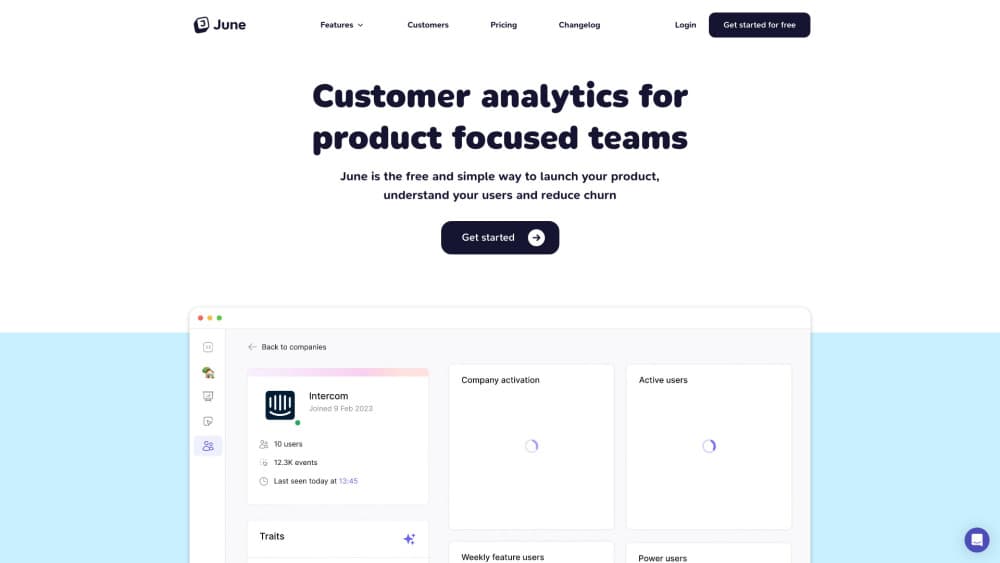
June is product analytics for B2B SaaS teams. It blends usage data with CRM records to show which accounts thrive and which are about to churn, with June AI answering follow up questions.
About June
What Is June
June is a customer analytics tool aimed at subscription software companies. Most analytics platforms count page views and button clicks. June starts from the account instead, so a product manager sees how a whole company uses the product, not just how one person clicked.
The platform pulls product events and CRM records into one place. Salesforce, HubSpot, and Attio integrations add deal size, plan, and owner data, which turns a usage chart into a revenue conversation. Reports arrive in Slack, and alerts fire when an account's activity drops.
There's one important catch. In August 2025 the June team joined Amplitude, and the standalone June product is no longer sold to new customers. Existing users were offered a path to Amplitude. Everything below describes what June did while it was live, which still helps if you're evaluating the ideas or comparing June alternatives.
Getting Started
- Connect your product data through the June SDK or your existing warehouse and segment setup.
- Link Salesforce, HubSpot, or Attio so accounts carry plan, owner, and revenue fields.
- Define the traits and events that matter, such as weekly active seats or feature adoption per company.
- Build a report or dashboard, then share it to Slack or set an alert for accounts that go quiet.
Product Information
A quick look at June's pricing, supported platforms, and performance.
Best for
The users, tasks, and scenarios where this tool fits best.
Users
- Product managers at B2B SaaS companies
- Customer success leads
- Founders and revenue leaders
Tasks
- Tracking feature adoption by company
- Preparing for a renewal or QBR
- Answering ad hoc questions
Scenarios
- A customer goes silent for two weeks
- A new plan tier ships
- Weekly revenue review
Key features
Account Level Analytics
June organizes everything around companies rather than individual users. You can see seats active, features used, and sessions per account, then sort by plan or revenue. For B2B products with multiple stakeholders per customer, that view matches how renewals actually work.
June AI Questions
June AI answers questions typed in normal language, such as which accounts stopped using a feature after the last release. It writes the underlying query and returns a chart or table. Saved queries let the rest of the team reuse an answer instead of asking again.
CRM Integrations
Native connectors for Salesforce, HubSpot, and Attio bring plan, owner, and deal data next to product events. That link is what makes customer analytics useful for revenue teams, since a drop in usage can be weighed against contract value.
Alerts and Slack Reports
You can schedule reports into Slack channels and set alerts on account activity. A sudden drop in active seats triggers a message, and the team sees it where it already works. No one has to remember to open a dashboard.
Computed Traits
Computed traits combine events into a single attribute, like power user or at risk account. Those traits then filter reports and audiences, which keeps analysis consistent across the team instead of one person's spreadsheet definition.
Embed API
The Embed API puts June charts inside your own admin panel or customer portal. Teams used it to show usage summaries to customers, which cuts down on support questions about seat counts and limits.
Pros and cons
Pros
- Account first data model fits B2B SaaS better than user level pageview tools.
- CRM connectors put revenue context beside usage without manual exports.
- June AI handles simple questions fast, which saves analyst time on repeat requests.
- Slack reports and alerts push insight to where the team already talks.
- Setup was handled with hands on onboarding, which helped small teams without data engineers.
Cons
- The product is no longer available to new customers after the Amplitude acquisition in August 2025, so new buyers have to look at June alternatives.
- Pricing started around $150 per month with custom quotes, which priced out early stage startups below roughly $1M ARR.
- There was no free plan, so testing the tool required a sales conversation.
- Deep custom analysis still leaned on SQL, which limited non technical users.
Frequently asked questions
June is product analytics for B2B SaaS companies. Teams use it to see how each customer account uses the product, connect that usage to CRM data, and catch churn risk before renewal.
Related content
Explore related tools, skills, and articles for June.
June Alternatives

Tractionwave
TractionWave · Image · MarketingTractionWave is an AI attention heatmap tool for static ads. Upload a PNG or JPG and it returns predicted attention, ranked hotspots, and fixes before you spend budget.

OpenSEO - AI Visibility
EveryApp · Coding · Marketing · BusinessOpenSEO is an open source SEO platform for keyword research, backlinks, rank tracking, site audits, and AI visibility, with usage-based pricing and MCP access for AI agents.

Plugins Radar
Plugins Radar · Marketing · BusinessPlugins Radar tracks where your ChatGPT plugin ranks in directory and in-chat search, which competitors outrank it and what changed, with hourly checks on 9,885 listings.